back
DILMUN I
The first large sailing ship

Goal
First large reed boat to mark the anniversary of Thor Heyerdahl's RA II expedition
Size
Length 14 m, width 4 m, weight 8 t, sail area approx. 20 m²
Material
European reed
Sailing performance
Downwind courses only
Field of application
Baltic Sea with Greifswald Bay
Objective
After the political changes of 1989/1990, the so-called Iron Curtain fell—not only for political prisoners in the Eastern Bloc, but also for many free spirits. Two of them were Cornelia Lorenz and Dominique Görlitz, both students of biology and sports science. They met in the context of lectures that Dominique gave together with other sports students from his seminar group.
In 1990, the joint idea arose to build an identical reed boat to mark the 20th anniversary of Thor Heyerdahl's RA II expedition. The aim was to gain initial practical experience in sailing reed boats and to test Heyerdahl's theoretical assumptions under their own conditions.
During their studies, both had already realized that the settlement of the Mediterranean islands must have begun long before the advanced civilizations of the Sumerians and Egyptians. This inevitably led to the question of whether taxable reed sailors had existed much earlier. The Heyerdahl anniversary offered a unique opportunity to gain attention, support, and publicity for such an experiment.
The original plan was to test the DILMUN I on the Wangenheim Reservoir near Gotha. However, shortly before the start, sports historian Prof. Willy Schröder prohibited this plan. At the same time, he supported the two students with advice and assistance and referred them to his former place of work, the University of Greifswald. There they were warmly welcomed at the Greifswald Naval School – in the immediate vicinity of the former GDR sailing training ship, the SS Wilhelm Pieck (today SS Greif).
The expedition was documented in great detail for the first time by ZDF in cooperation with the “Drehscheibe” editorial team.
The construction
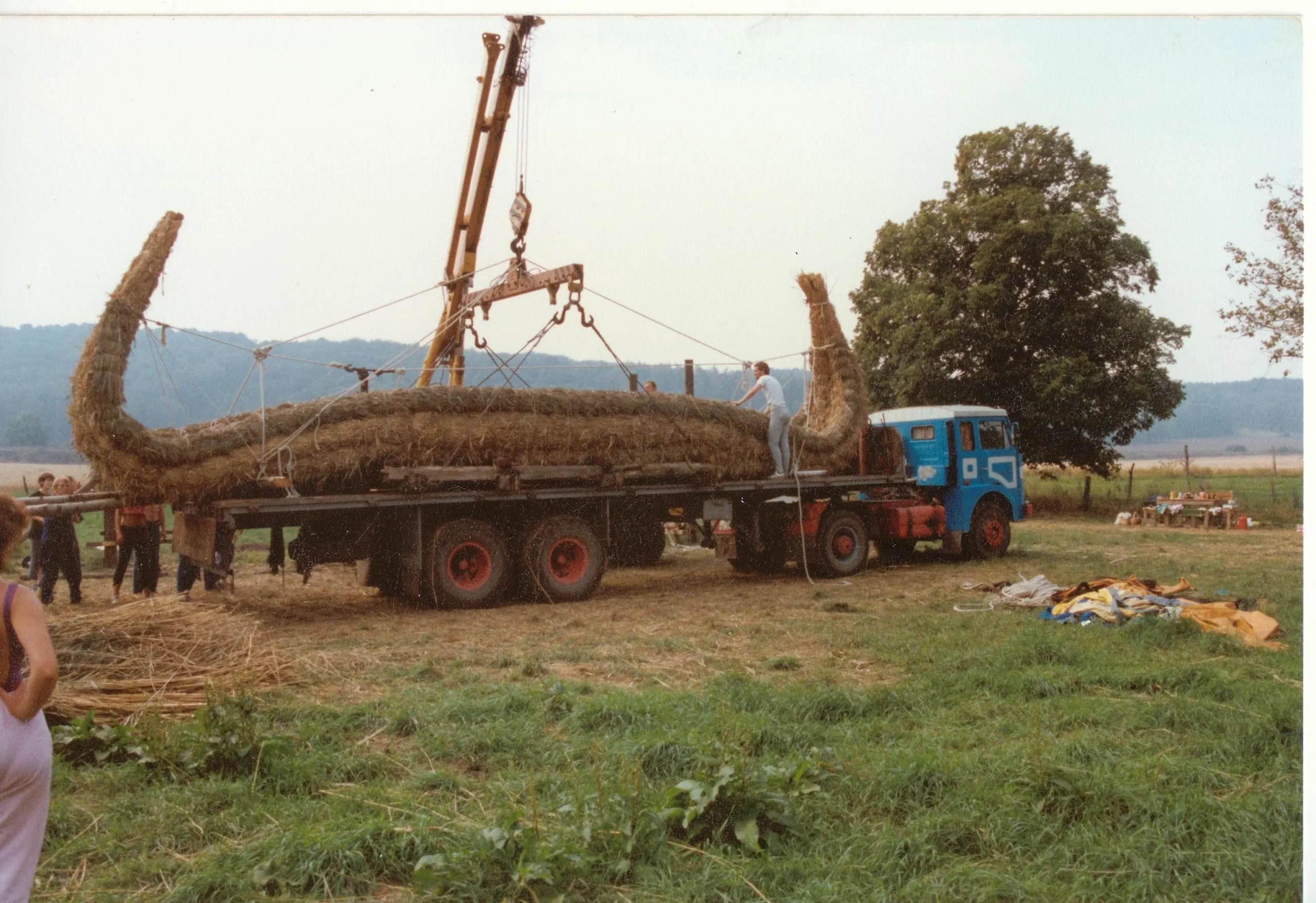
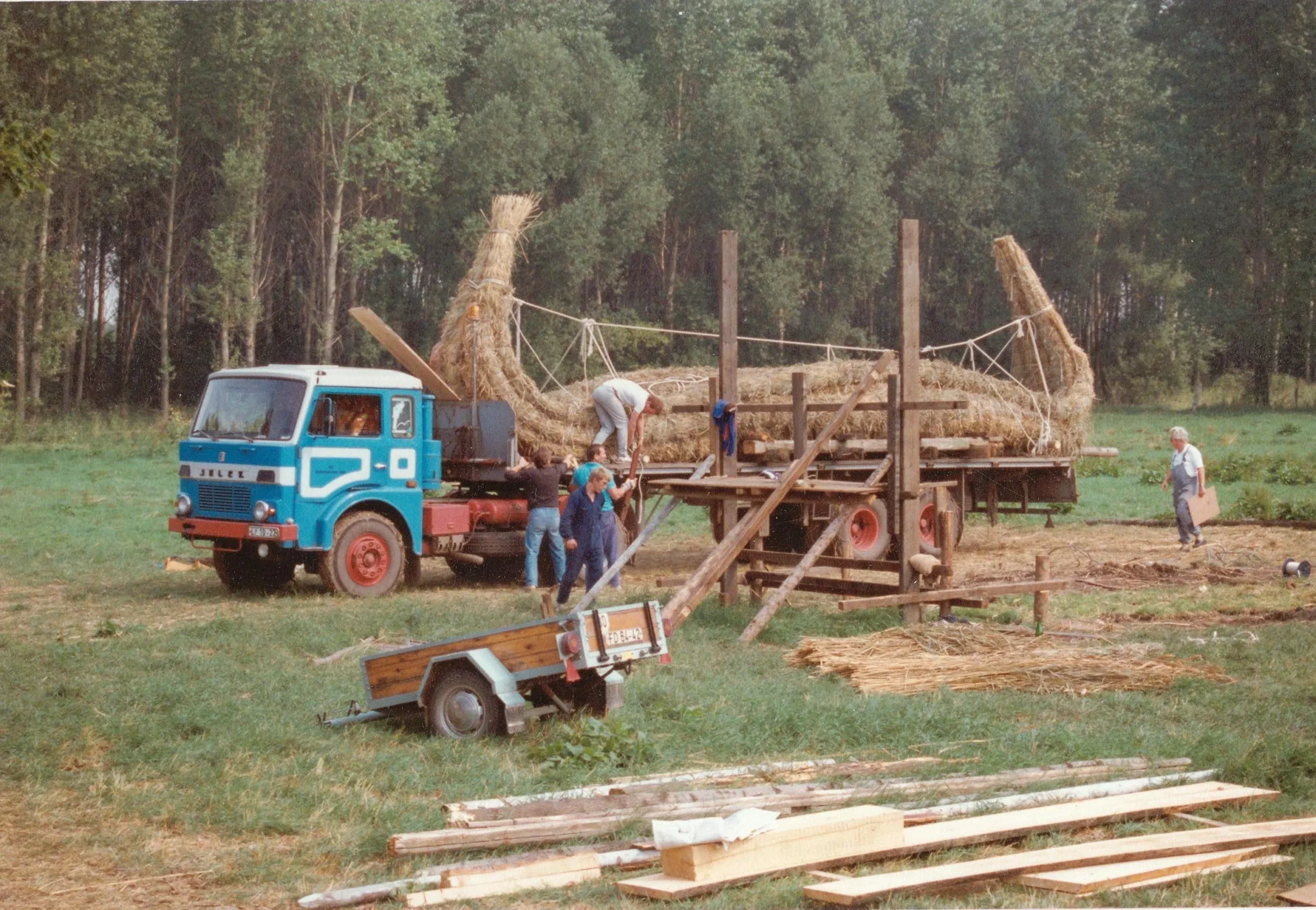
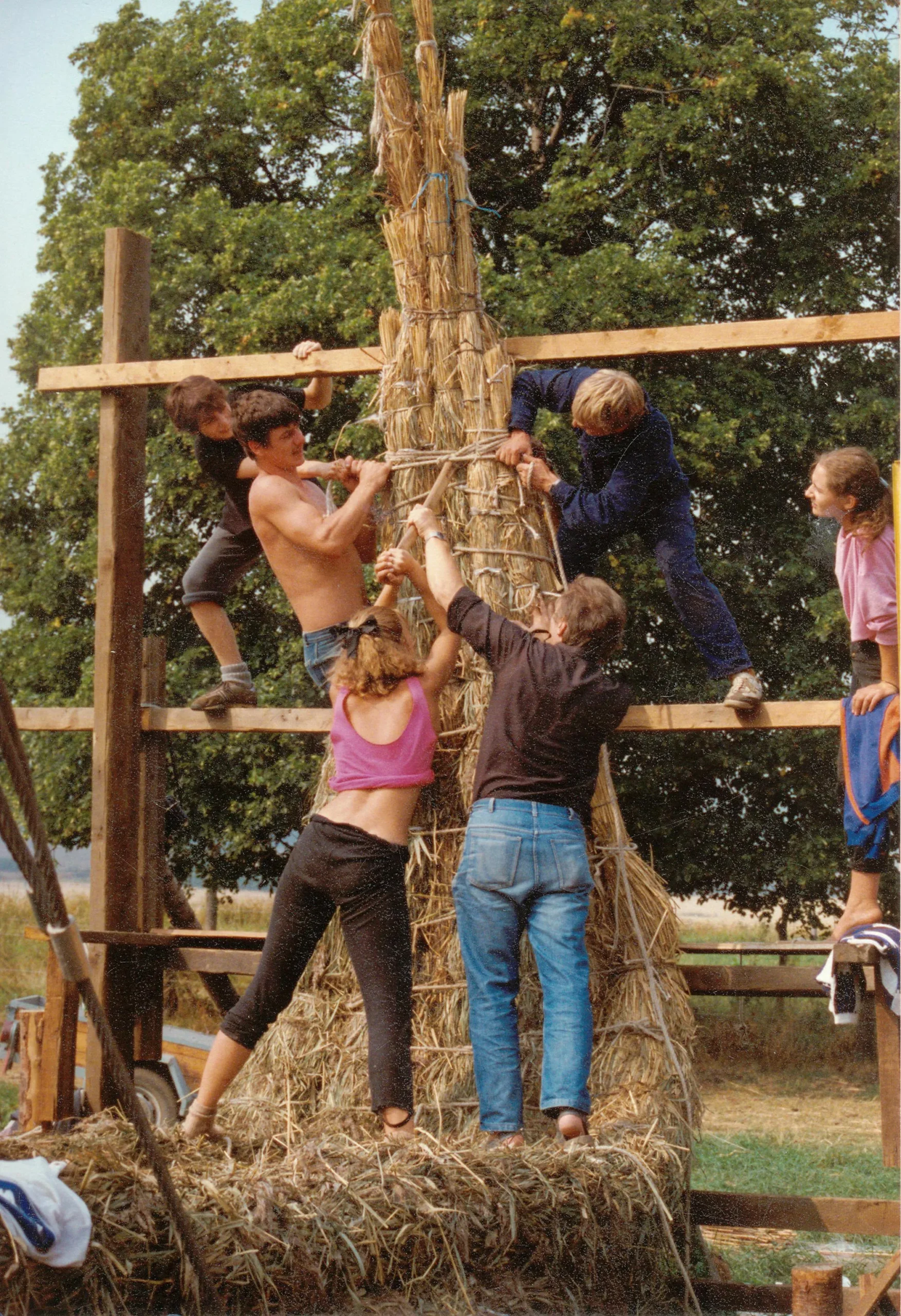
With the support of the head of the Gotha Cultural Association, Lorenz and Görlitz received special permission to harvest reeds from the Siebleber Pond. Together with students from Jena and Dominique's former school friends, several hectares of reeds were cut.
The European reed used belongs to the sweet grasses (Poaceae) and was not a classic material for boatbuilding in antiquity – in contrast to Papyrus or totora. Nevertheless, the students deliberately chose this material in order to experimentally test its buoyancy and durability.
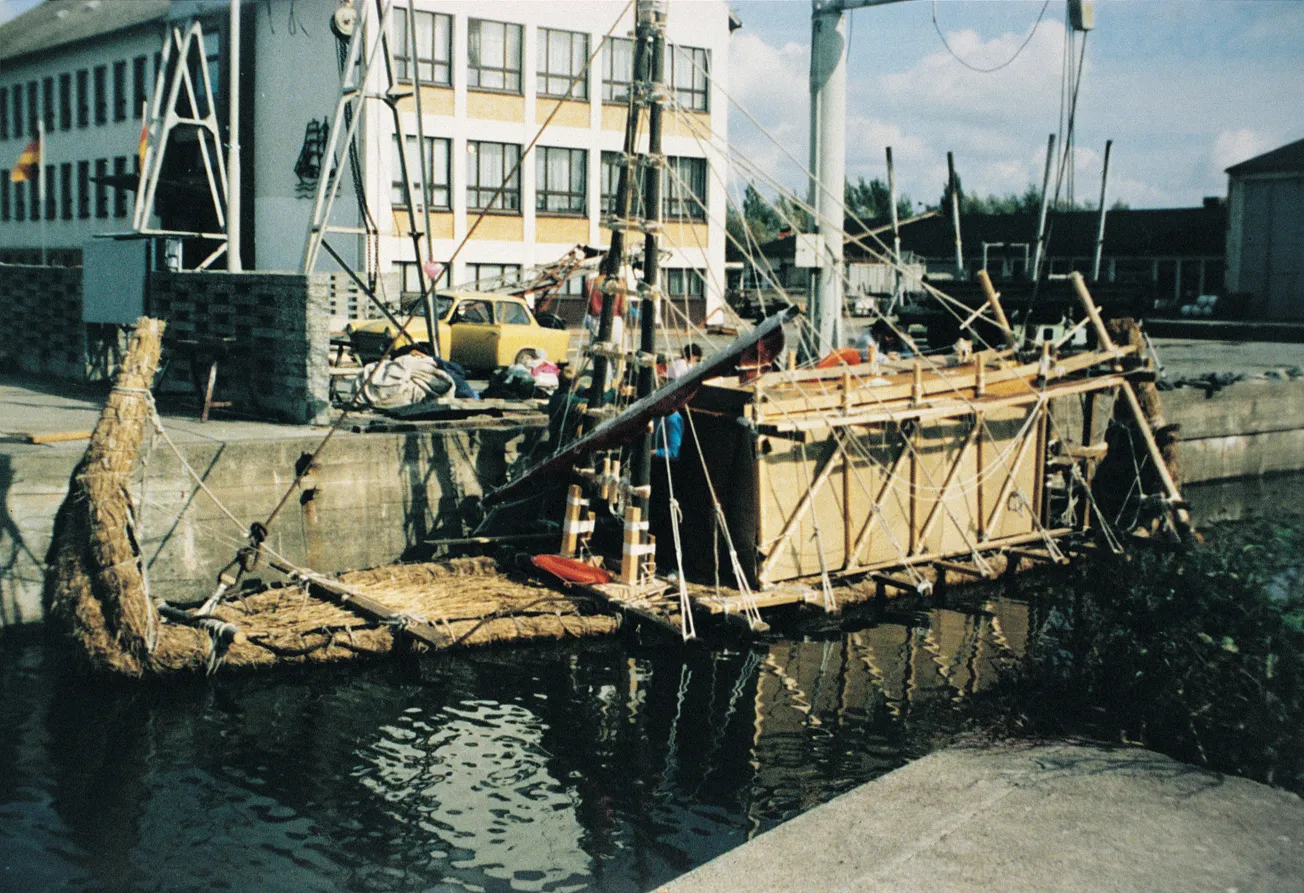
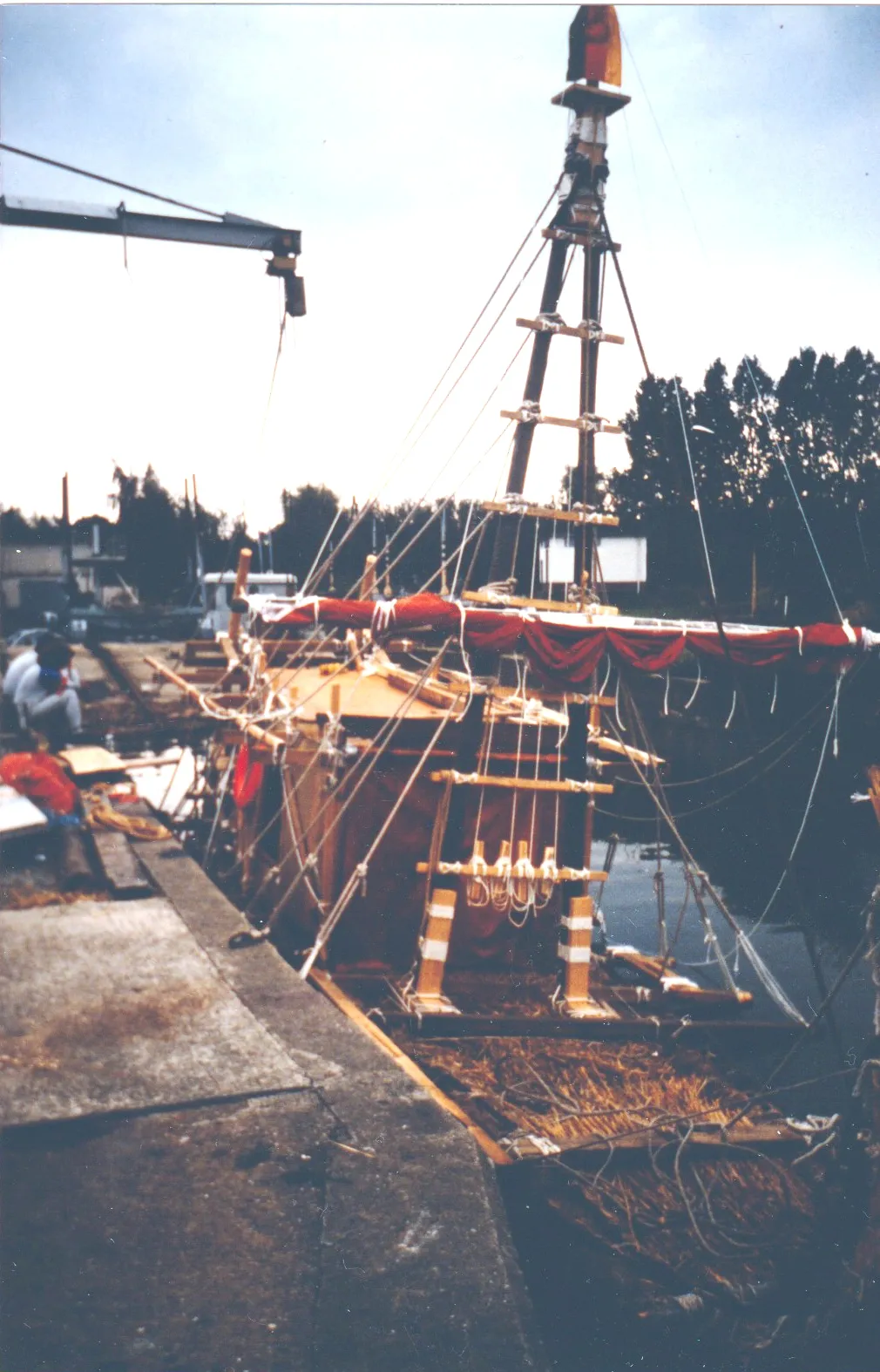
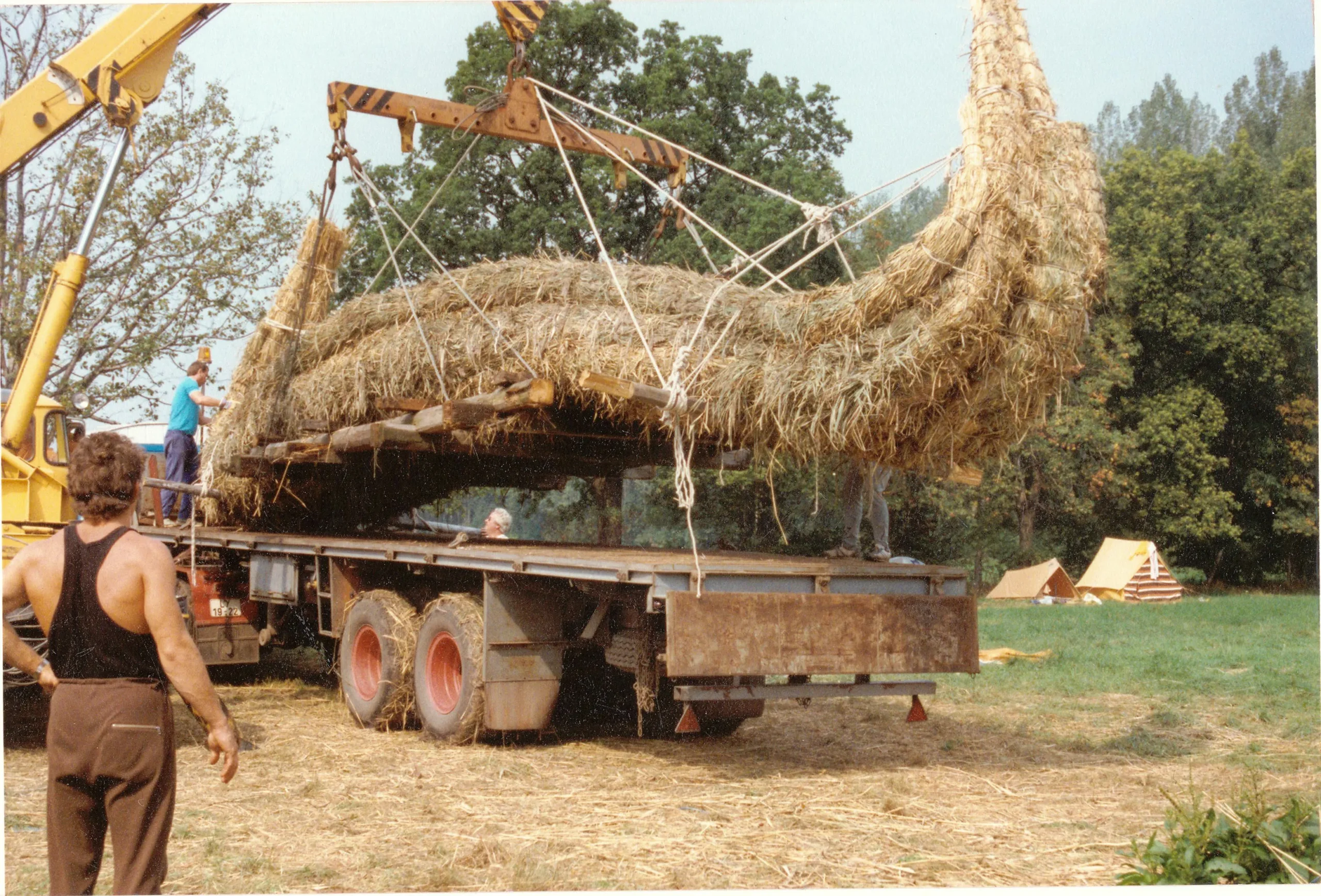
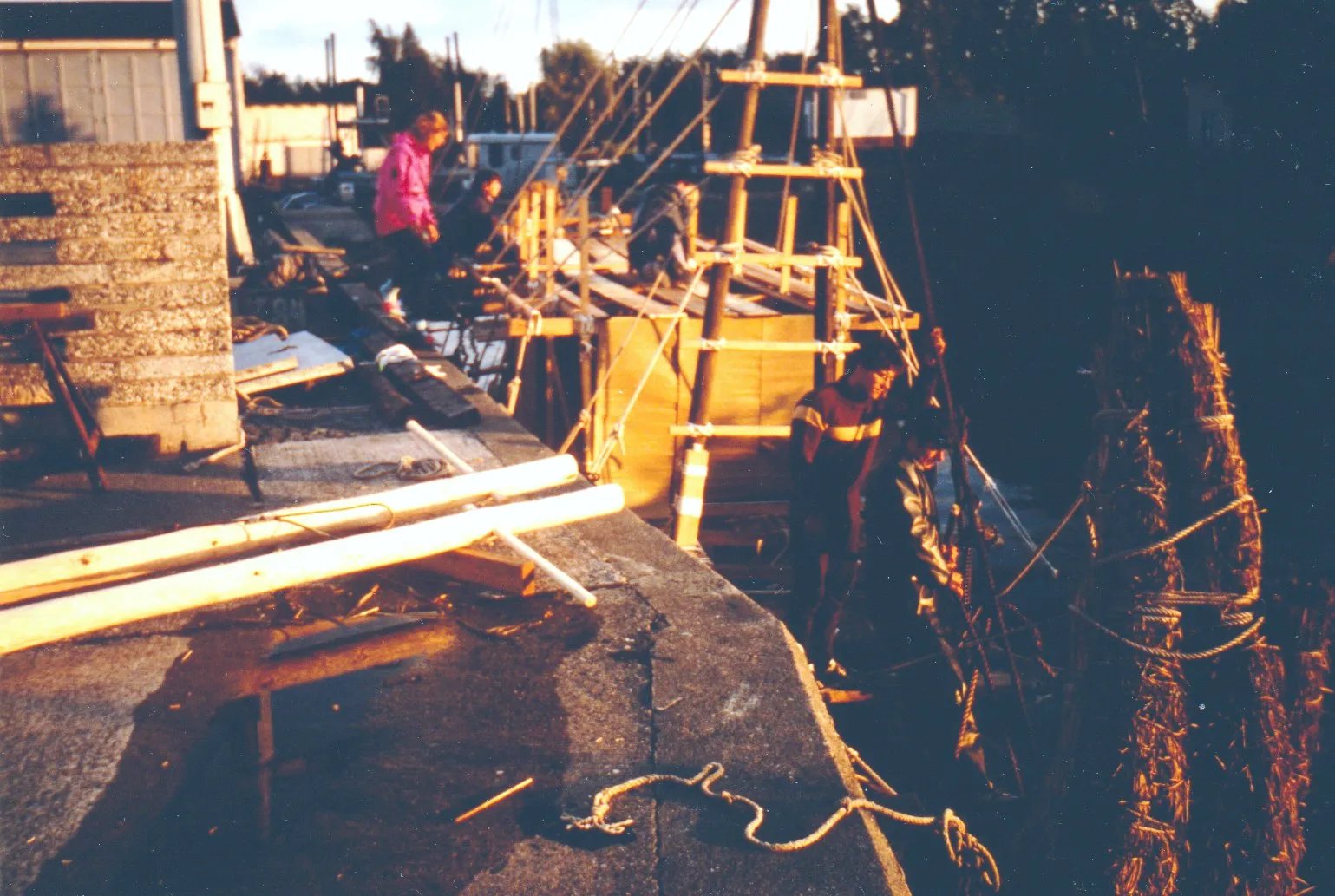
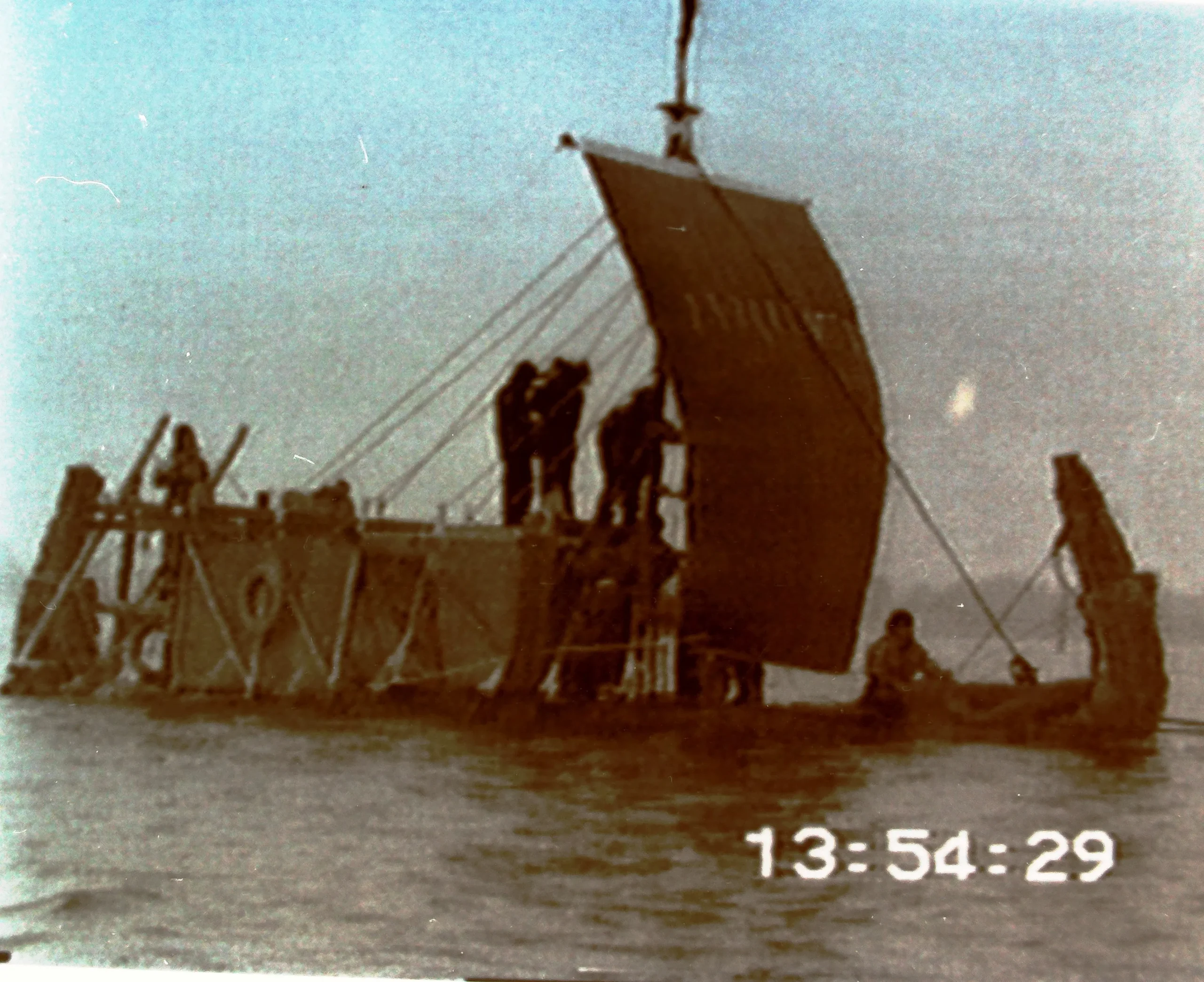
The construction of the reed boat took around seven weeks. The hull was approximately 14 metres long, four metres wide, and about one metre thick. The vessel was then rigged in Greifswald by the inexperienced shipbuilders over a further four weeks. The launch finally took place in early September 1990. According to the Greifswald port authority, DILMUN I was one of the last ships to be christened under the flag of the GDR, as German reunification was completed on 3 October 1990.
The First Sea Journey
The planned route was to take them from Greifswald around the island of Rügen in a counterclockwise direction. However, the first autumn storms arrived unusually early at the beginning of September.
On September 13, 1990, the time had finally come: for the first time, sails were set on an inland sea. Without any practical sailing experience, but with theoretical knowledge of sailing physics and hydrodynamics, the DILMUN I set course for the so-called “Yellow Shore” in the direction of Rügen.
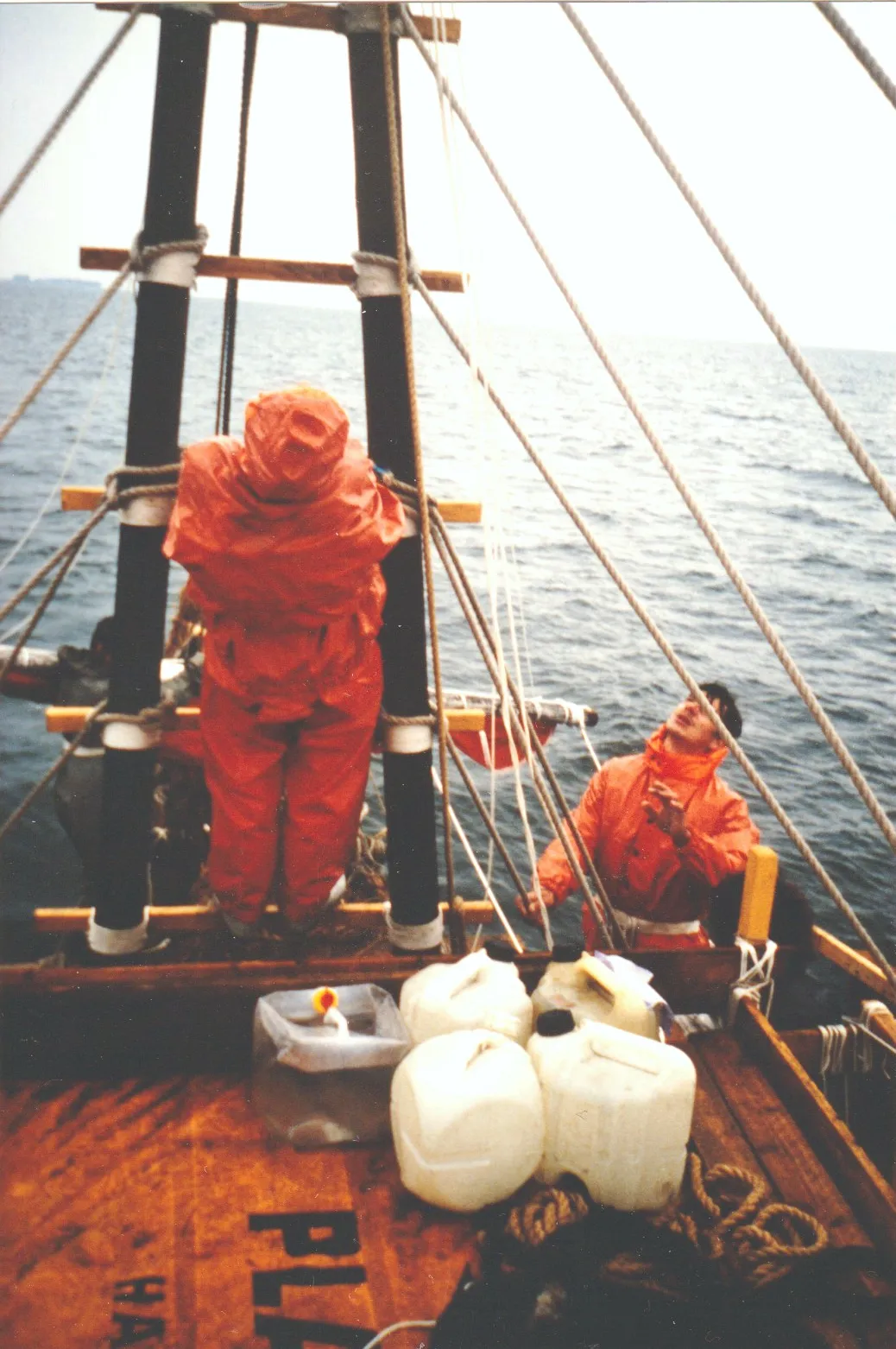
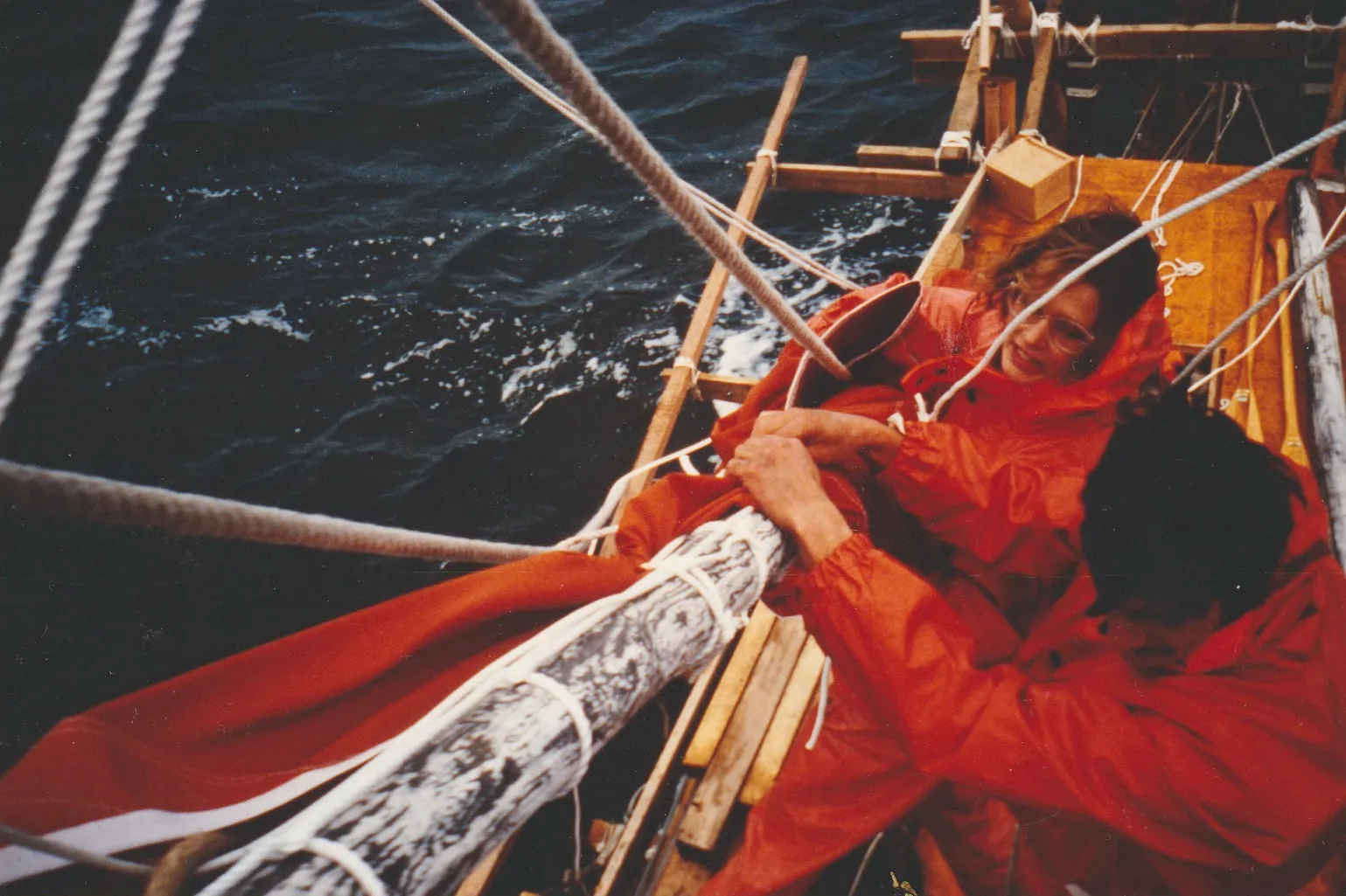
Initially, weather conditions were favorable, but after about two hours, the situation changed abruptly. At Stralsunder Straße, winds from the west and northeast collided. Wind force 6 created a pronounced cross sea, which demanded everything from the inexperienced inland waterway skippers from Thuringia.
As the wind picked up, the boat became increasingly windward and eventually turned sideways to the wind. Since there were no daggerboards attached to the stern, there was no way to steer the reed sailboat back onto a downwind course. After consulting with an experienced skipper from Greifswald, the decision was made to abort the first major experiment.
After around ten weeks of construction and only five to six hours under sail, the dream of circumnavigating Rügen was over for the time being.
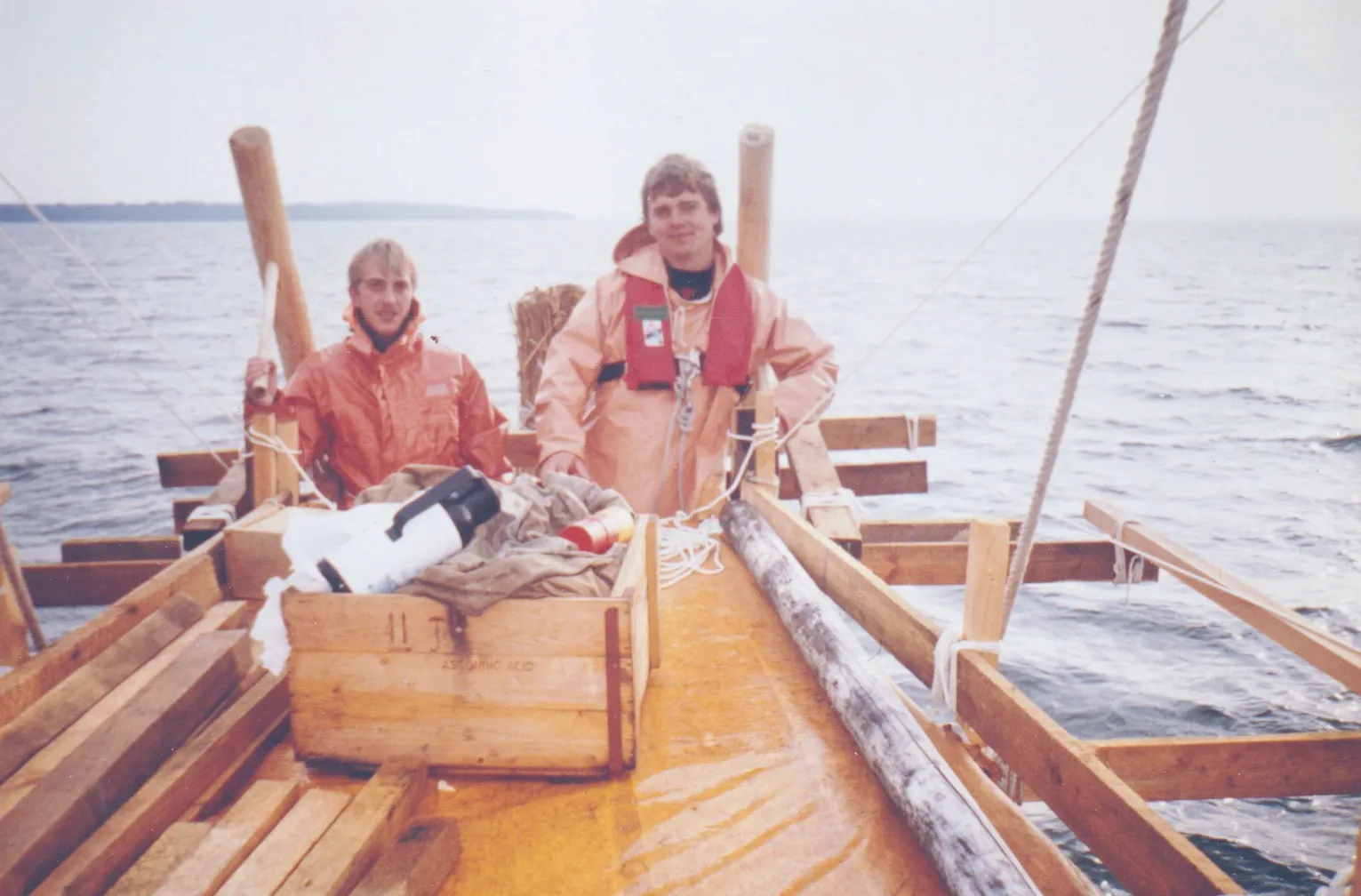
Despite the premature termination, DILMUN I yielded crucial insights. The European reed once again proved to be highly buoyant, and the raft body manufactured in Gotha proved to be extremely stable even under harsh conditions. Even cross seas with wind force 6 did not damage the structure of the reed boat.
However, one observation would prove to be of particular significance: *DILMUN I* did not sail exclusively on a dead downwind course but at times moved at a right angle to the wind. This suggested that reed boats—under certain conditions—might be capable of achieving beam reach courses. An assumption that even Thor Heyerdahl had always doubted.
Like RA I and RA II, DILMUN I ultimately drifted largely uncontrolled toward the east coast of Rügen. However, this early experiment provided initial indications that this behavior could be technically useful under controlled conditions.
This realization stayed with Dominique Görlitz.
Conclusion of the first experiment
Consequences and outlook
As a direct result of the DILMUN-I project, Cornelia Lorenz and Dominique Görlitz traveled to Egypt for eleven weeks in 1992. There, two German archaeologists first drew their attention to the predynastic Negada culture.
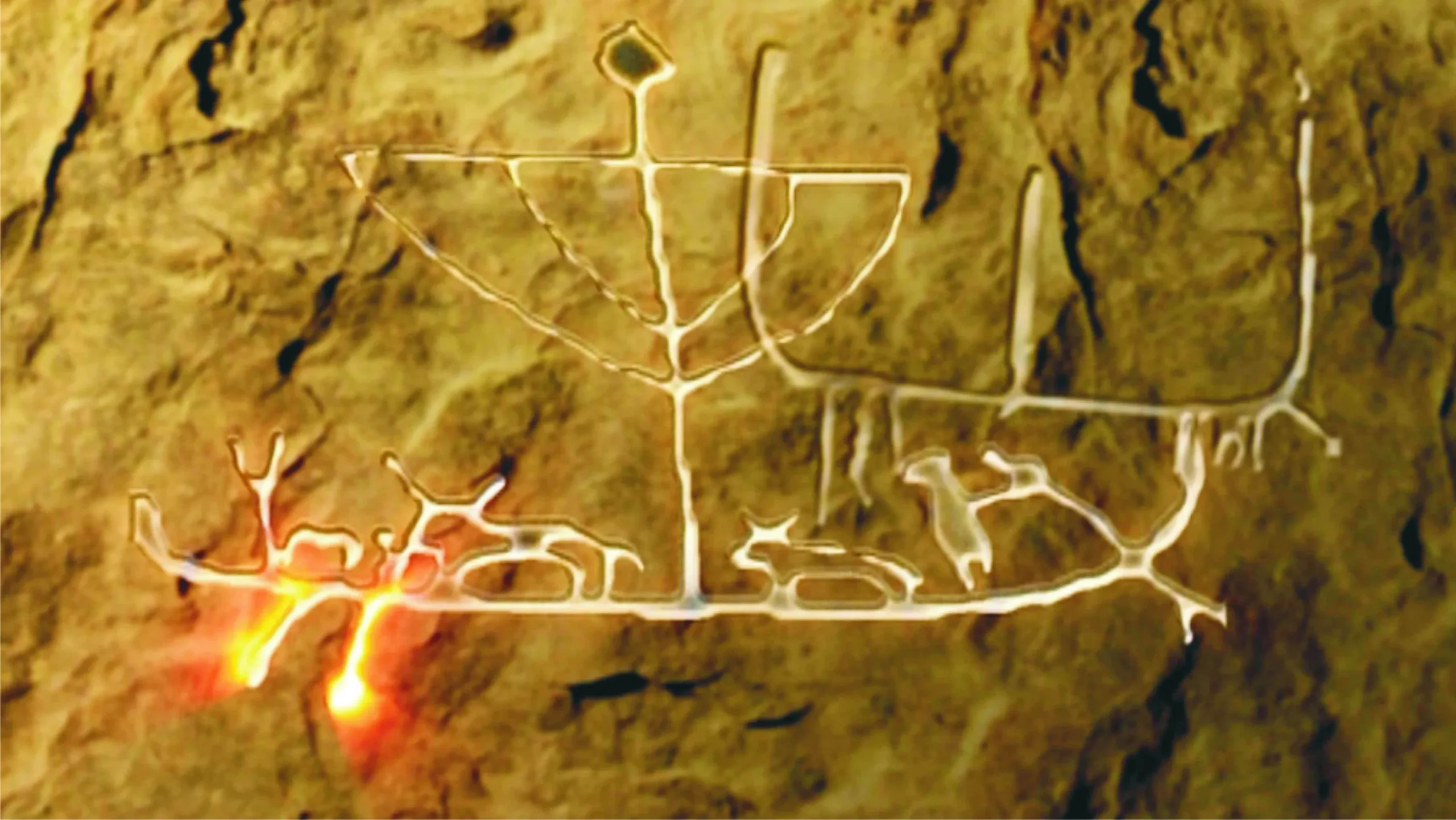
During excursions to Wadi Hammamat and intensive research on the Negada culture at the Leipzig State Library, they finally came across prehistoric rock paintings of reed boats. At the bow and stern of these depictions, Görlitz discovered simple lines, which he interpreted as primitive keels or leeboards—a finding that had previously gone unnoticed.
This marked the birth of the idea for a new DILMUN boat. Once again, it was to be built near Gotha—but this time, the newly identified structures were to be systematically tested. The Wangenheim Reservoir was finally to become a testing ground.
go to DILMUN II