
back
Chapter 5
The human tooth from Lanzarote
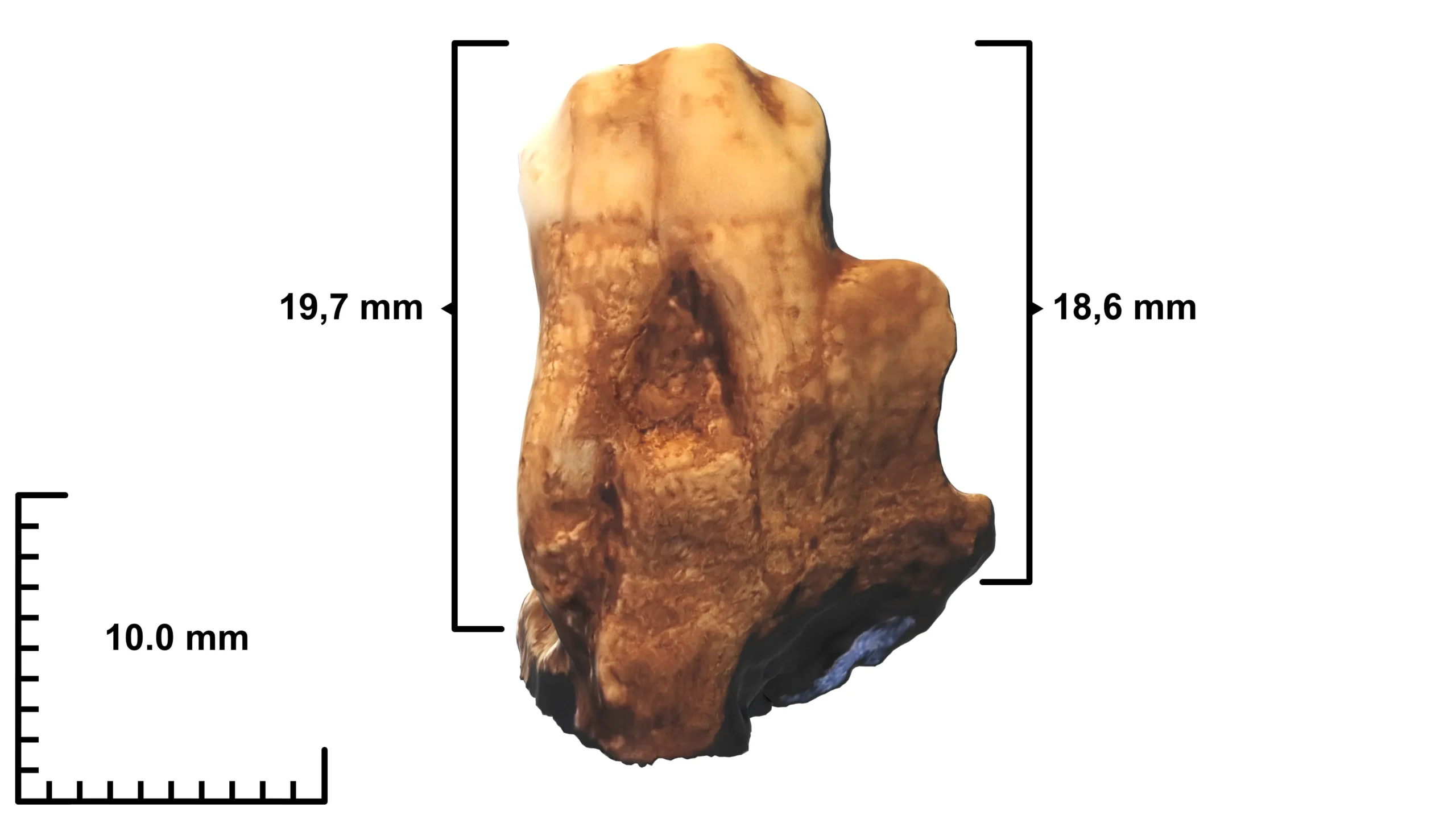
The discovery of the so-called Lanzarote human tooth represents one of the most unexpected and potentially significant findings of the Canary Islands Pyramid Project to date. It was not made during a traditional excavation, but rather in the course of preparations for the ABORA V mission, when Dr. Dominique Görlitz and Ramon Zürcher undertook research trips to the eastern Canary Islands in 2023. Zürcher has since become managing director of the A.A.S. (Research Society for Archaeology, Astronautics, and SETI) and is continuing the life's work of Erich von Däniken (1935-2026), who once founded this institution.
The specific reason for the trip to Lanzarote was a tip from geomorphologist Prof. Dr. Ludwig Zöller (formerly of the University of Bamberg). As part of an international research project on the stratigraphic structure of the eastern Canary Islands, Zöller had discovered several goat bones in a gravel pit near Guatiza. Dating carried out in Germany revealed an age of approximately 3,400 to 3,200 BC, a result that was additionally confirmed by TL dating (thermoluminescence dating) of the loess-containing sediments.
This finding clearly contradicted the prevailing theory that humans first settled the Canary Islands around 1,000 BC at the earliest. However, the presence of domesticated goats at the end of the 4th millennium BC implies human presence—and thus a much earlier settlement of the archipelago.
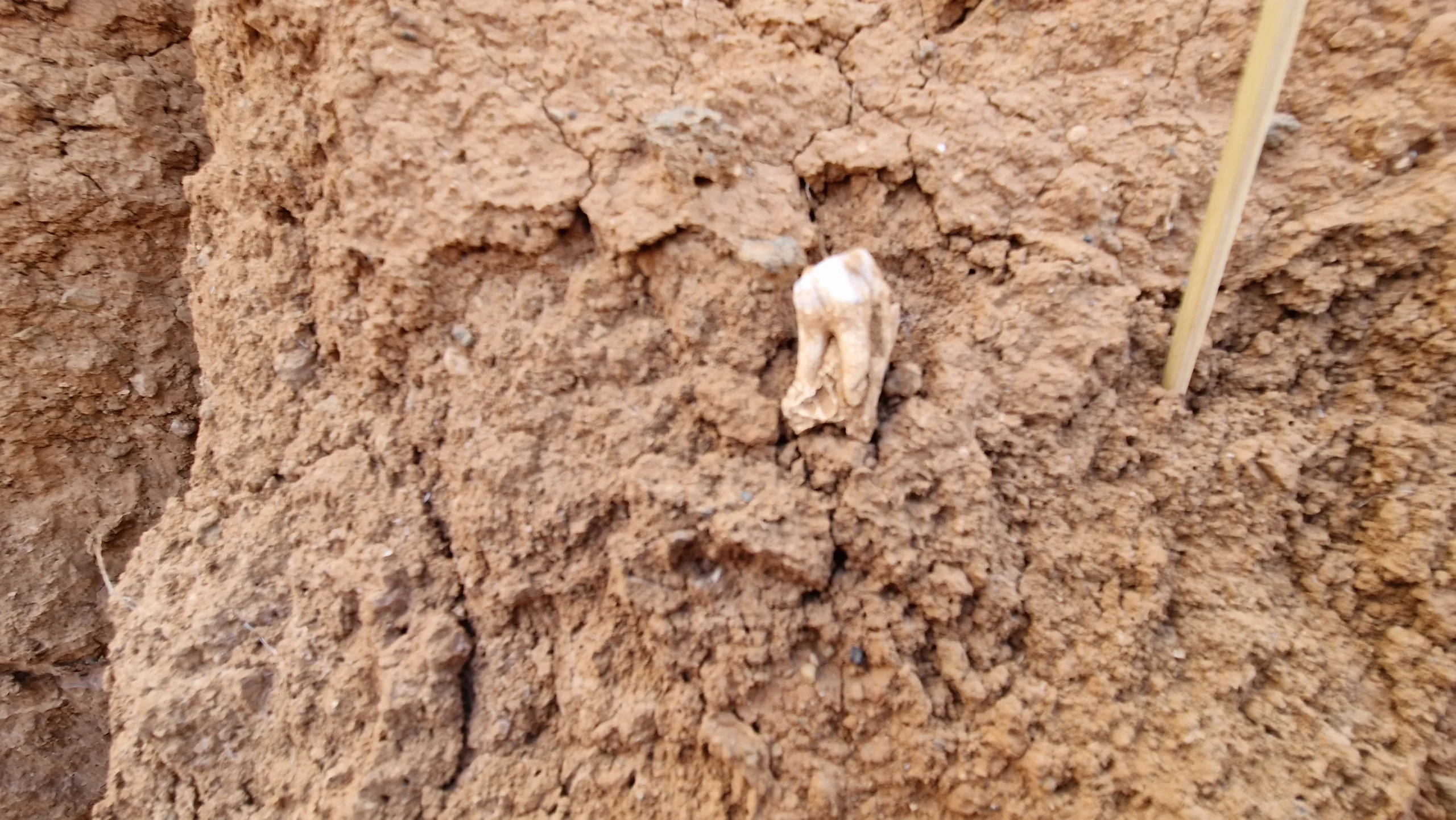
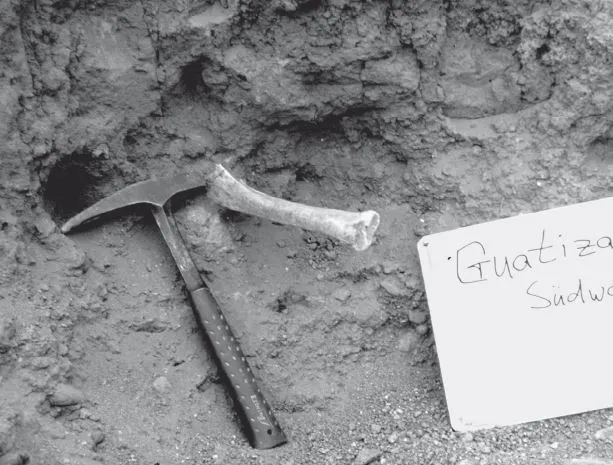
This picture shows the goat bones discovered by Zöller on Lanzarote. The domesticated animals have been dated to around 3,300 BC. They thus mark the beginning of the oldest settlement of the Canary Islands. Unfortunately, Canarian archaeologists do not accept this finding. Perhaps our tooth could help?
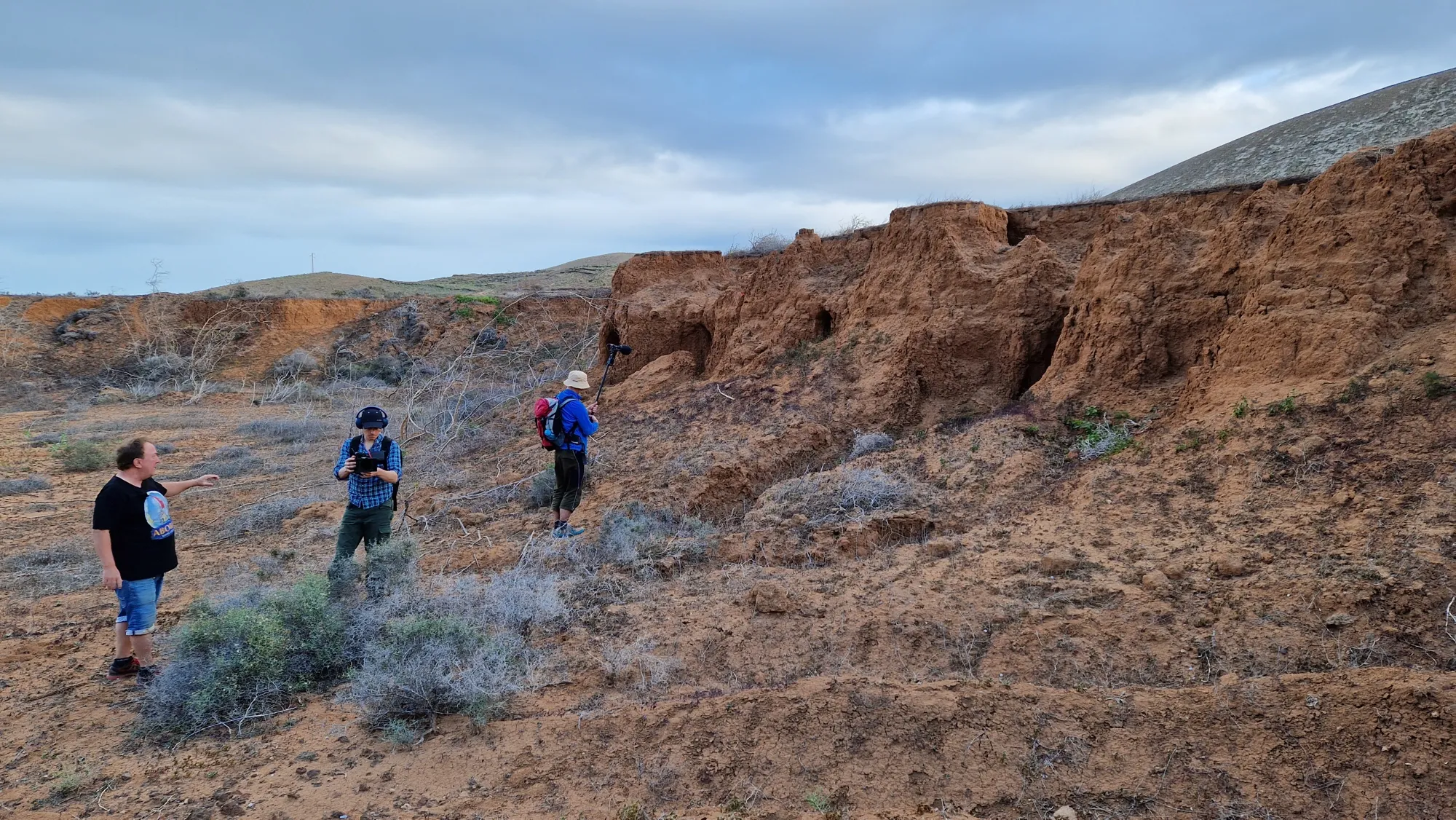
Zöller therefore expressly recommended that Görlitz return to the site and search specifically for further bones. He personally explained the stratigraphic situation to him using original photographs. Görlitz passed this information on to Ramon Zürcher on site, while he himself gave an interview to a film crew that had traveled with him.
Zürcher then discovered a single tooth in exactly the same layer where the goat bones had been found. At first, he thought it was another goat find. However, Görlitz immediately recognized that it was not a goat tooth, but a human molar. This assessment was later confirmed by two independent expert opinions from German dentists.
The find has not yet been scientifically evaluated. Since 2023, Görlitz and Zürcher have been waiting for official approval from the chief archaeologist responsible for the eastern Canary Islands, Prof. Pablo Atoche. At the same time, there is constructive cooperation with the chief archaeologist of the Canary Islands, Prof. Carmen del Arco, so there is justified hope that the tooth will be available for further C14-Dating and human genetic analyses to be released.
If the presumed age is confirmed, this would have far-reaching consequences. The central question of Canarian archaeology—when did the first humans reach this outermost outpost of the Old World?—would have to be fundamentally reanswered. A Neolithic or Early Bronze Age date would prove that seafaring navigators had explored the Atlantic much earlier than previously assumed.
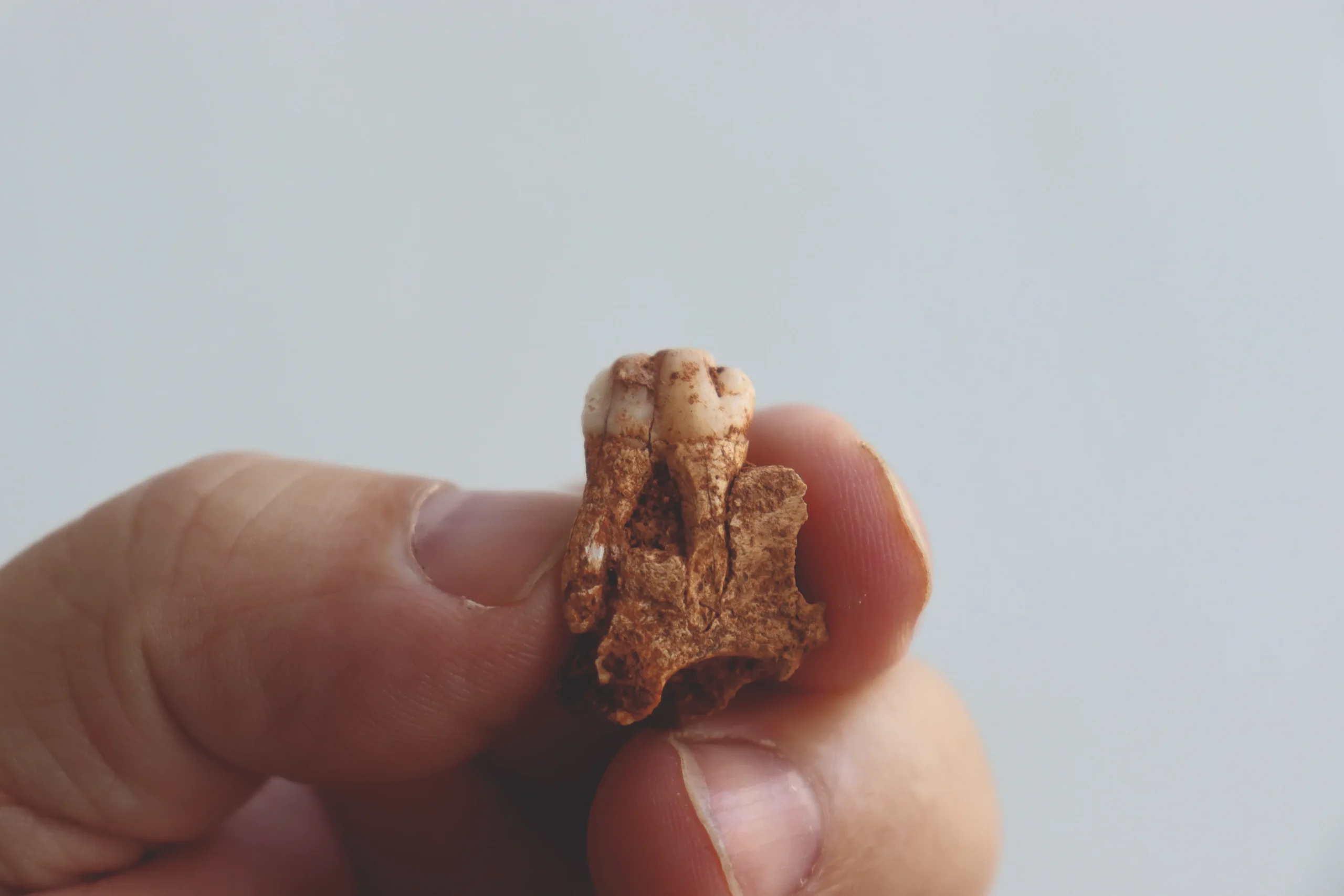
These findings form an essential part of the scientific basis for the ABORA V mission. They suggest that transatlantic navigation was not just a phenomenon of ancient or modern times, but may have been possible even in prehistoric times.
Against this backdrop, another international research project will be launched in 2026 in cooperation with two universities in Cuba. The OSL specialists from the ABORA team will date rock art in selected caves whose iconographic features show striking transatlantic parallels. These images could serve as cultural markers of early maritime exchange – and thus provide another piece of the mosaic in understanding the earliest global seafaring.