ABORA V
Transatlantic shipping between the Old and New Worlds
1. Objective
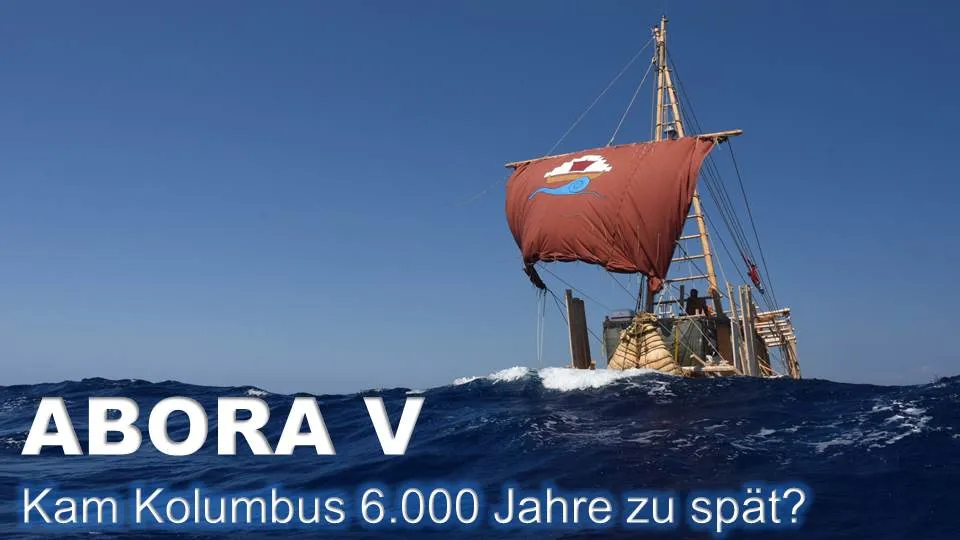
The aim of the ABORA V expedition is to verify for the first time under controlled experimental conditions whether a targeted transatlantic sea voyage from the Old World to the New World was technically and nautically possible using a prehistoric reed boat that could be reconstructed.
The focus is not on drift-driven crossing, but on controlled navigation along a predetermined route, which also requires courses outside of pure downwind conditions. ABORA V is thus intended to overcome a central methodological weakness of earlier experiments.
Archaeological background
One of the unresolved questions in classical studies to this day is whether the pre-Columbian cultures of the New World developed completely independently of cultural influences from the Old World. Despite numerous and sometimes remarkable parallels between the cultures of pre-Columbian America and those of the Mediterranean region, there are still no reliable archaeological models that provide a convincing explanation for these similarities.
Against this backdrop, the ABORA team is conducting new dating, analysis, and comparison projects in collaboration with several universities, including those in Athens, La Coruña, Tenerife, Matanzas, and, in the future, Rabat. The aim of this interdisciplinary research is to reassess the open questions on the basis of new data and facts. Further information on these research projects can be found under the “Projects” button.
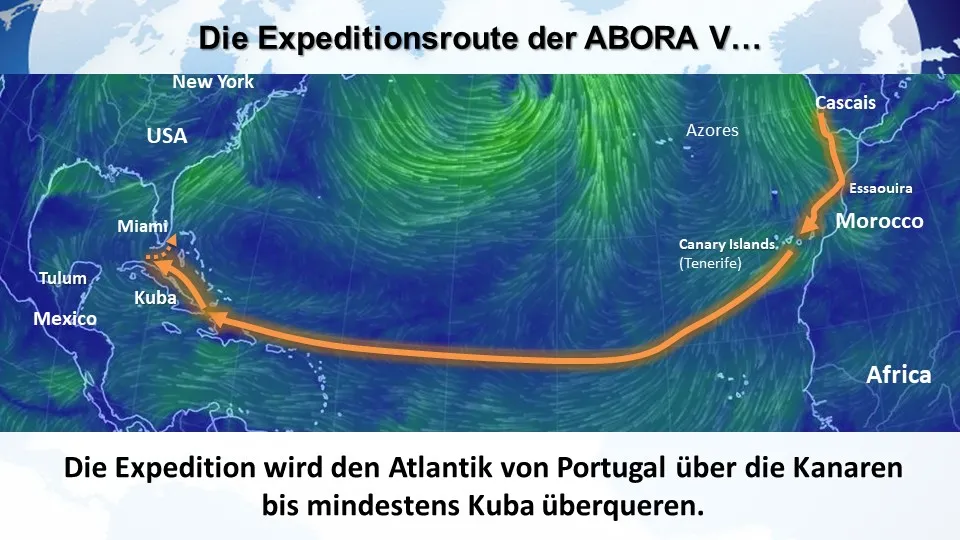
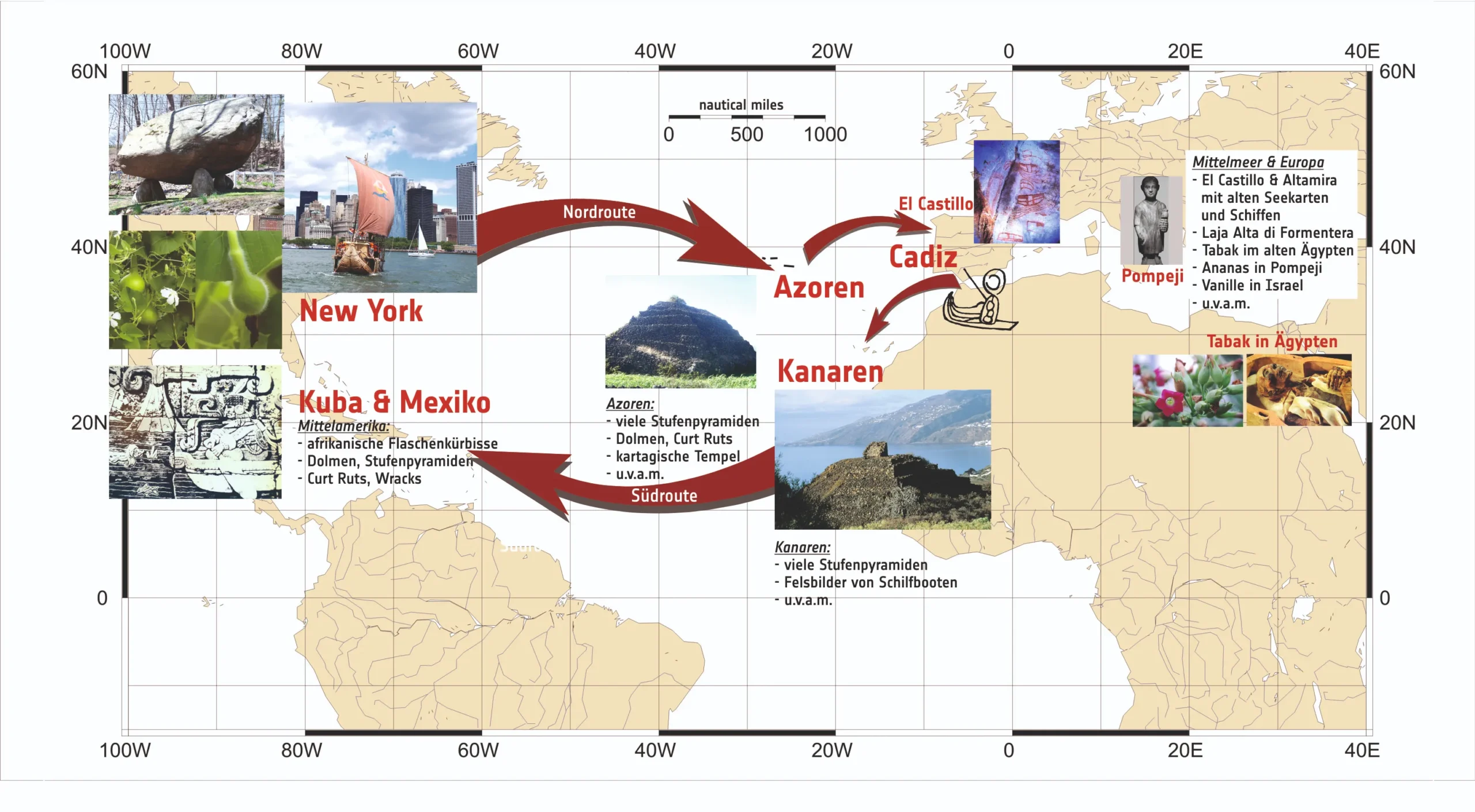
Should these investigations provide evidence of actual transatlantic contacts, the planned sea voyage from Portugal via Morocco, the Canary Islands, and Cuba to the Caribbean will serve as empirical verification of corresponding hypotheses.
Thor Heyerdahl's famous RA-I and RA-II expeditions caused great astonishment around the world, but hardly led to a rethinking in professional archaeology. In addition to the limited evidence available at the time, this was mainly due to the limited maneuverability of Heyerdahl's ships: they were hardly able to maintain precise courses or navigate to distant destinations in unfavorable winds. This is exactly where ABORA V comes in.
The new expedition follows a clearly defined route with several intermediate destinations that cannot be reached exclusively on downwind courses. The sea area between North Africa and the Canary Islands is particularly challenging, where the Schilfsegler will have to navigate out of the Canary Current into the open Atlantic in order to reach Lanzarote and La Graciosa.
After deliberately choosing to island hop within the Canary Islands, the route then takes the boat thousands of kilometers to the Caribbean. ABORA V is scheduled to sail along the northern sides (windward slopes) of several islands to at least Havana. Subject to official approvals, there are plans to continue on to Florida.
Alexander von Humboldt and Baron von Braunschweig had already reported astonishing cultural parallels between the cultures of the Antilles and Neolithic societies in the Mediterranean region. The deliberate reaching of the Caribbean from Western Europe would therefore be important evidence that experimental archaeology can make a decisive contribution to verifying the findings of 19th-century archaeology.
Construction and technical design
The construction of the reed boat for ABORA V will once again take place in Huatajata on Lake Titicaca. The Inca Utama Hotel (Crillon Tours & SPA) offers ideal conditions for the construction, together with the Aymara boat builders of the Limachi family.
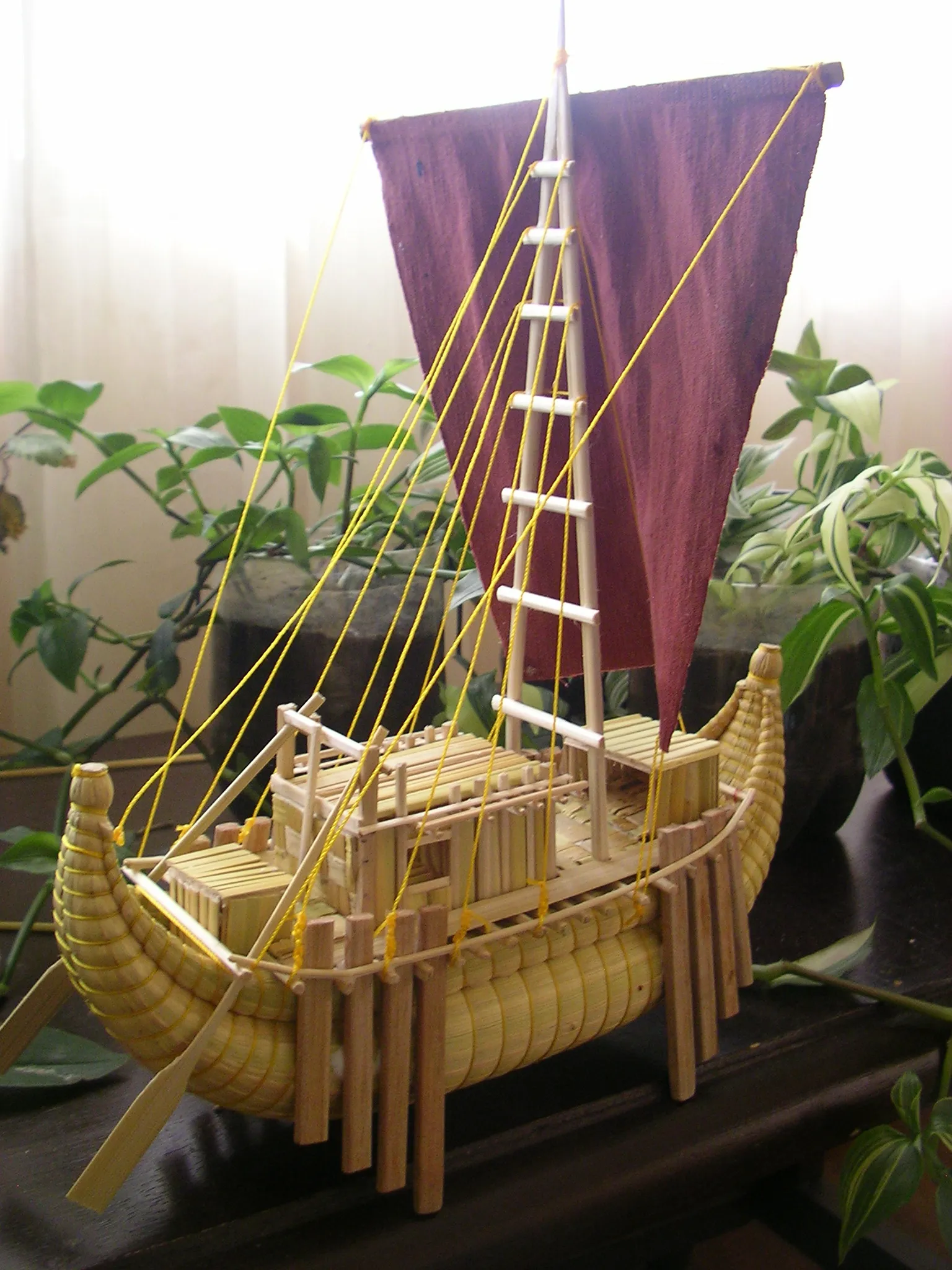
The hull is planned to be 14 meters long and only 4 meters wide in order to achieve high hull speed while maintaining good upwind performance. Parallel to the hull construction, the members of the ABORA association will build the superstructure, including the two cabins, mast and rigging, and the double rudder system. The positive experiences with the extended cabins for rough Atlantic sea conditions will be put to the test on ABORA V.
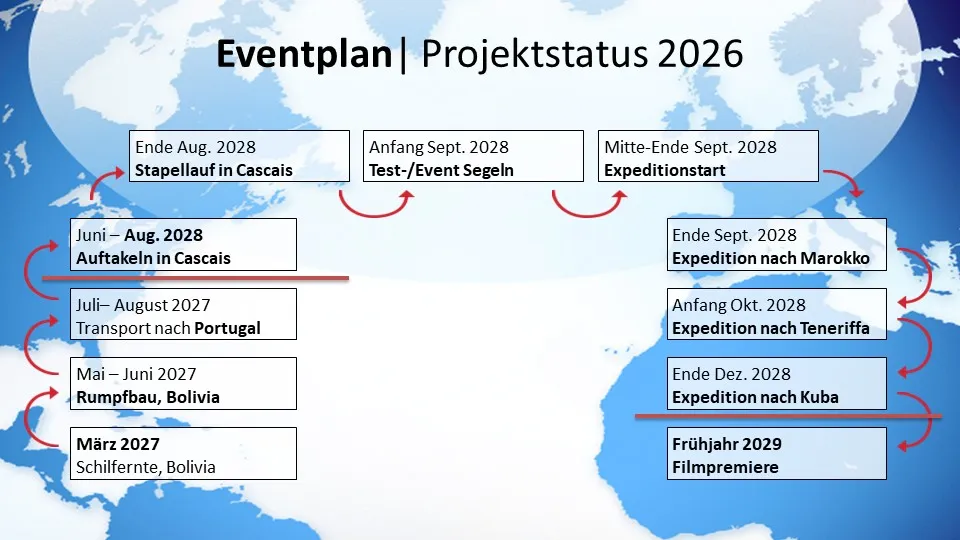
One year later, all components are to be assembled into a complete ship in Cascais near Lisbon (Portugal). The local yacht club is providing logistical and technical support for the challenging work involved in the project. The city of Cascais is also actively supporting the expedition.
The specific start date of the voyage depends on the final financing. Several well-known companies have already expressed interest, including the Austrian company TGI AG (Treue Gold Investment).
Conclusion and outlook
ABORA V combines more than two decades of experimental maritime research into an expedition that sets new methodological standards. For the first time, controlled, targeted transatlantic navigation with a prehistorically reconstructed reed boat is to be demonstrated.
Evidence of possible early transatlantic contacts can also be found in the spread of the Negade culture, whose characteristic reed boats with triangular sails and leeboards are depicted not only in Upper Egypt, but also in the Levant, southern Spain, Tenerife, and even in the Caribbean (Cuba), as well as in comparable mummification techniques on both sides of the Atlantic. If this voyage is successful, it would not only reevaluate central assumptions about early seafaring, but also show that experimental archaeology is an indispensable tool for testing old cultural-historical hypotheses. ABORA V thus sees itself not as a conclusion, but as a catalyst for an open, transdisciplinary reassessment of early global contacts.