back
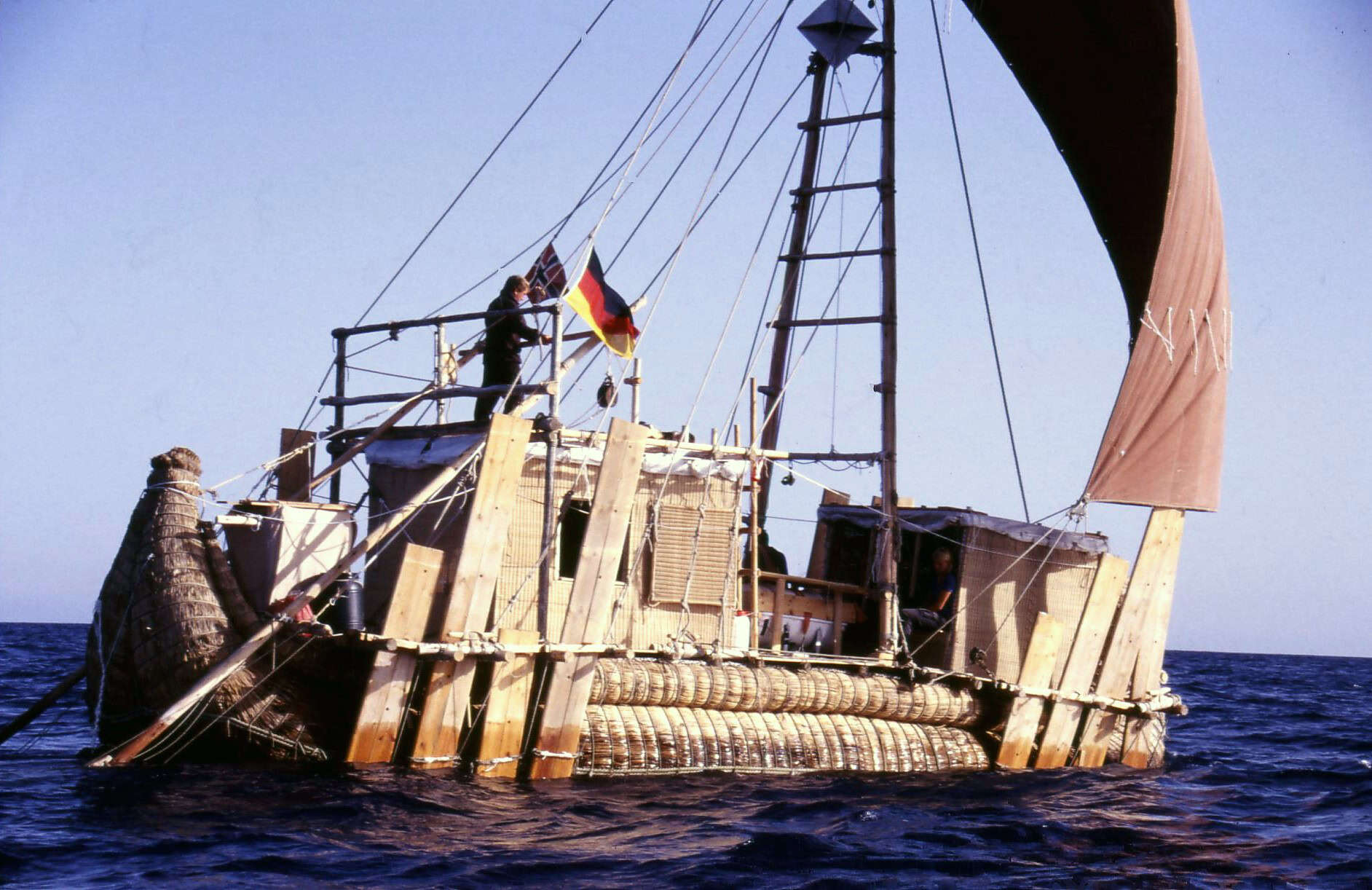
The ABORA II
– the first round trip in modern times

Goal
First round trip expedition with a ship's boat on the Mediterranean Sea in 2002
Size
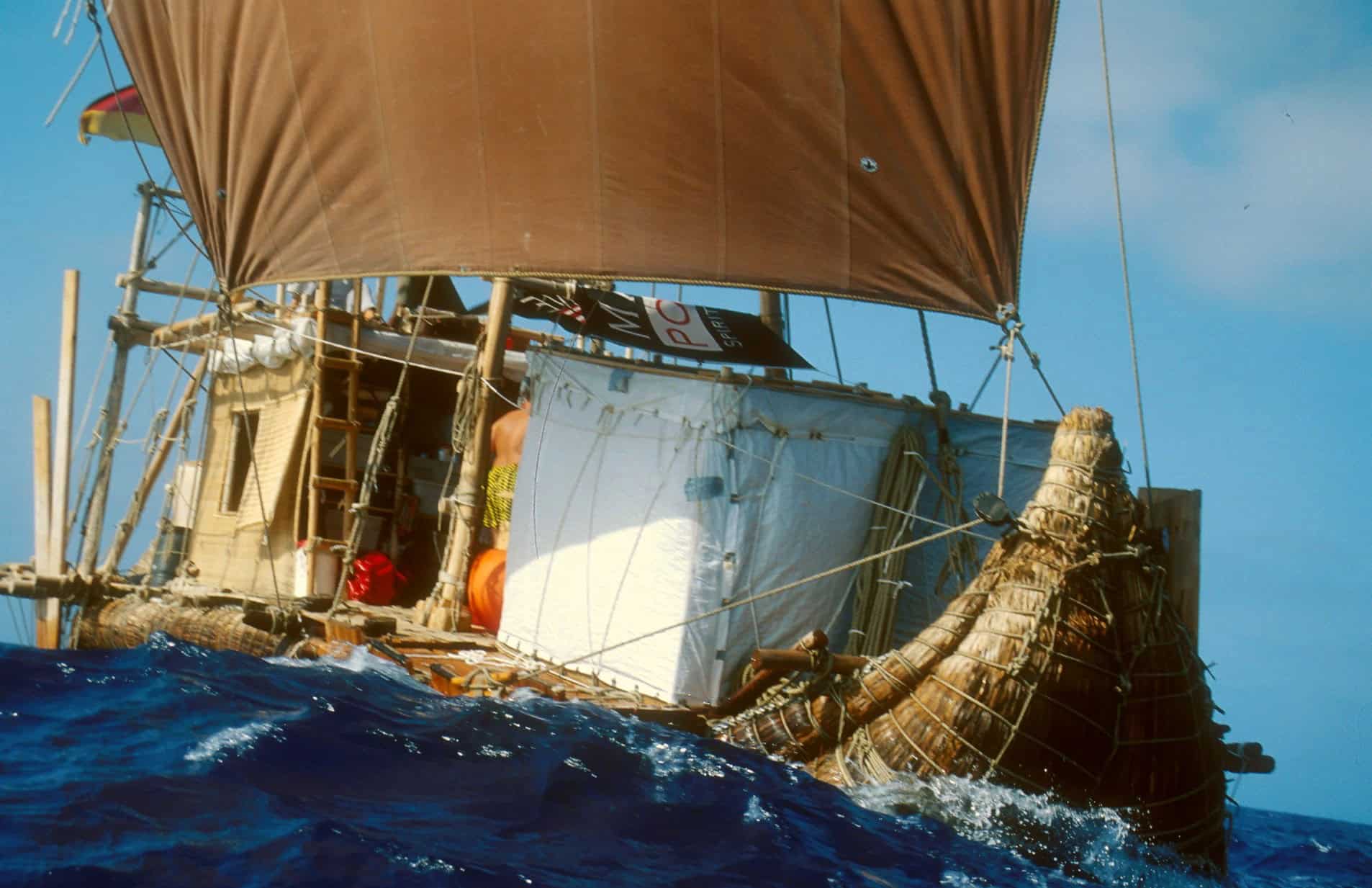
Length 12 m, width 4 m, weight 12 t, sail area approx. 56 m²
Material
Totora reed
Sailing performance
Average sailability approx. 75° to the wind
Travel itinerary
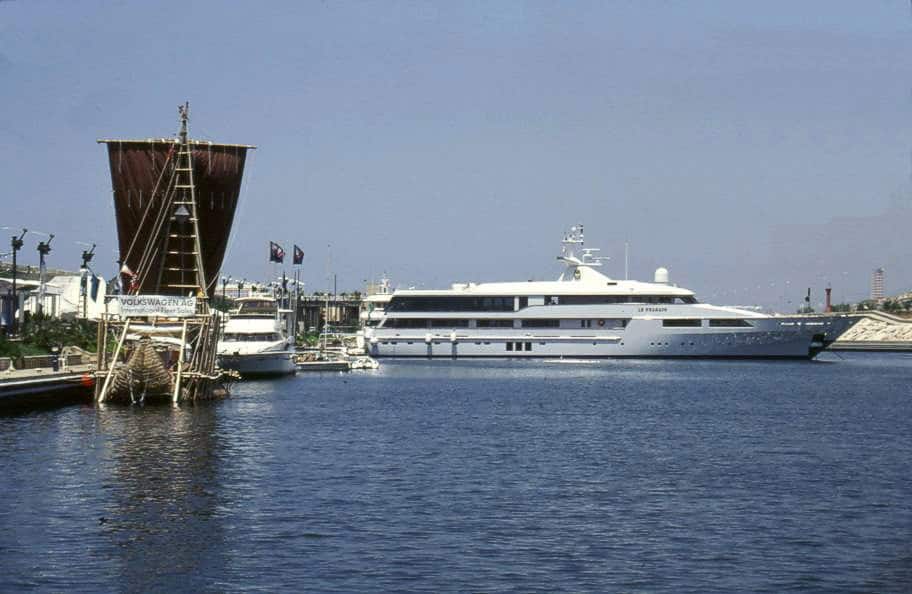
From Alexandria via Beirut and Cyprus back to Alexandria, approx. 2,150 km
Objective & Research Question
The expedition ABORA II represented the next step in the ABORA series. Building on the experience gained with ABORA I, the aim was to specifically correct the design weaknesses of the first reed boat and significantly improve its sailing characteristics.
The focus was no longer on basic seaworthiness, but rather on the question of whether an optimized reed boat:
- sail closer to the wind
- Shift the lateral pressure point in a targeted manner
- and can cross larger areas of sea back and forth from time to time.
ABORA II was intended to demonstrate for the first time that reed boats are suitable for round trips.

Construction & Engineering
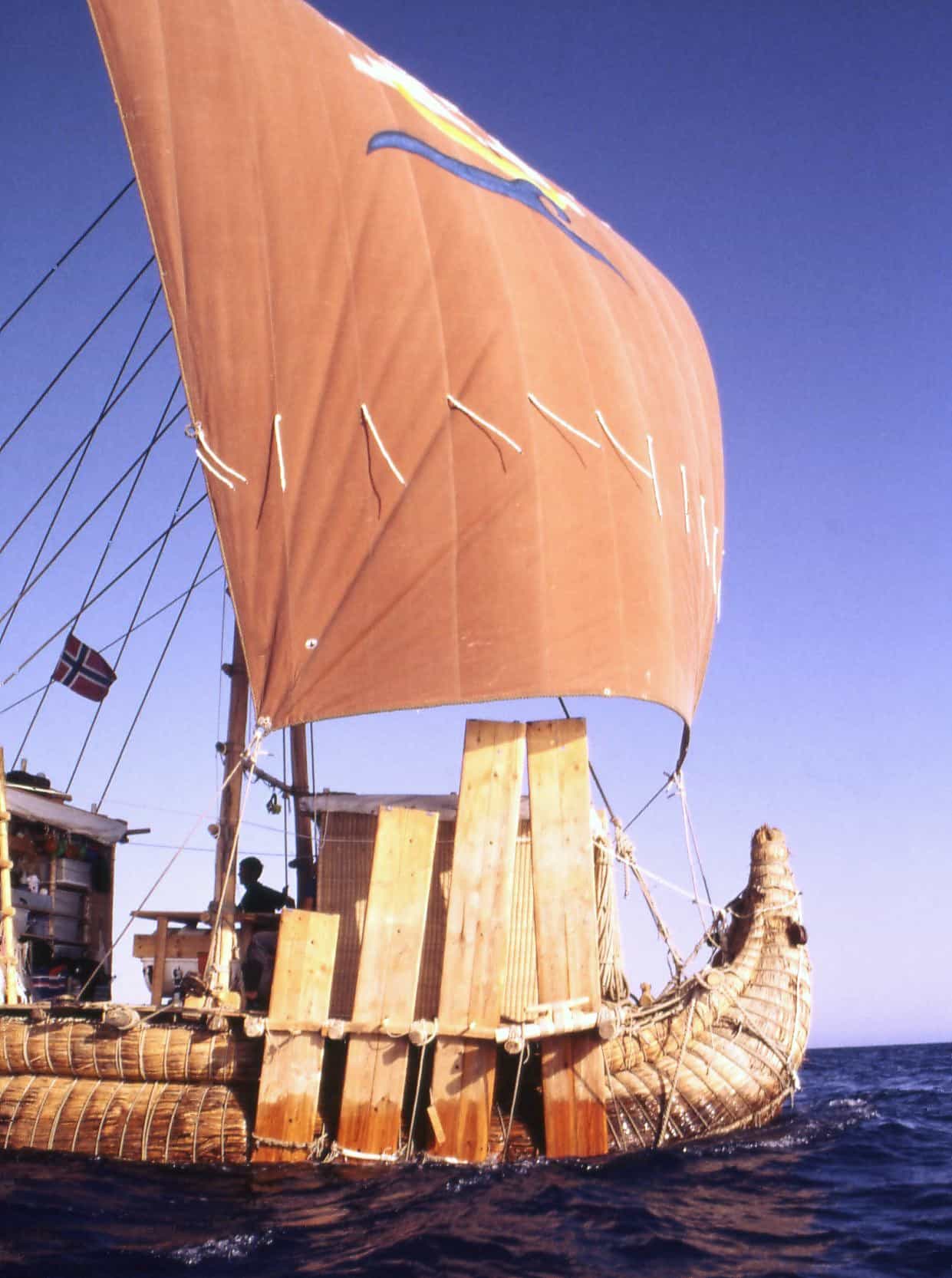
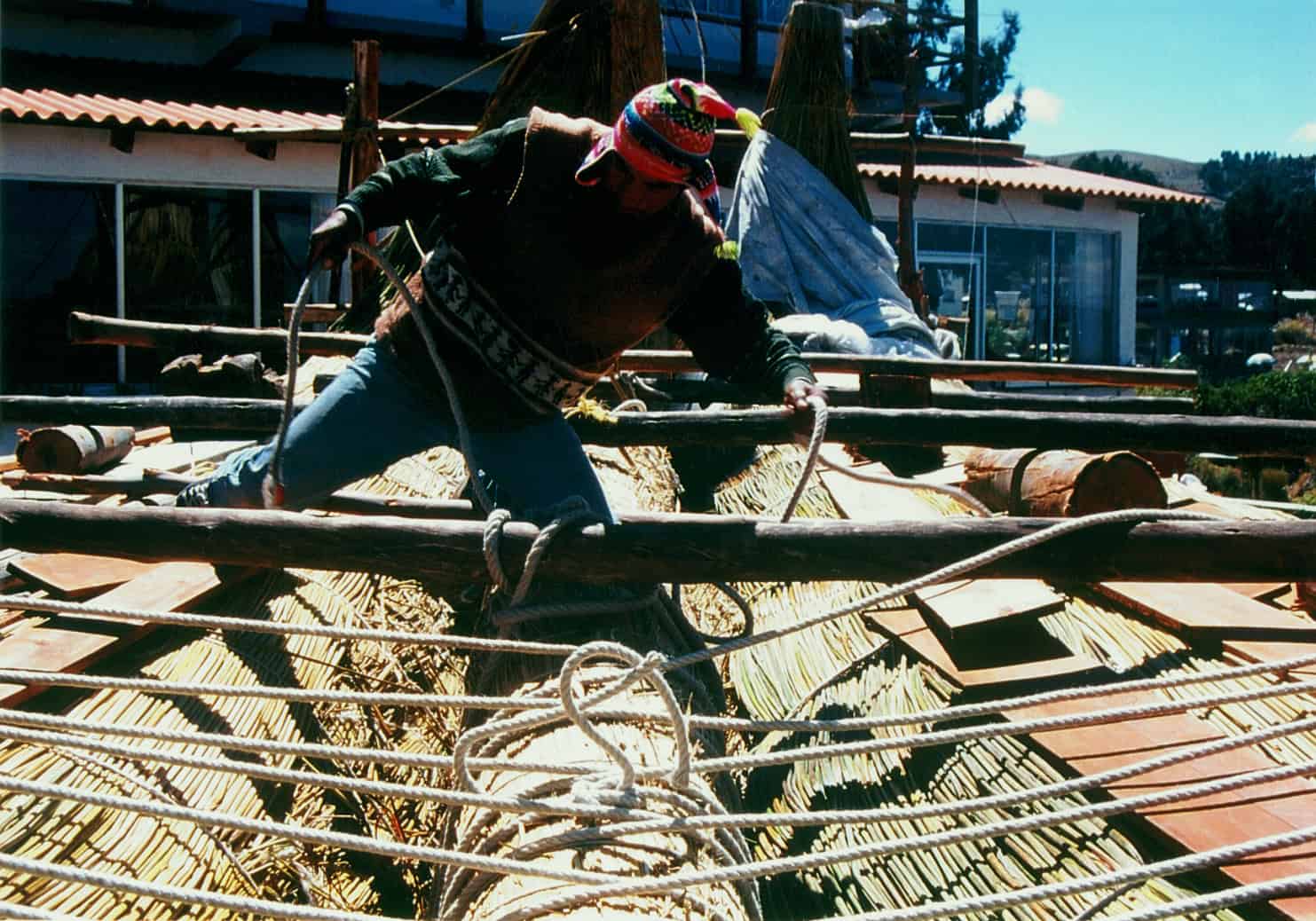
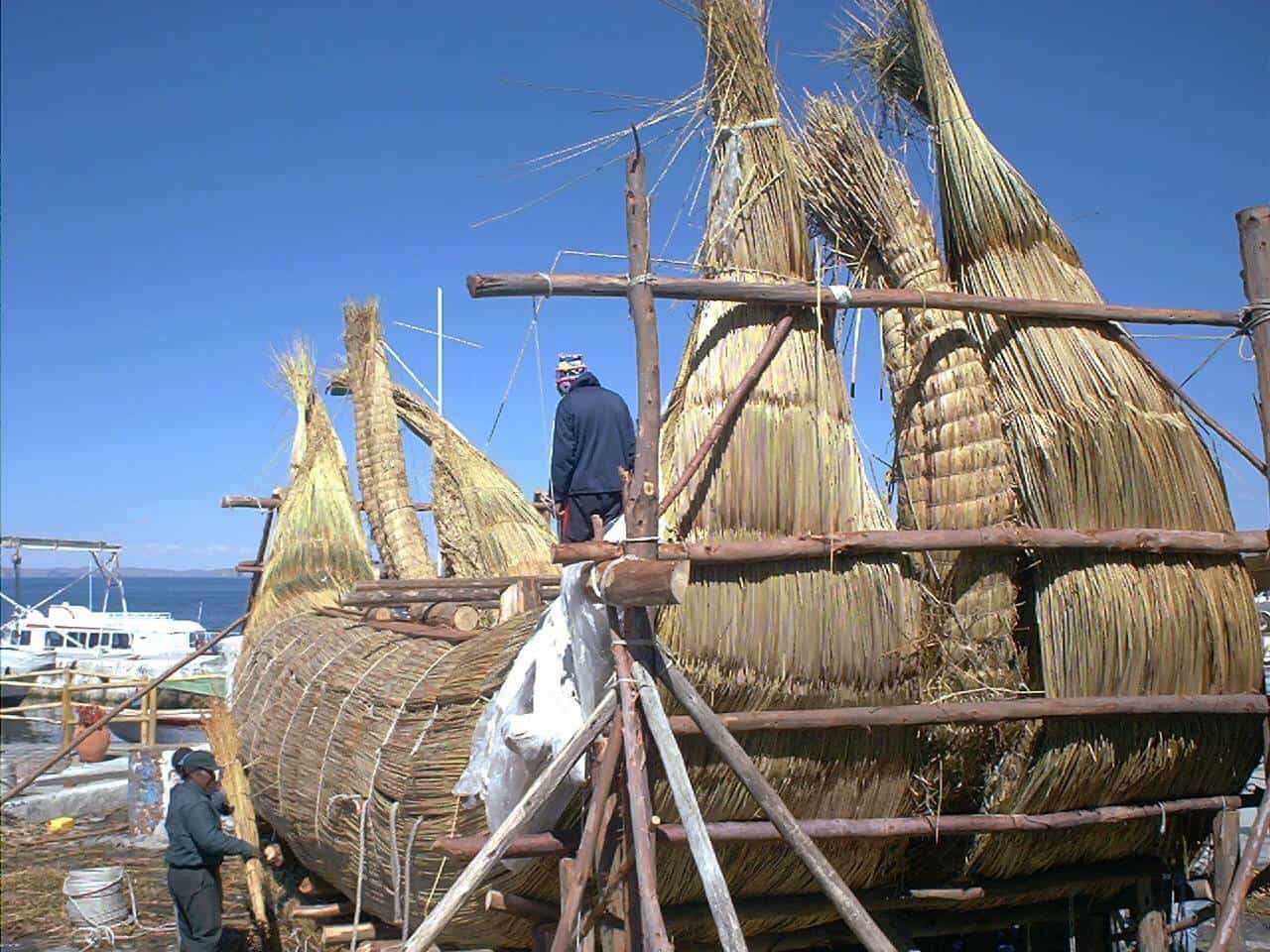
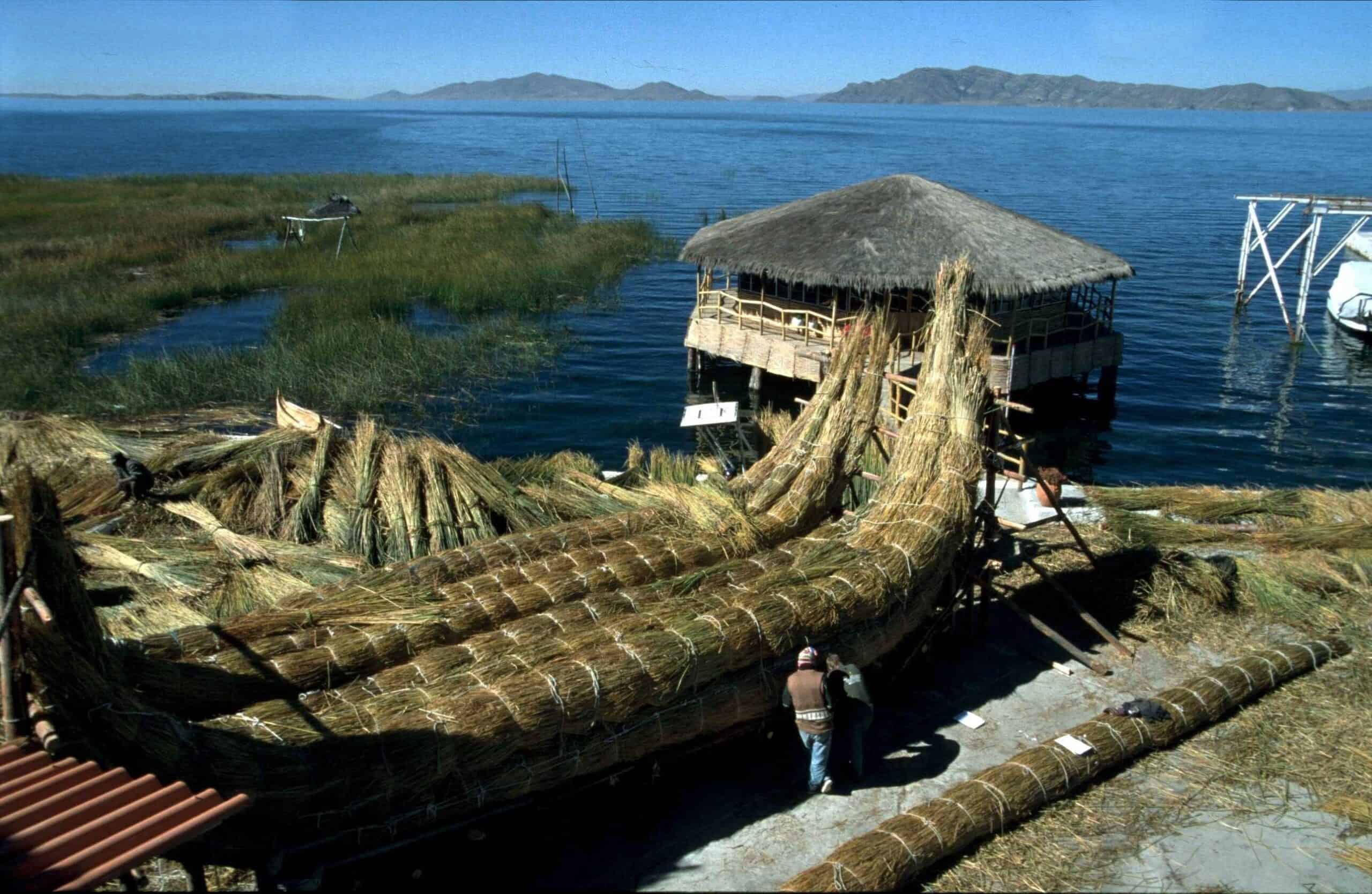
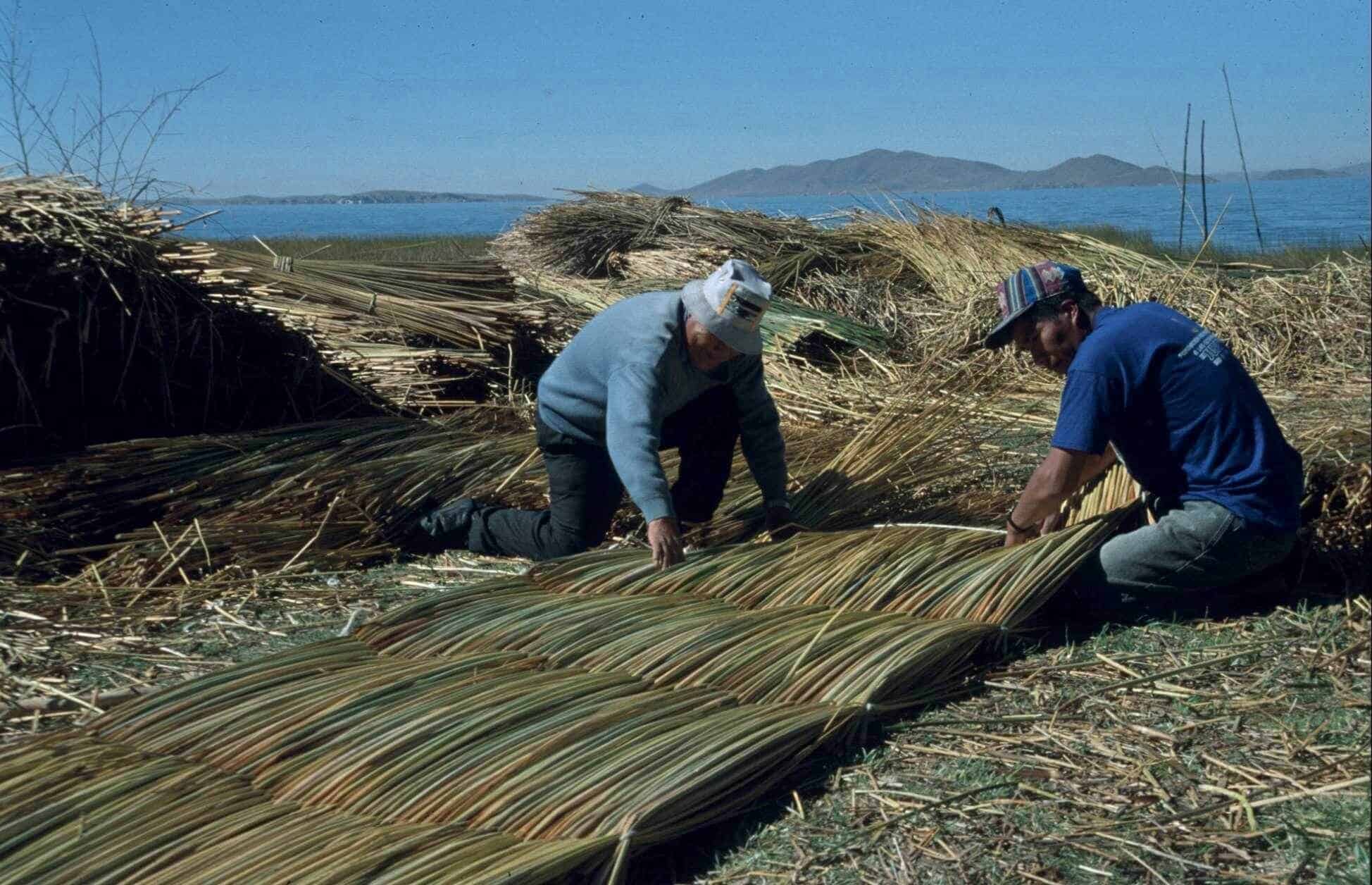
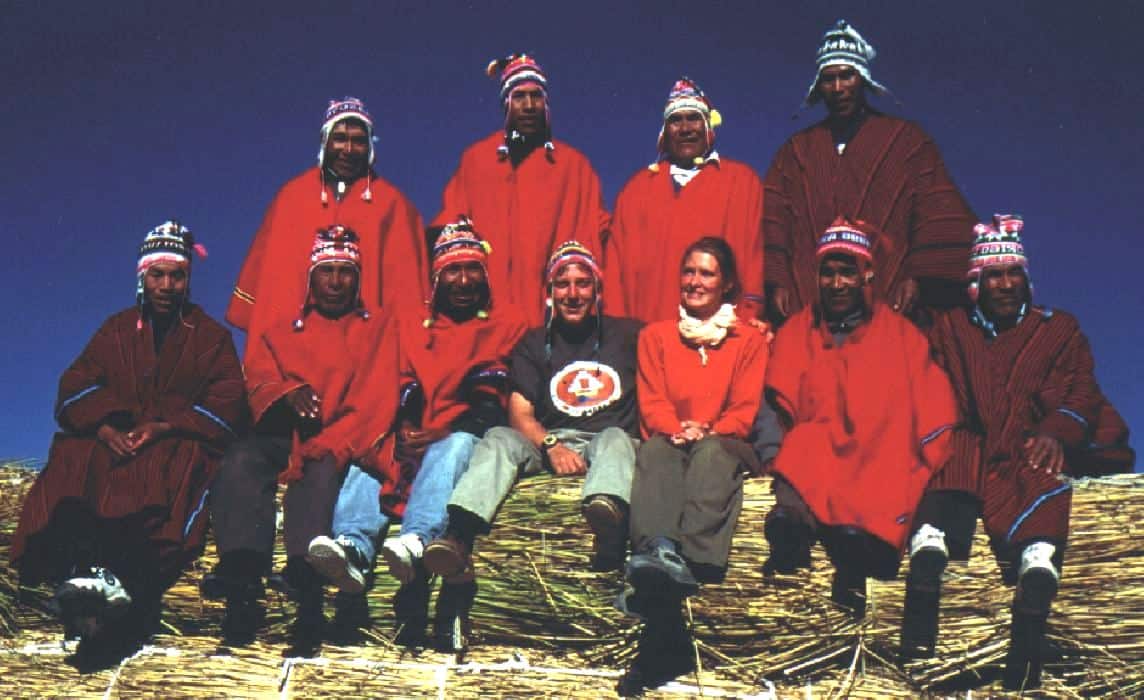
ABORA II was made from the original building material “pond reeds” (Scirpus lacustris L.), also known as Totora in South America, but with significant structural improvements resulting directly from the findings of ABORA I. The hull was first built by the Limachi family on Lake Titicaca in Bolivia. They had also built the famous reed boats RA II & TIGIRS for Thor Heyerdahl.
The most important technical innovation was:
- a changed mast position, shifted further forward
- an optimized arrangement of the side stabilizers at the bow and stern
- a slimmer and more hydrodynamically favorable hull shape overall
The construction continued to be based on ethnological and archaeological models, in particular on reed boat traditions from:
- Lake Titicaca with the Bolivian Aymara Indians (Limachi family)
- the prehistoric Nile Valley (rock paintings from the Negade culture between 3,600 and 3,100 BC)

Experiments with Kiel University in 2002
Route & Implementation
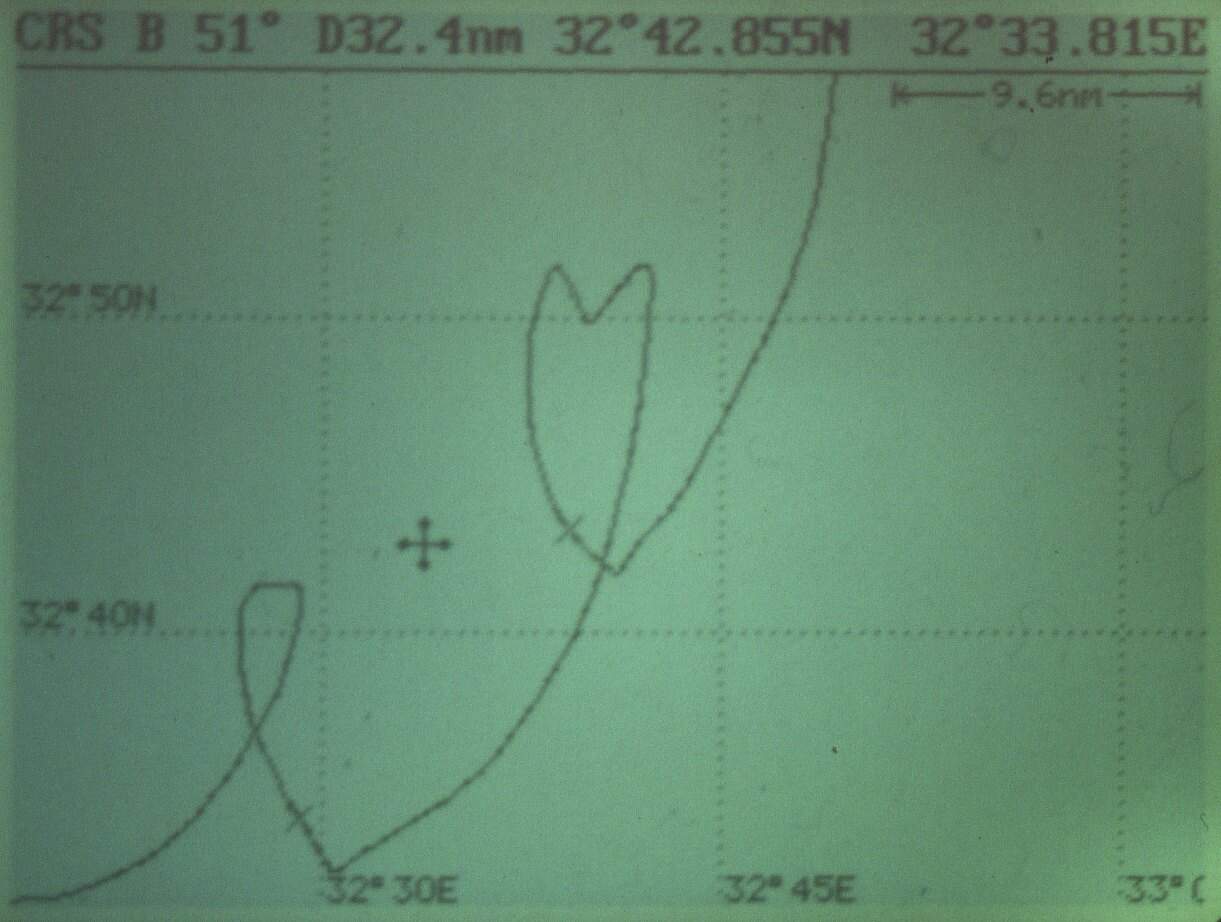
Unlike ABORA I, ABORA II was the first expedition to follow a clearly defined maritime route. The aim of the expedition was to cover greater distances in a targeted and controlled manner. The sea voyage began in Alexandria (Egypt) and headed towards Lebanon. From Beirut, the raft crossed over to Larnaca in Cyprus, sailing crosswind and against the wind. This trip proved that the sailboat could sail not only crosswind but also against the wind over longer distances. The return journey from Limassol to Alexandria was even more challenging. For 16 days, the ABORA II tacked against the Meltemi wind blowing from the Aegean Sea in the northwest. In 65 days, the ABORA II covered a total of 2,100 km, tacking continuously against the wind for the last 650 km. The actual sailing time without breaks was 31 days.
During the journey, the following aspects in particular were examined:
- Improved upwind performance (up to 70° above ground at true wind)
- Course stability over longer distances
- Boat behavior in changing wind and sea conditions
- Resilience of the material over extended periods of time
ABORA II confirmed that the design changes made had resulted in significantly improved sailing performance. The boat was now able to stay on course against the wind and maneuver safely even in more challenging conditions.


Classification within the ABORA series
ABORA II marks the transition from the basic feasibility study (ABORA I) to systematic research into prehistoric seafaring.
The expedition delivered:
- clear technical optimizations
- Reliable comparative data on ABORA I
- high headwind sailing ability with ocean currents
- Against the current, only courses of 95-110° above ground were achieved.
Without the findings from ABORA II, the subsequent long-distance ventures of ABORA III and ABORA IV would not have been possible.
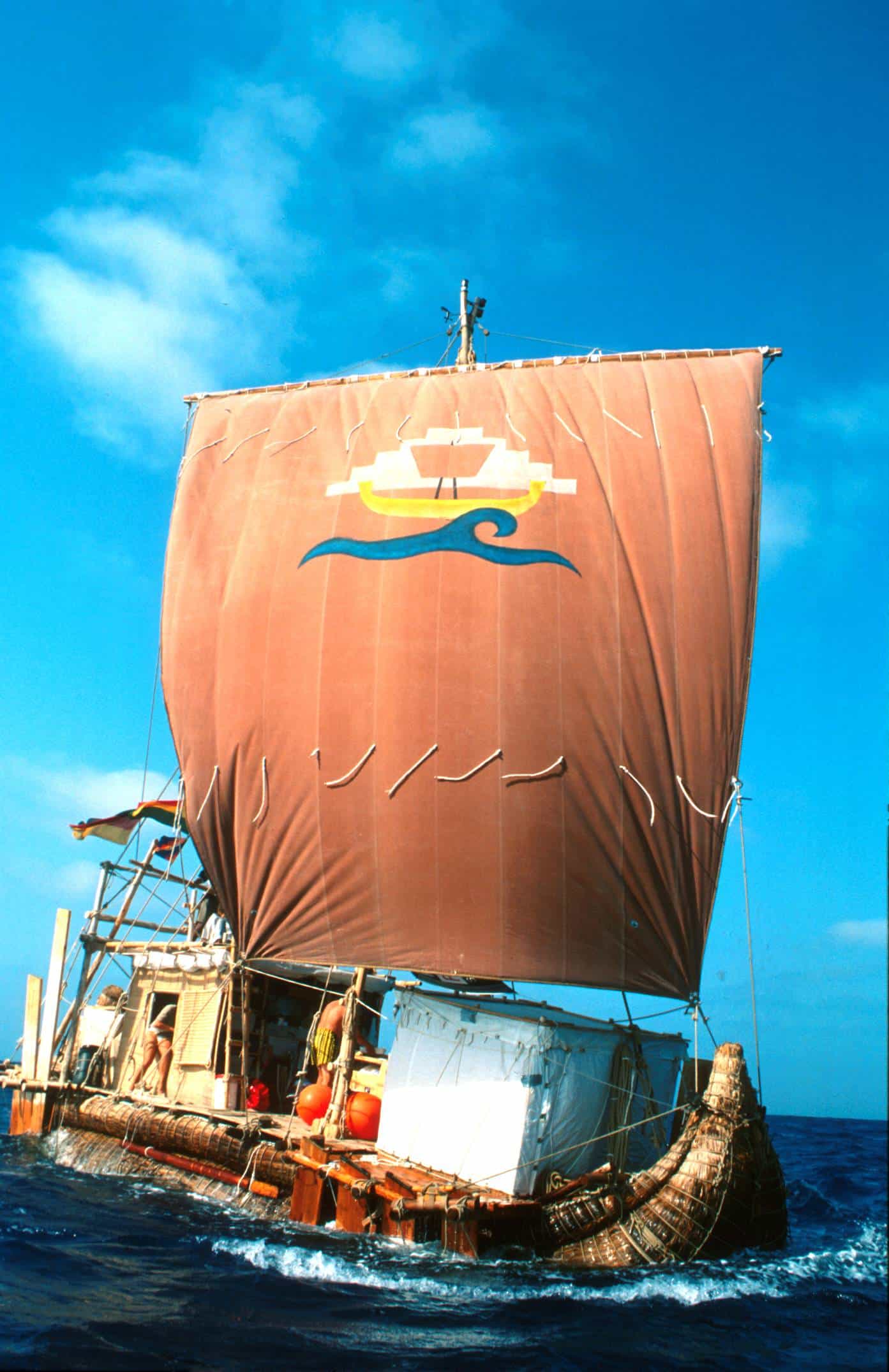
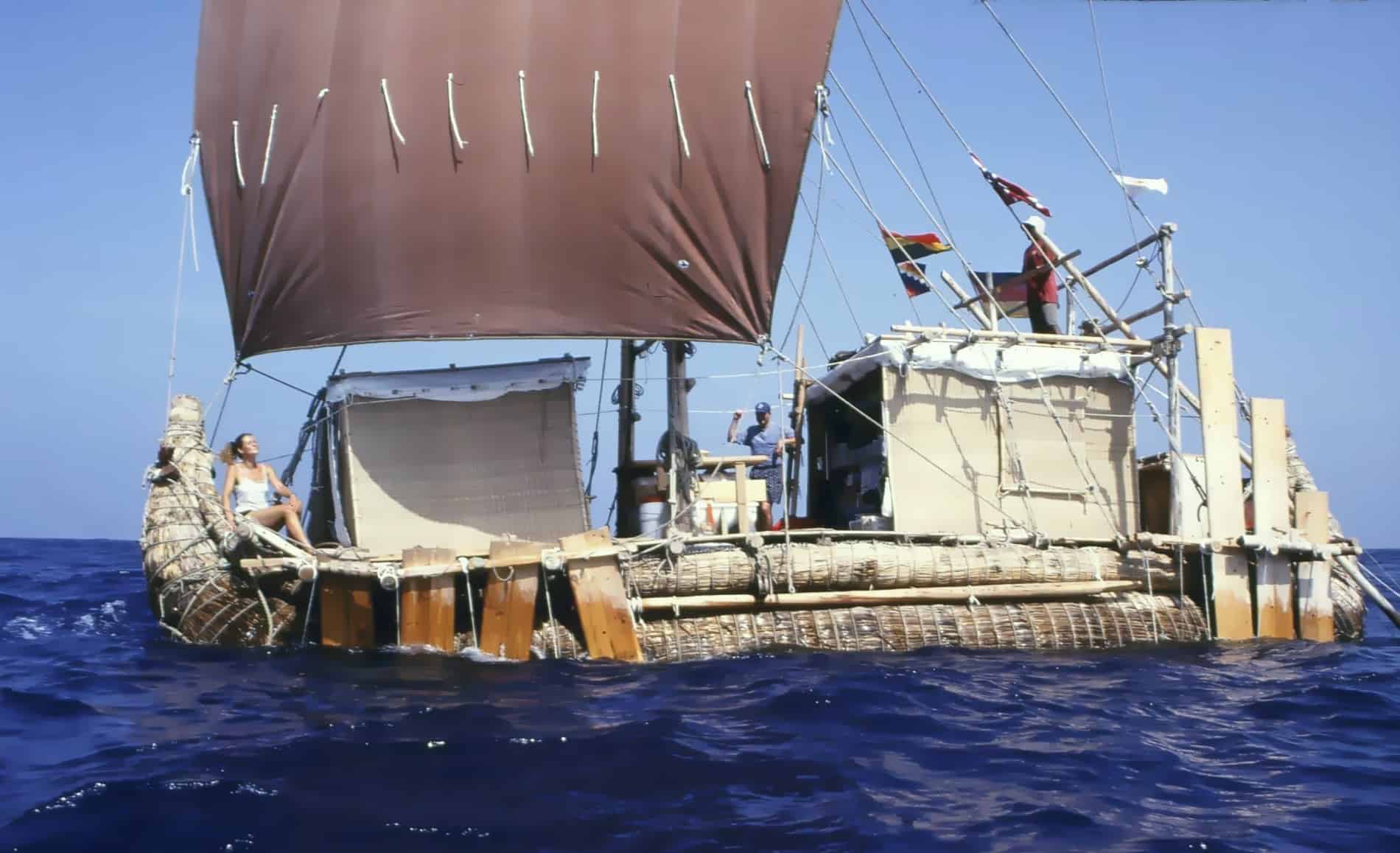
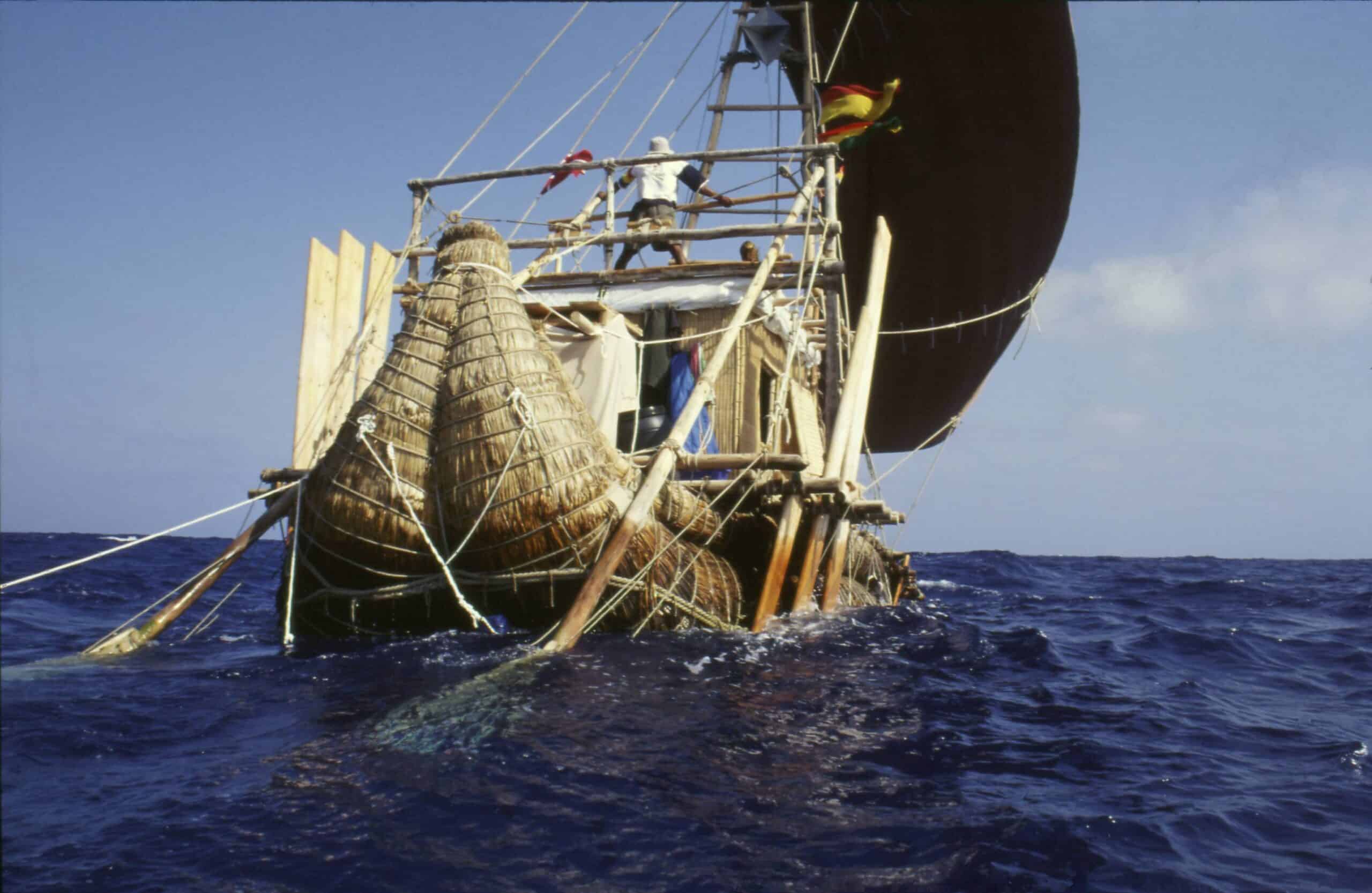
For the first time in modern history, an experimental replica of a reed boat completed a round trip. This sailing ability was questioned by all experts, as reed boats, like rafts, do not have a keel. The use of leeboards at the bow and stern, based on Stone Age designs, confirmed that experimental archaeology at sea not only tests theoretical assumptions, but can also reveal concrete technological development processes.
The expedition showed that even minor design changes led to significant improvements in sailing performance—a decisive indication that prehistoric seafarers may also have systematically developed their maritime knowledge over generations.
ABORA II thus became the technological link between the early preliminary experiments and the later transoceanic ventures of the ABORA series.
Significance for future expeditions