
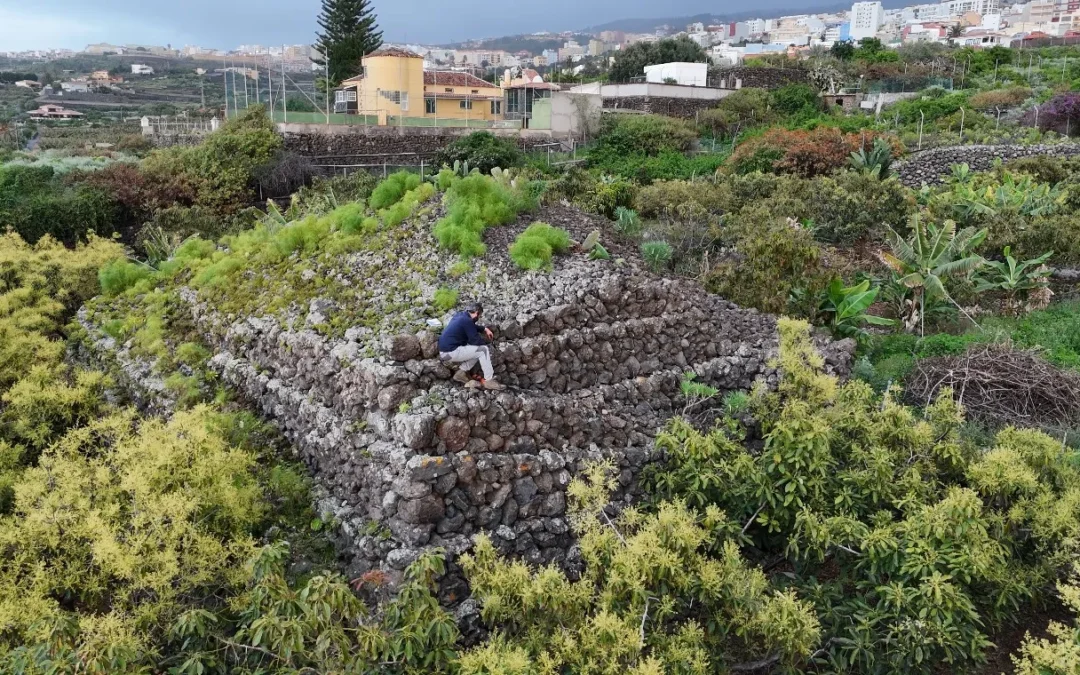
Our recent journey to the pyramids of Tenerife marks an important milestone in our research. The primary focus was the precise determination of natural radiation in order to reliably finalize our OSL dating results. For this purpose, Dr. Jorge Sánchez brought a portable gamma spectrometer—an essential tool to further refine the age calculations of the pyramids.
In addition to the already investigated sites of Santo Domingo and San Marcos, we were able, for the first time, to conduct measurements in the Pyramids of Güímar. The continued support of the park management and the access to the step structures are of invaluable importance to our work.
A particularly significant moment was our meeting with Prof. Carmen del Arco and the park management in Güímar. The presentation of our preliminary results attracted considerable attention—especially due to the unexpectedly high age of the pyramids. At this stage, we are deliberately refraining from publishing specific dates, as the final results can only be validated after a full calibration of the OSL signals with both the natural environmental radioactivity and the newly acquired gamma radiation data. However, this final step is now imminent.
Together with our archaeological partners, we are planning a public presentation of the final results in early July 2026 in the Canary Islands—a moment that could fundamentally change our understanding of these structures. We will keep you informed as soon as the time comes.
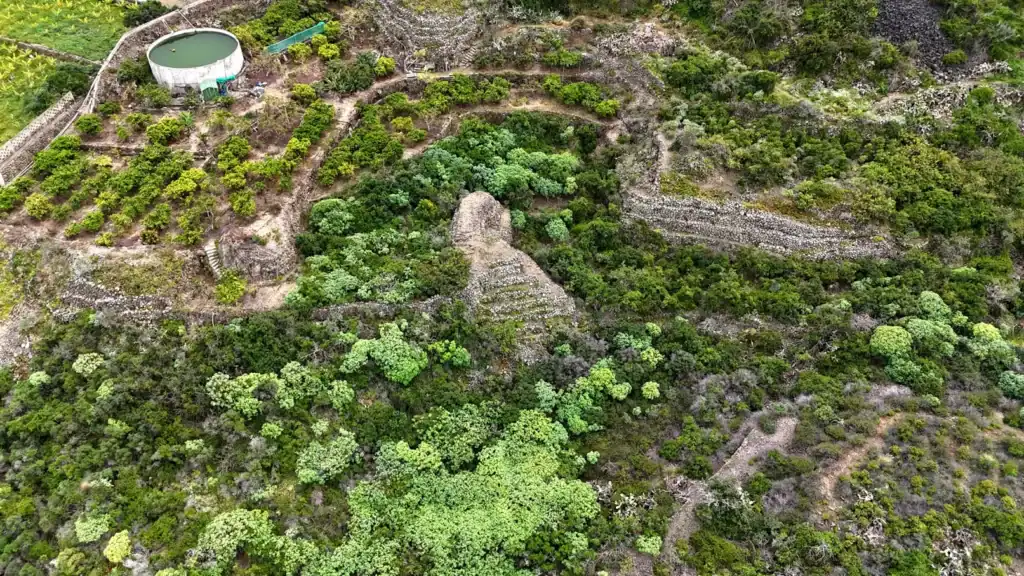
Die Stufenpyramiden auf den Kanaren beherbergen noch viele Rätsel. Neben ihrem Alter tappen die Forscher auch im Dunkeln, welche Funktion sie besaßen. Dieses Luftbild von den Stufenbauten in Santo Domingo offenbart, dass dieser Komplex möglicherweise ein riesiger Makrokalender war, um den Lauf der Gestirne in dem riesigen kesselartigen „Amphitheater“ zu bestimmen?
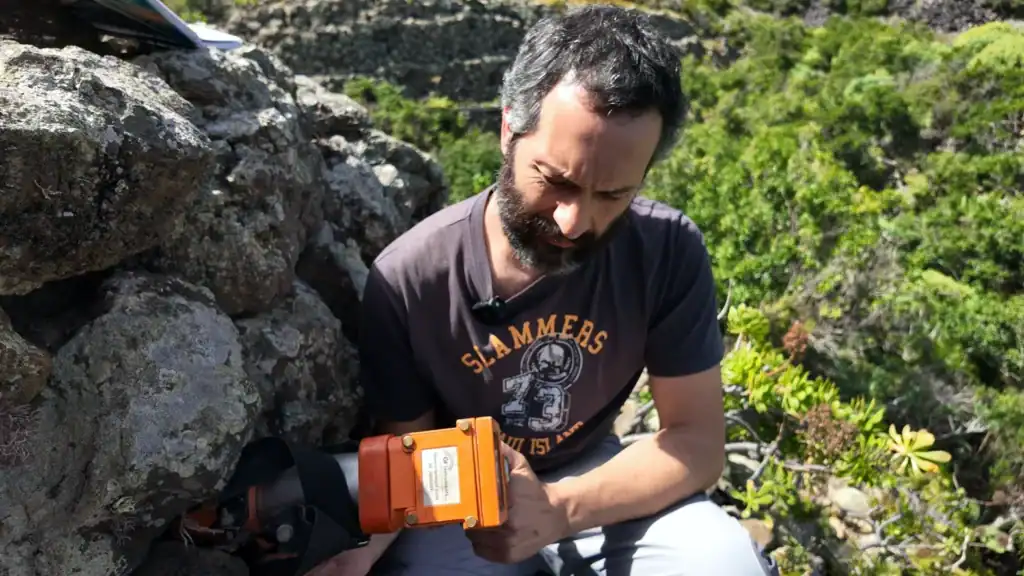
Dr. Jorge Sánchez brought a gamma spectrometer with him from his university in A Coruña. This allowed us to measure the stones for specific isotopes of three elements, which are ultimately crucial for the final calculation of the age of the OSL samples.
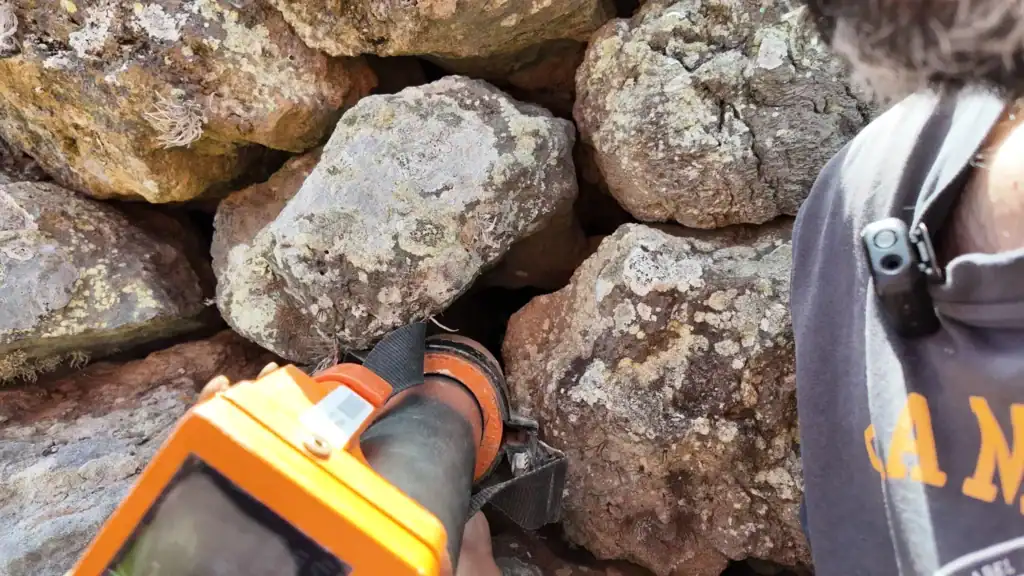
Handling the device on the steep pyramid slopes wasn't easy at all. First, we had to climb to the various OSL sampling points, and then each measurement took three minutes. However, four configurations were measured each time, which meant twelve minutes for a single measurement. So, a lot of work at a height of more than 10 meters!
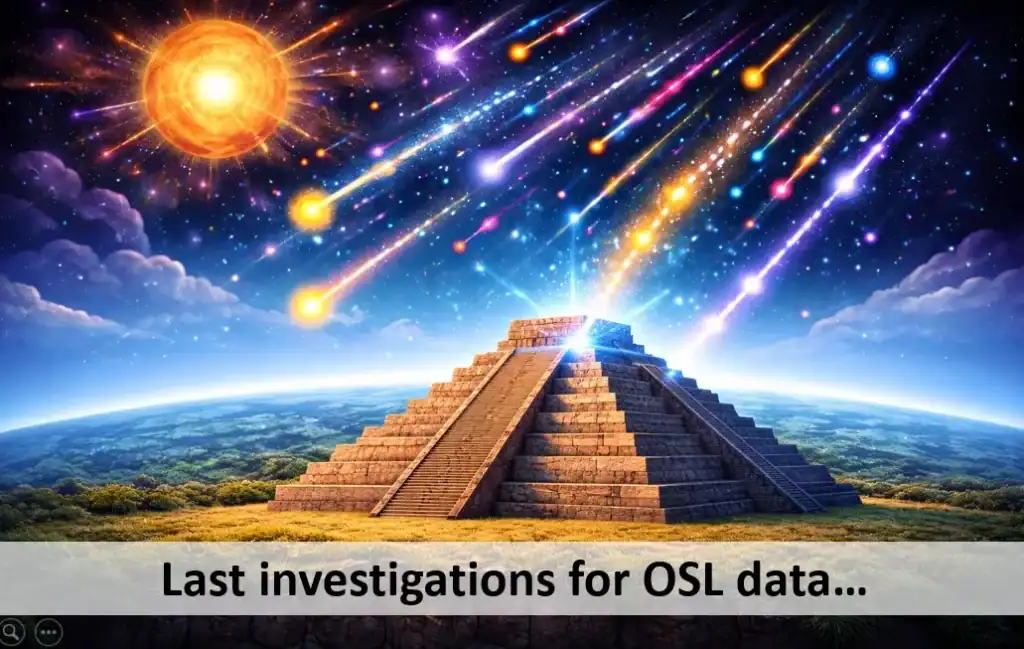
In OSL dating, we analyze the charge that develops in minerals after they have been exposed to ionizing radiation for thousands of years. Rocks naturally contain small amounts of uranium, thorium, and other radioisotopes. These radioisotopes emit alpha, beta, and gamma radiation. Gamma radiation, however, must be measured directly at the sample site because it can penetrate rock or sediment to a depth of up to 30 cm. That's why working on-site at the pyramids was so important!
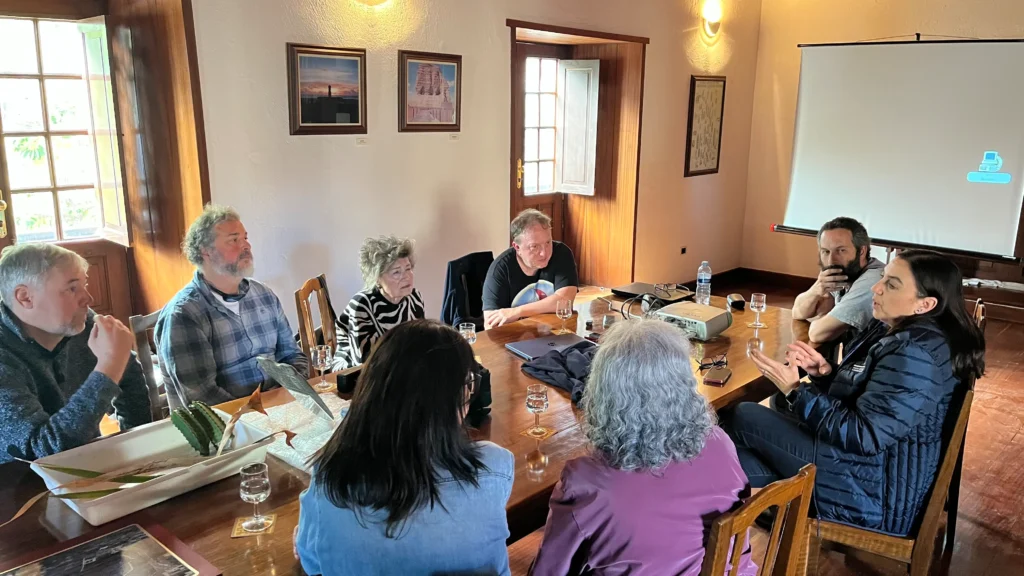
For the first time, Dr. Sánchez and I presented the preliminary measurement results to a panel on the Canary Islands. In addition to the project director, Alicia B. Martin, and the two Canarian archaeologists, Professor Carmen del Arco and Beatriz G. Girona (all three at the bottom right), Thor Heyerdahl's widow (Jaqueline, next to me), our project manager, Gustavo Sánchez, and a Russian archaeologist also participated (top, from left to right). Together, we discussed the significance of this new data for research in the Canary Islands.
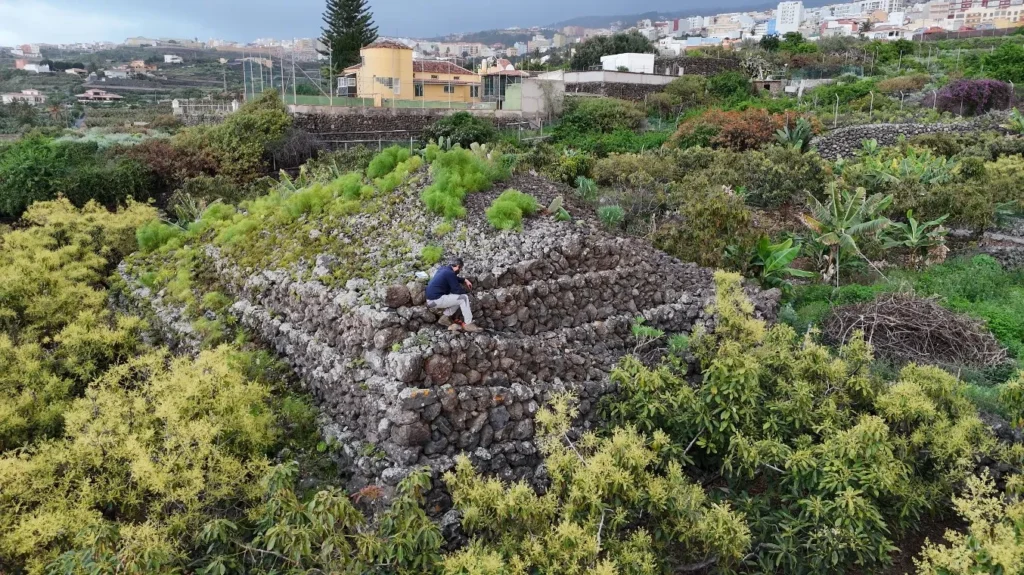
Jorge's spectrometer was used again on the Santis Pyramid. The measurement taken at the site of the oldest part of this step pyramid is visible. From Jorge's measurement, a ramp leads downwards and to the right. This ramp was later added in front of the older truncated pyramid. This is clearly visible in the OSL results! The area on which the pyramid stands was artificially filled with fertile soil 60 years ago. This event, too, can be seen and confirmed in the OSL data!