Cuba
Rock paintings, myths, and possible transatlantic traces
Die aktuellen Kuba-Forschungen des ABORA-Teams gehen auf die enge Zusammenarbeit von Dr. Dominique Görlitz mit Prof. Armando Rangel (University of Havana) and Esteban Grau (University of Matanzas). For more than two years, the researchers have been working together to investigate whether cultural and maritime contacts between the Old and New Worlds may have existed even before Columbus. While Prof. Rangel pointed to possible external influences in Havana based on museum findings – including mummies, slingshots, and other artifacts – Prof. Grau Görlitz introduced one of Cuba's most important archaeological sites: the Cueva Ambrosio on the Varadero Peninsula.
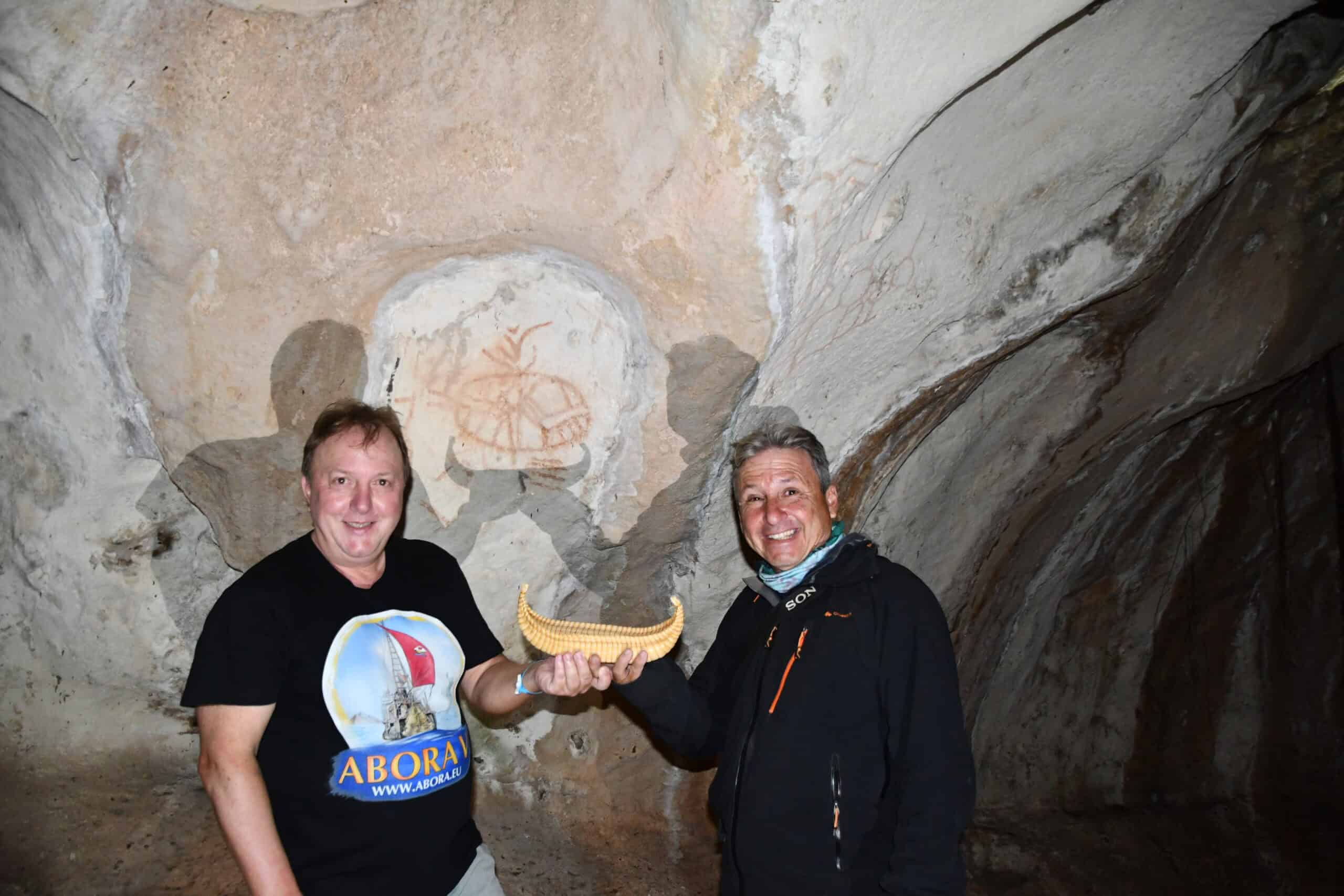
This cave proves to be an extraordinary archive of prehistoric symbolism. Its most outstanding finding is the depiction of a reed boat in red paint, which strikingly displays almost all the characteristic features of a predynastic reed boat from the Upper Egyptian Negada III culture (around 3,100 BC). A triangular cross sail, bow and stern cabins, distinctive stem shapes – and, remarkably, even several side swords on the fore ship – can be seen. Such detail cannot be explained by the known indigenous imagery of the Caribbean or by purely functional representations.
But Cueva Ambrosio has much more to offer. Astro-archaeological motifs show constellations of the Pleiades and Hyades in connection with the passing moon. Dr. Michael Rappenglück attributes these depictions to the astro-mythology of the eastern Mediterranean region. In addition, there are numerous concentric spirals, symbolic shapes, and cartographic-looking drawings that appear almost identically in the Canary Islands, southern Spain, Sardinia (Nuragic culture), and parts of the Mediterranean region. These formal similarities clearly exceed the scope of coincidental parallel developments.
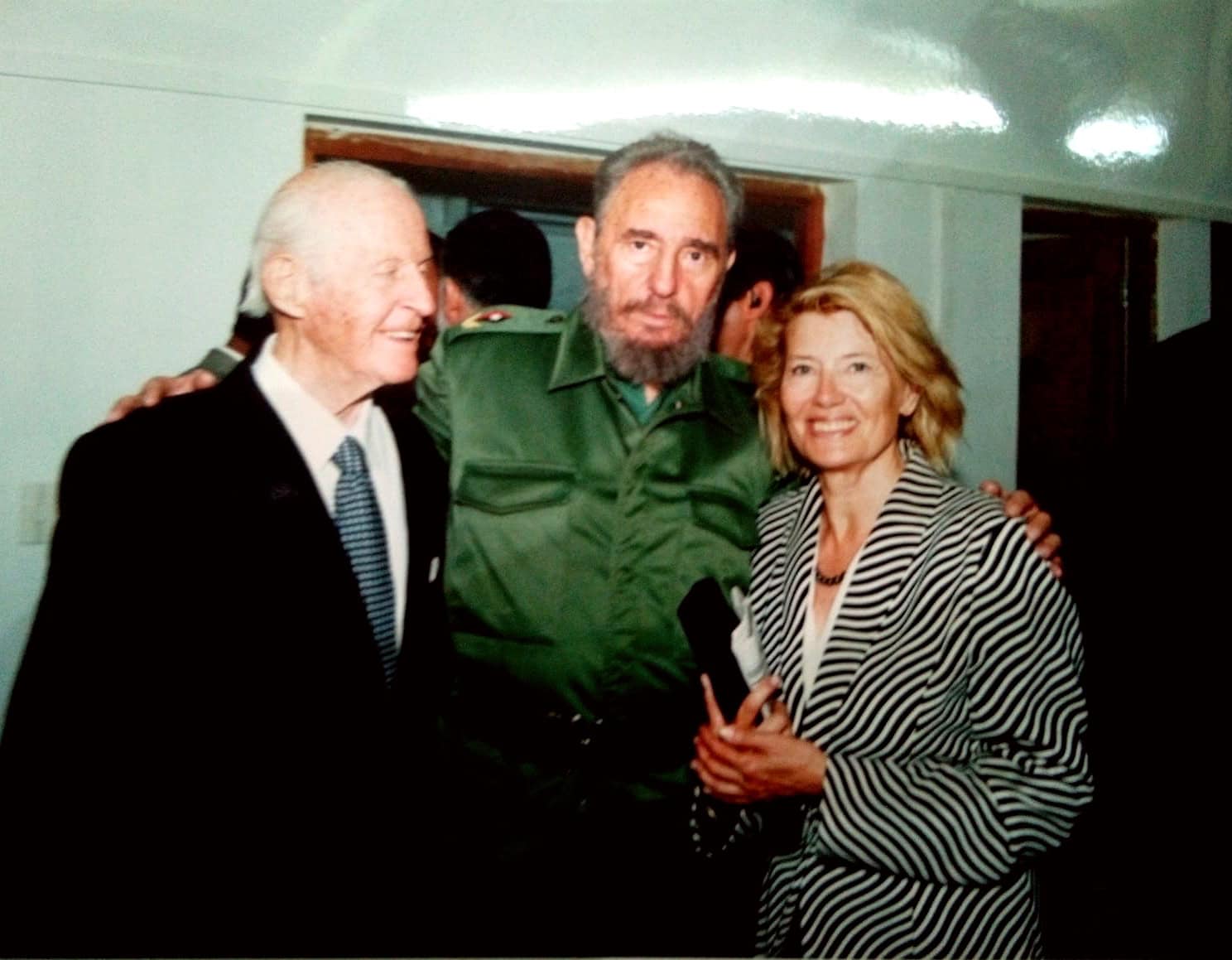
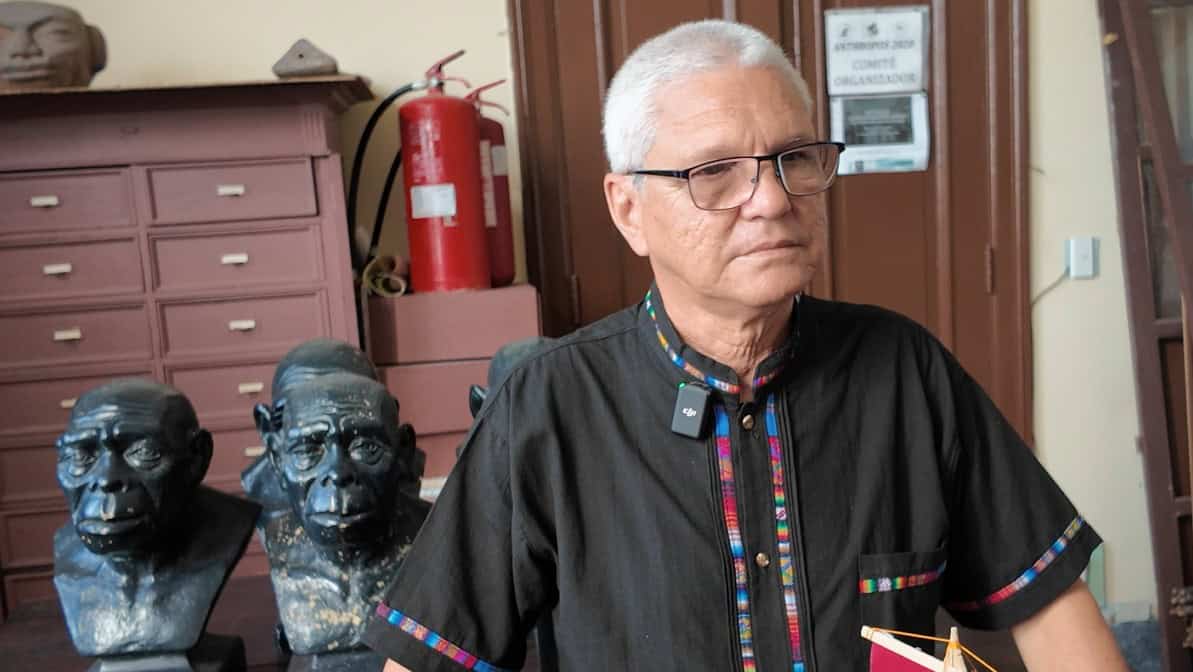
Thor Heyerdahl and his wife Jacqueline with Fidel Castro (above). Heyerdahl became aware of the astonishing similarities between the Old and New Worlds in Cuba at a very early stage. President Castro took him on several occasions to ancient villages in southeastern Cuba, where the descendants of Canarian indigenous people were said to still live. The picture below shows Prof. Armando Rangel.
Vor diesem Hintergrund entschied sich das ABORA-Wissenschaftsteam, im März 2026 eine gezielte Datierungsmission nach Kuba durchzuführen. Neben der Cueva Ambrosio soll auch die südlichste Insel Kubas, die Isla de la Juventud, untersucht werden. Besonders im Osten der Insel (Punta del Este) existieren bislang kaum erforschte Höhlen mit umfangreichen Felsbildern. Erste Aufnahmen, die Esteban Grau dem Team übermittelte, zeigen Motive, die sowohl an maya-zeitliche Darstellungen als auch an altmesopotamische Symbolik erinnern. Eine spezielle Darstellung rief bei Dr. Rappenglück besonderes Interesse hervor, da sie nahezu identisch auf altsumerischen Rollsiegeln erscheint.Against this backdrop, the ABORA scientific team decided to conduct a targeted dating mission to Cuba in March 2026. In addition to Cueva Ambrosio, Cuba's southernmost island, Isla de la Juventud, will also be explored. Particularly in the east of the island (Punta del Este), there are caves with extensive rock paintings that have hardly been explored to date. Initial photographs sent to the team by Esteban Grau show motifs reminiscent of both Mayan-era depictions and ancient Mesopotamian symbolism. One particular depiction aroused Dr. Rappenglück's interest, as it appears almost identical on ancient Sumerian cylinder seals.
Back in February 2025, Dominique Görlitz presented the objectives and background of this joint Cuba research project at an international scientific conference in Havana chaired by Armando Rangel. This ensured that the project was embedded in an open academic discourse at an early stage.
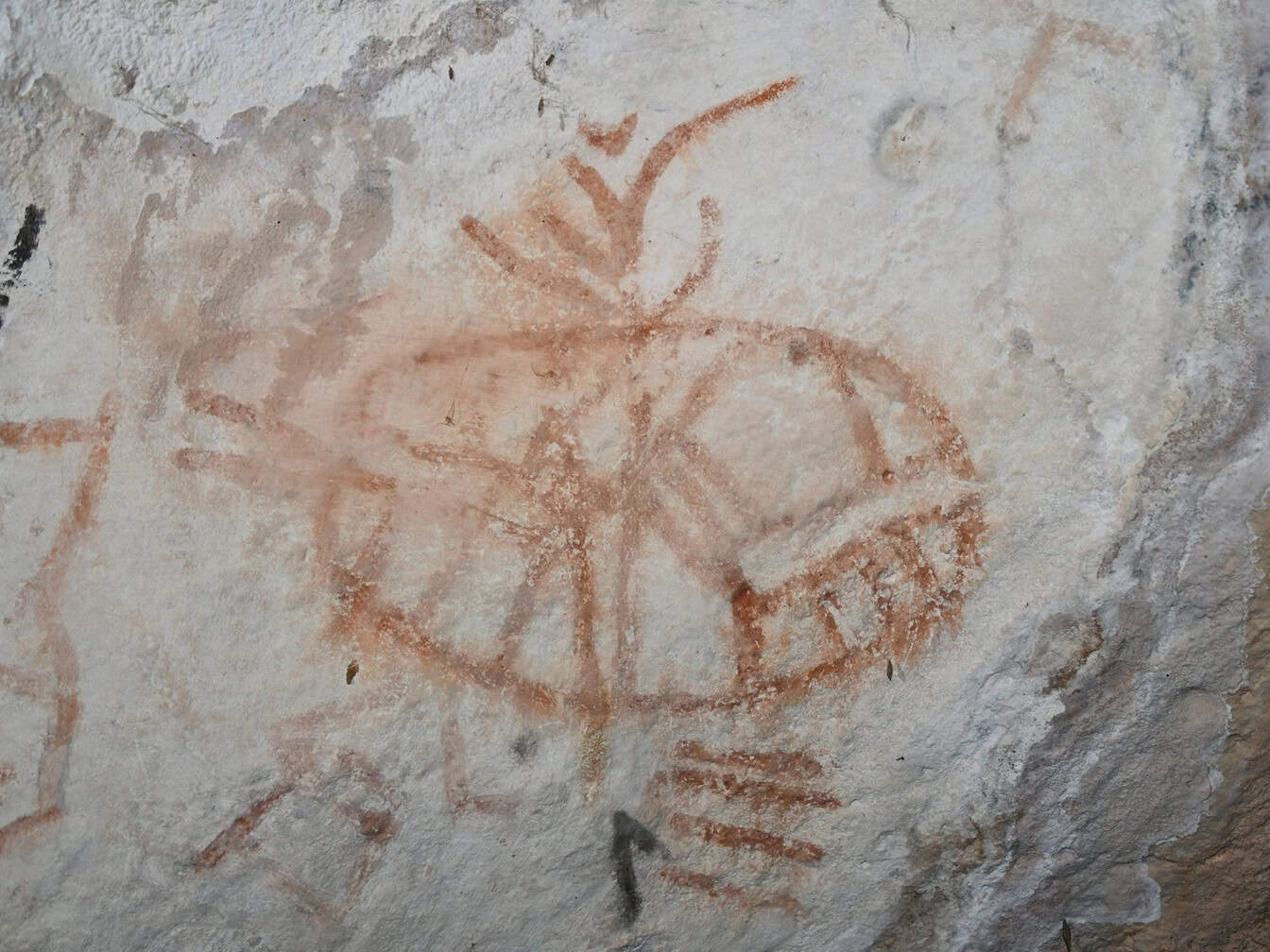
The ship painting from Cueva Ambrosio. It shows almost all the nautical and technical features of the pre-dynastic reed boats of the Negade cultures. Moreover, we find almost identical ship paintings in southern Spain and on Tenerife.
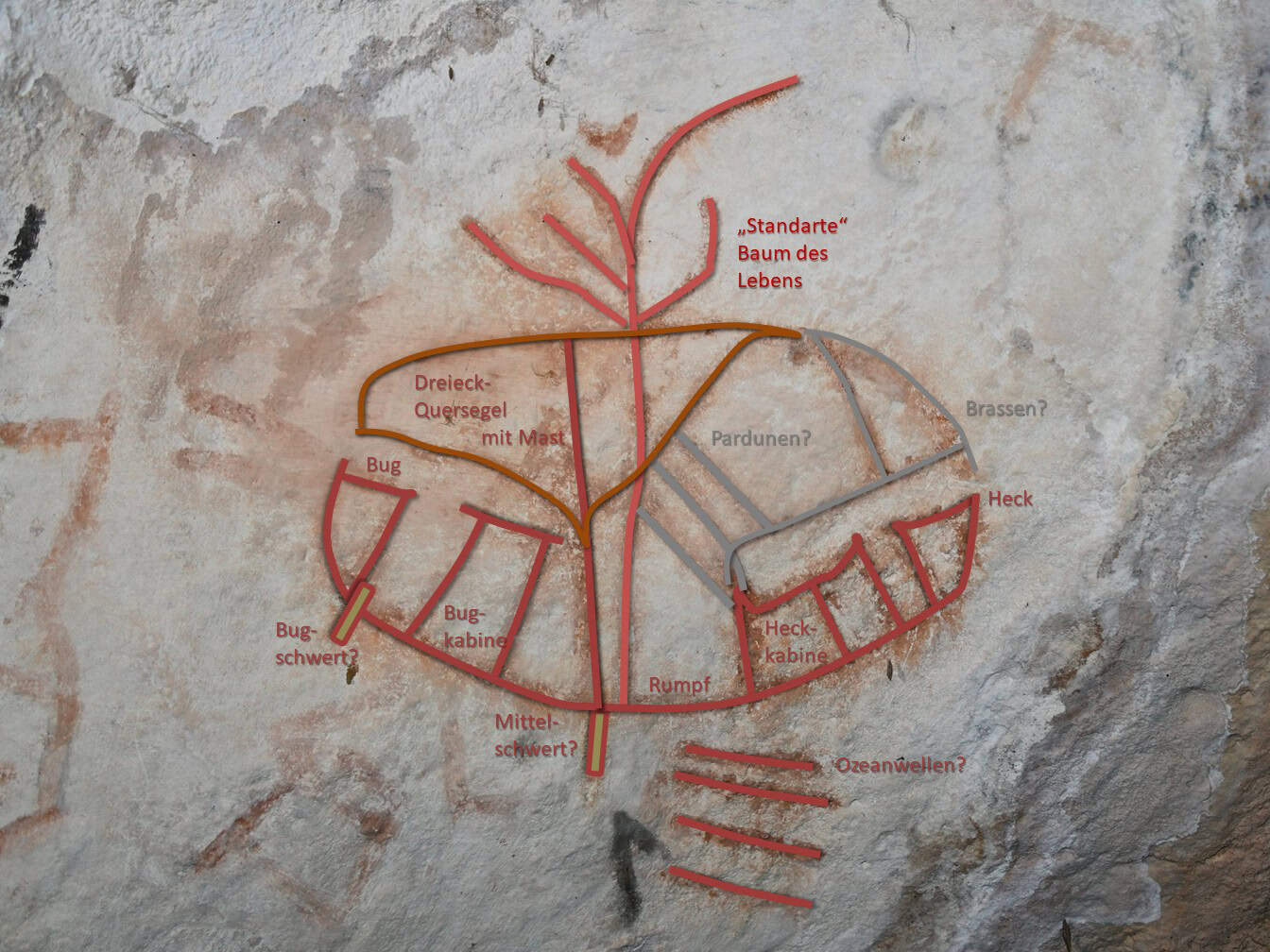
Dominique Görlitz interprets these illustrations on the right-hand side based on his decades of experience. The labels indicate the parts of the rigging. Particularly striking is the triangular square sail, which is also somewhat reminiscent of a more modern lugger sail. But the other details also bear a striking resemblance to their supposed models in the Old World.
Conclusion and outlook
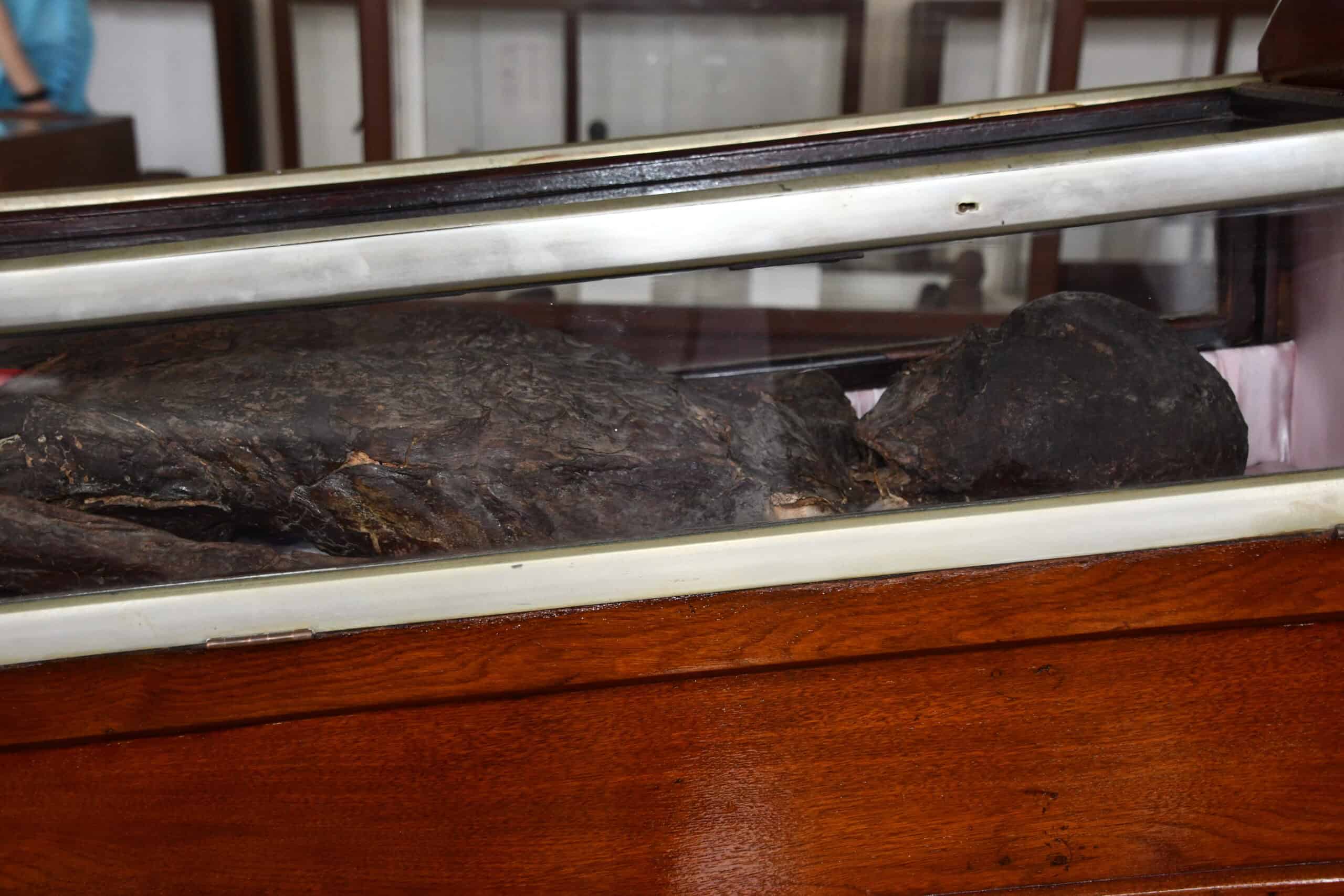
Research on Cuba deliberately draws on older traditions of knowledge that have now largely been suppressed. As early as the 19th century, Alexander von Humboldt and Baron von Braunschweig had pointed out striking cultural parallels between the Caribbean, the Canary Islands, and even the eastern Mediterranean region. Their observations were later marginalized in favor of a strictly isolationist worldview. The current findings from Cuba give reason to reevaluate these early insights.
If the planned scientific dating confirms the presumed ages, a cultural horizon would emerge that extends far beyond local developments. In this case, the results will be disseminated worldwide as part of the scientific and cultural cargo on board the ABORA V. The aim is not to prematurely replace old certainties, but to facilitate an open debate on whether early seafarers – long before ancient times – may already have understood the Atlantic as a connecting space.
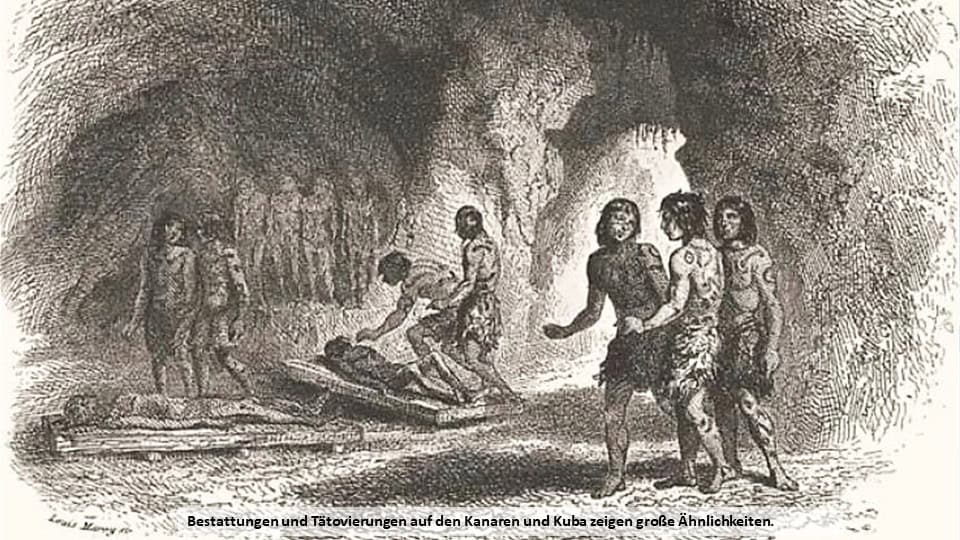
This image, which originates from the Canary Islands, was used by Baron von Braunschweig to highlight the astonishing parallels between the Canary Islands and Cuba. In particular, tattoos, mummification practices, and trepanation techniques connect the two archipelagos on either side of the Atlantic.
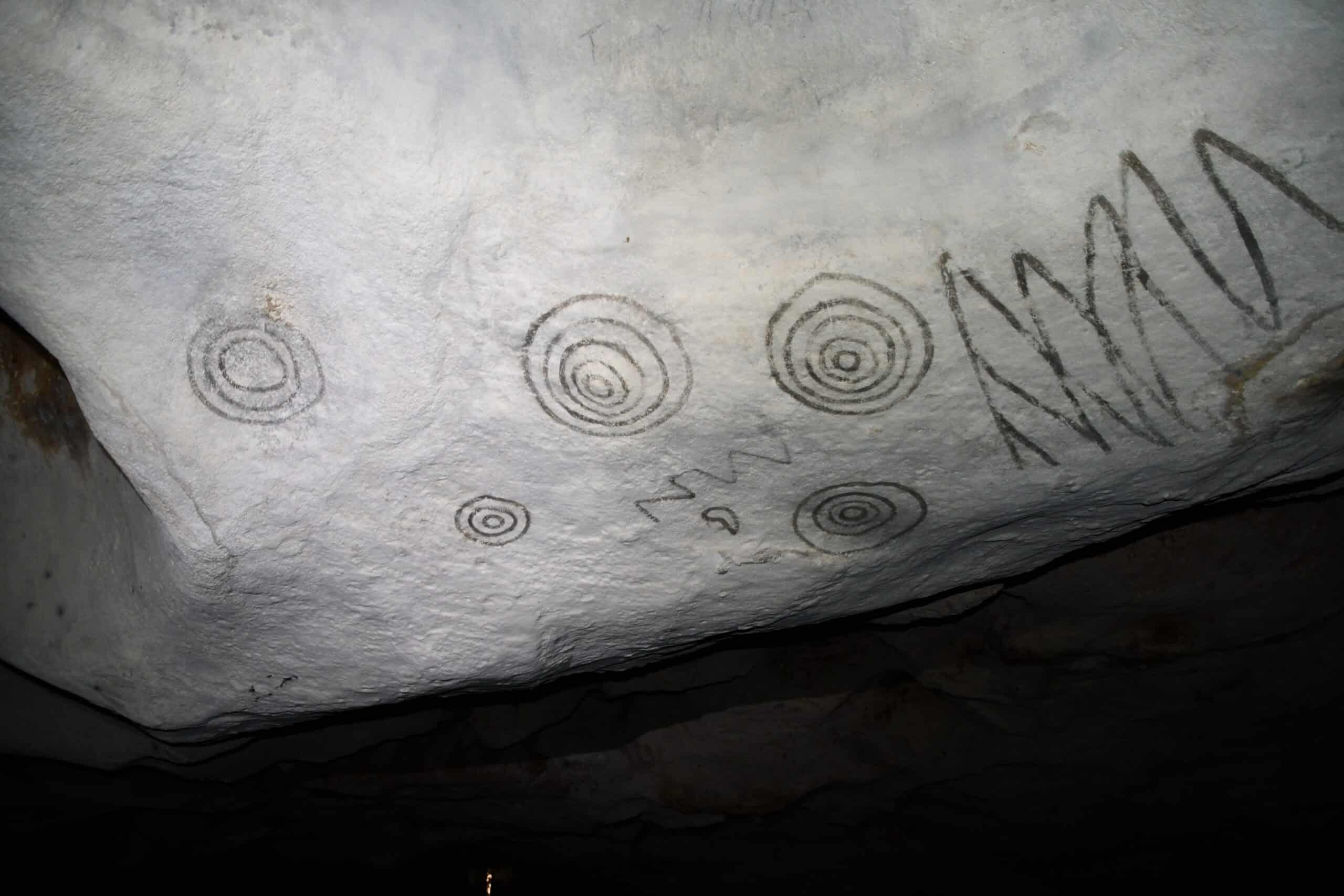
This astronomical depiction is equally significant. It shows us the Pleiades with a classic lunar eclipse. But on the right-hand side of the image, Rappenglück recognizes the typical representation of the Hyades. They were already depicted as a fishing net in the eastern Mediterranean region: the net that catches the moon in the sky and sends it back to the Pleiades. How did such iconography find its way into the New World?
back