
A new publication by Alberto Donini (University of Bologna) is currently generating considerable attention in the debate surrounding the age of the Great Pyramid of Giza. Donini presents an innovative method – Relative Erosion Method (REM)It is based on comparing two erosion patterns of the same rock type under identical environmental conditions: one of known age, one of unknown age. An age estimate is then derived from the ratio of the erosion degrees.
Donini concludes that there is a 68.2% probability that the construction period of the Great Pyramid could lie between 10,979 and 38,903 BC, with an average value around 24,941 BC. Such a dating would fundamentally call into question all previous archaeological and scientific findings.
A detailed discussion of this would go beyond the scope of this article. Therefore, here are just three key facts that argue against such an early dating:
-
- The Wadi al-Dscharf Papyrus meticulously documents the transport of Tura limestone blocks for the pyramid's casing and clearly dates it to the reign of Khufu (around 2.600 BC). Carbon-14 analyses confirm this dating.
-
- AMS dating of charcoal samples from the lime mortar of the cornerstones yielded growth dates between 3.030 and 2.905 BC – in close agreement with further carbon-14 data from the workers' quarters behind the Pyramid of Khafre.
-
- Astro-archaeological investigations by Robert Bauval show that the orientations of the so-called "soul shafts" only precisely align with the relevant star constellations during the period between 2.700 and 2.500 BC.
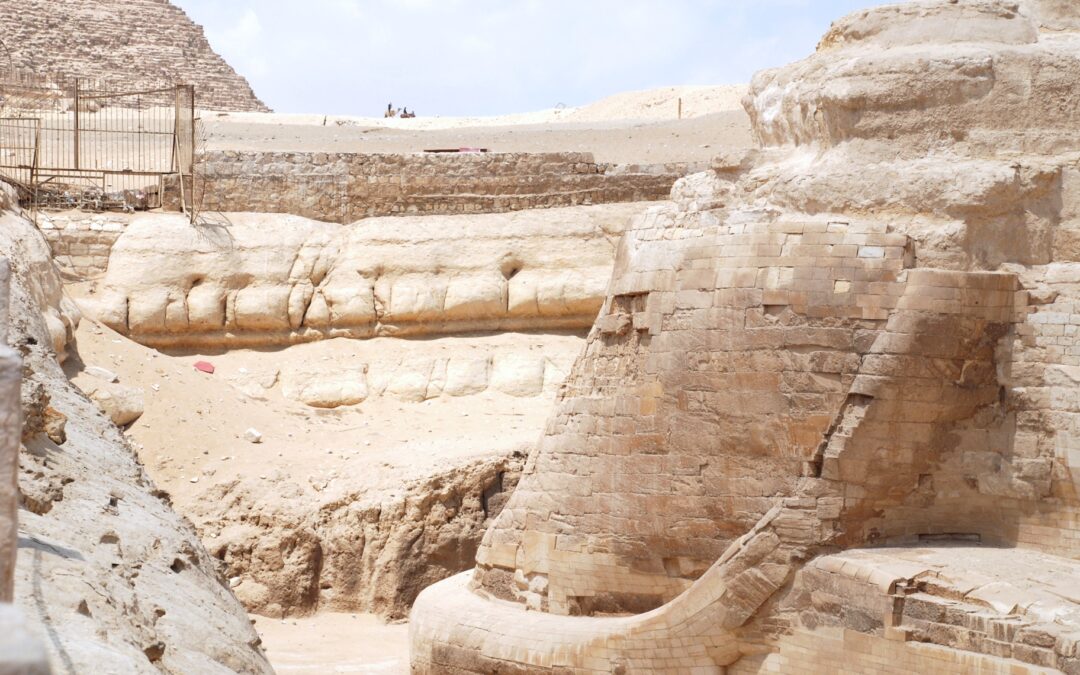
I am curious to see how the academic community will react to Donini's approach. Based on current knowledge, however, I consider this extremely early dating untenable. Regardless, the question remains open whether structures below the Giza Plateau – such as the Valley Temple and the Sphinx – might actually be older than previously assumed; this is an aspect that should be further discussed intensively.
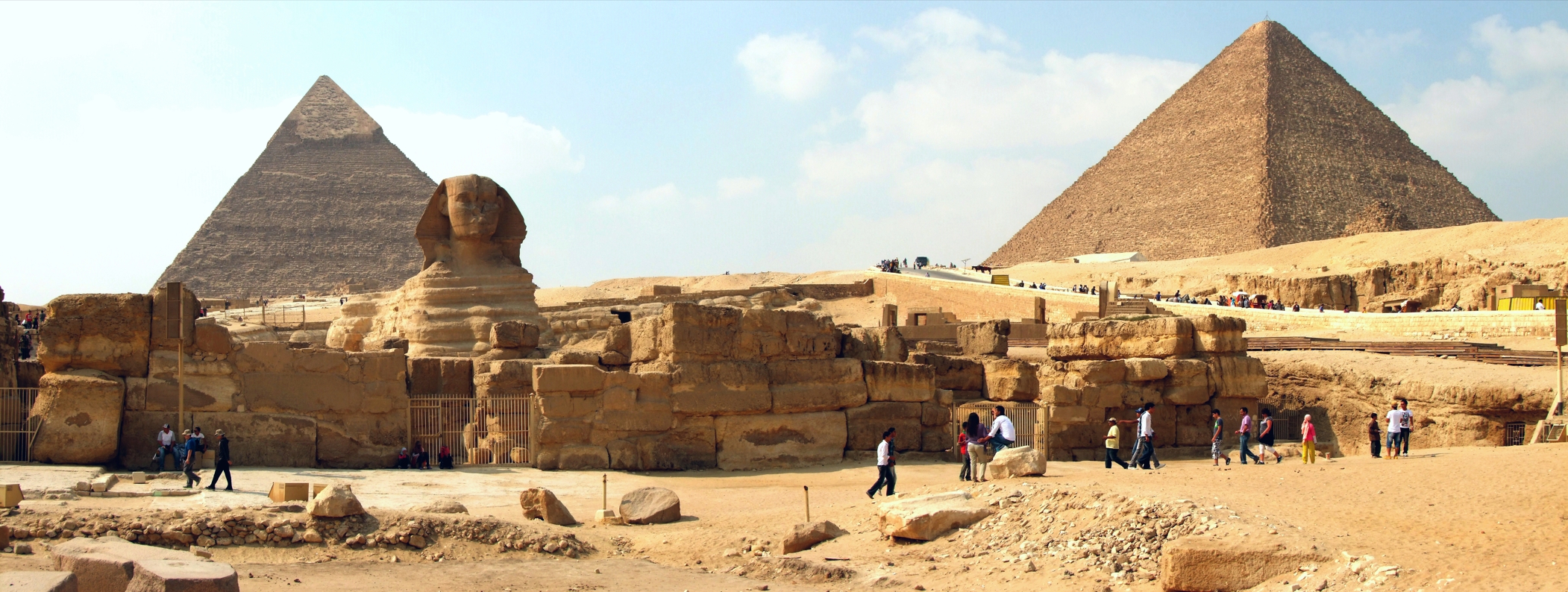
The age of the pyramids on the Giza Plateau was already debated by scholars of antiquity. According to the accounts of one of the most important scholars, Herodotus (around 500 BC), the largest pyramid was first built by Pharaoh Khufu (Cheops) in the 4th Dynasty, some 4,600 years ago. However, whether the megalithic structures beneath the large pyramids are located there remains a matter of debate.
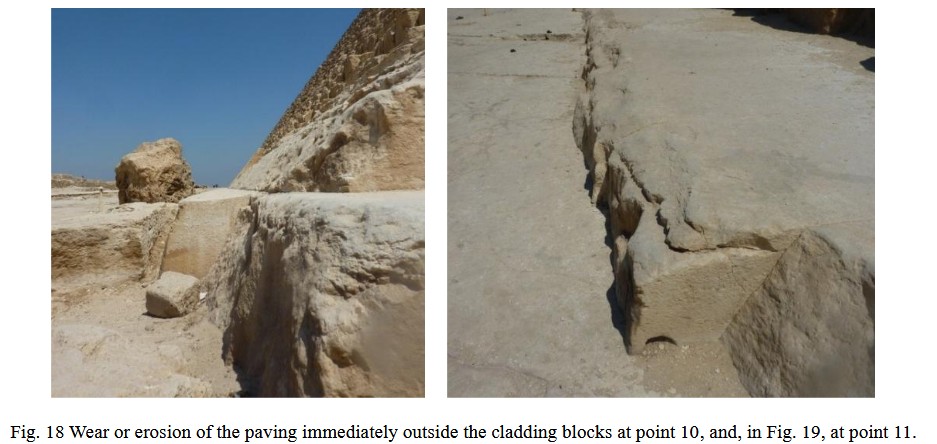
Excerpt from the publication by Alberto Donini (University of Bologna). In it, Donini presents an innovative method – the so-called Relative Erosion Method ). It is based on comparing two erosion patterns of the same rock type under identical environmental conditions: one of known age, the other of unknown age. From the ratio of the erosion degrees, he then intends to derive an age estimate.
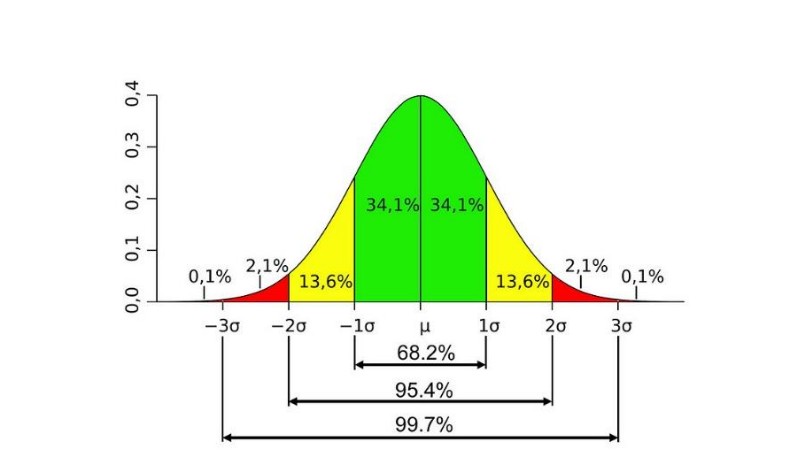
Using specific formulas, he ultimately calculates the determined age of the weathering. The Gaussian curve (from the publication) shows the probability of 68.2% that the value lies within plus or minus one standard deviation.
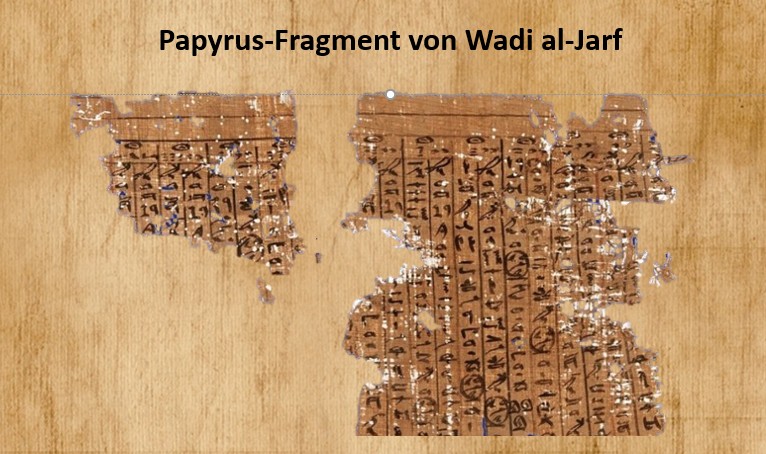
Fragment of one of Egypt's oldest inscribed papyri – the approximately 4,600-year-old fragments from Wadi al-Dscharf on the Red Sea. The texts document the work of a construction crew that shipped limestone from Tura to Giza. The stone was used to build the Great Pyramid of Khufu (Cheops). Does this papyrus thus prove the authenticity of Herodotus's accounts?
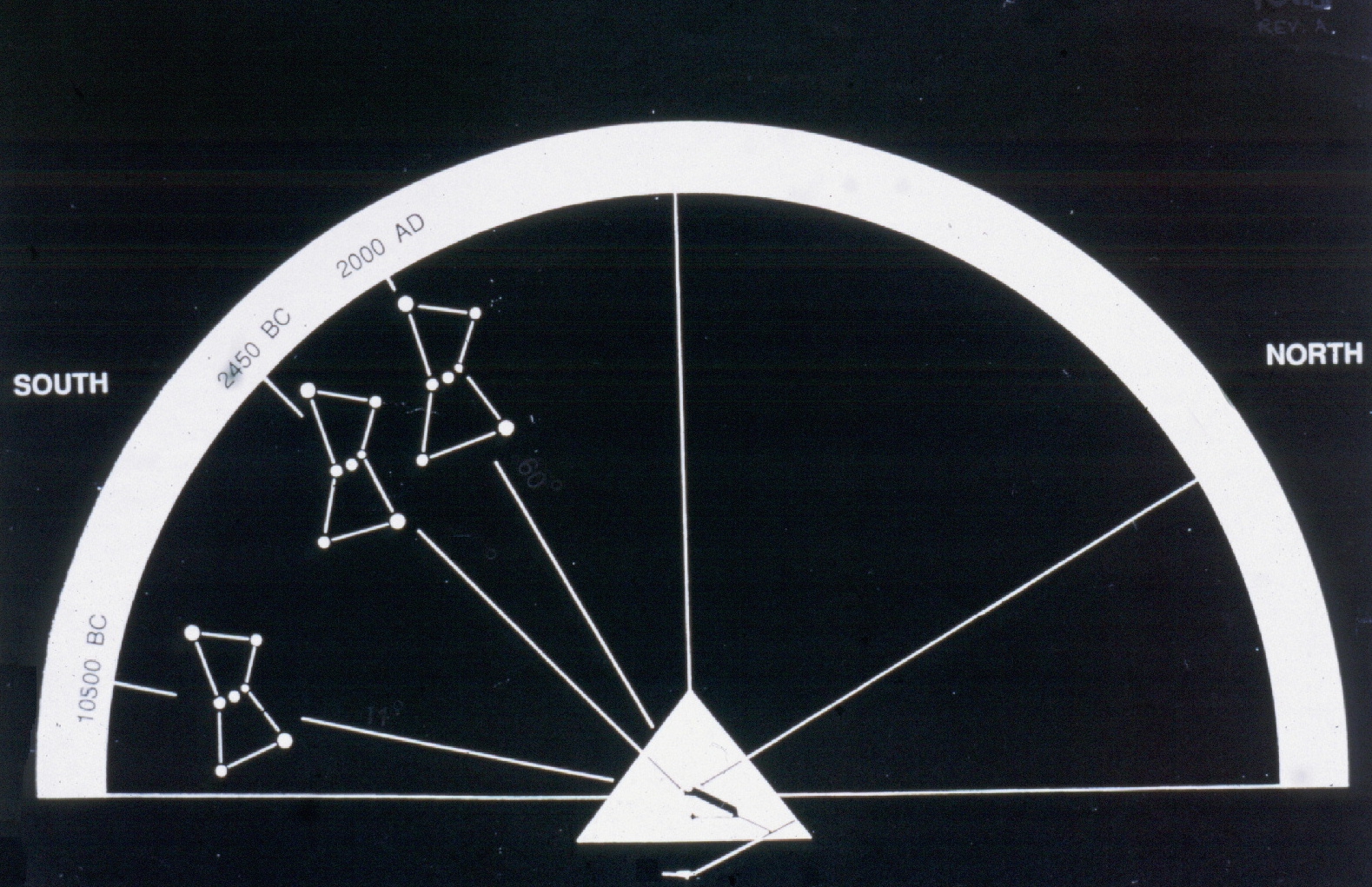
Robert Bauval's calculations revealed that the precision of the Earth's axis, in conjunction with the alignment of the so-called "soul shafts," allows for the astronomical dating of the Great Pyramid of Giza. Only within a relatively narrow time window between 2.700 and 2.500 BC do the shafts point to specific stars or constellations.
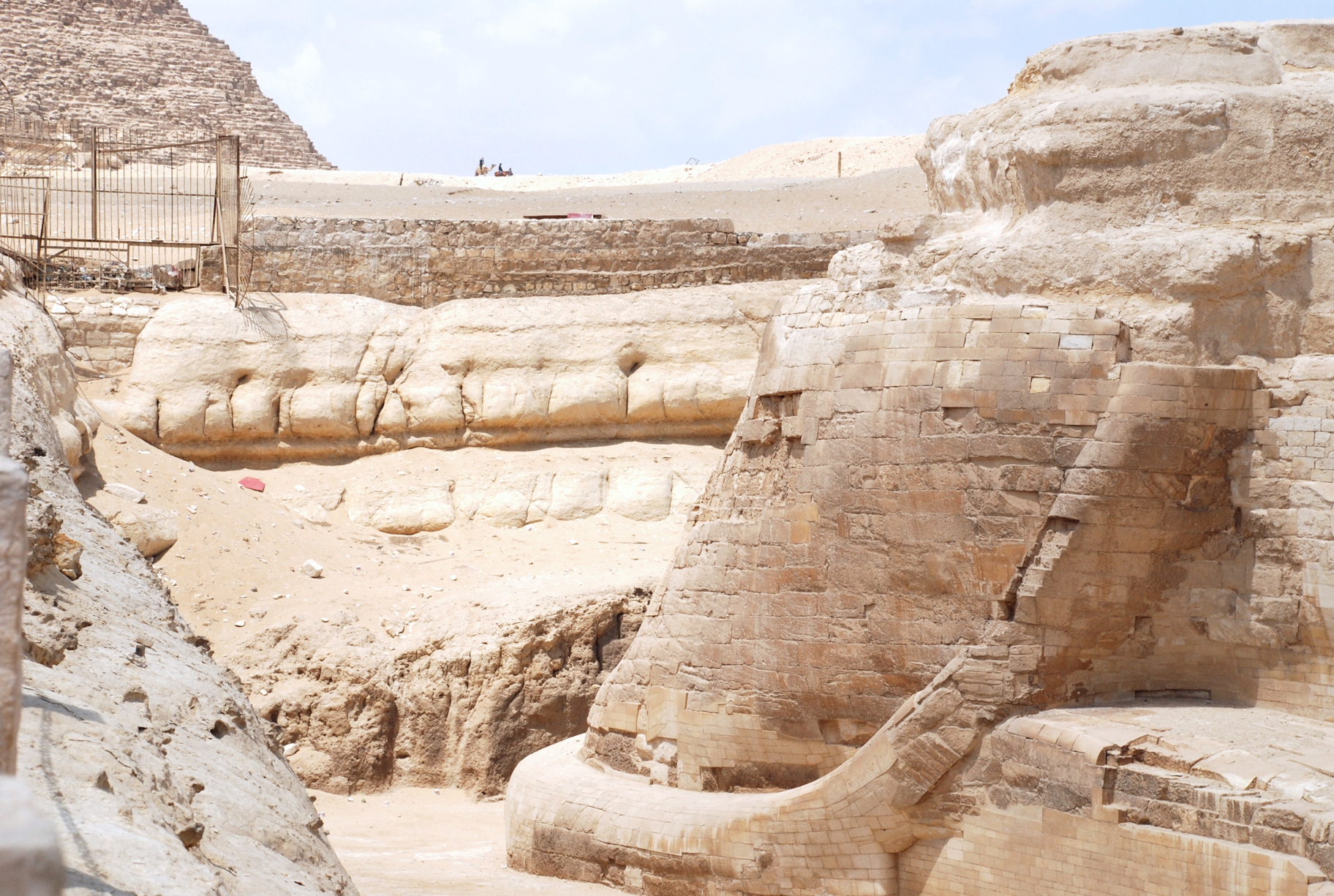
Inspired by the author John Anthony West, Professor Robert Schoch, through his research on the Sphinx in the early 1990s, revealed that the erosion patterns might indicate strong water erosion rather than purely wind erosion. His hypothesis: The weathering could date back to a significantly wetter climatic period—around 10.000 BC. My colleague Prof. David Rohl and I reject this paleo-age based on own observations on predynastic structure at the Giza-Plateau.