
back
Subproject III
The stone lifting experiment in Lennestadt
Archaeological experimentation has become increasingly important in the study of ancient history in recent decades, particularly where written sources are lacking or archaeological finds are fragmentary. The hypothesis developed by Dominique Görlitz as part of the Cheops Project, that the tongue-shaped impressions on the ceiling beams of the King's Chamber could have been made by transport and lifting plates, therefore required experimental archaeological verification. The aim was to demonstrate the technological feasibility of this approach under realistic conditions.
The starting point for these considerations was a central problem in pyramid research that remains unsolved to this day: How were the granite beams of the Pyramid of Cheops, some weighing up to 80 tons, lifted and moved into their final position?
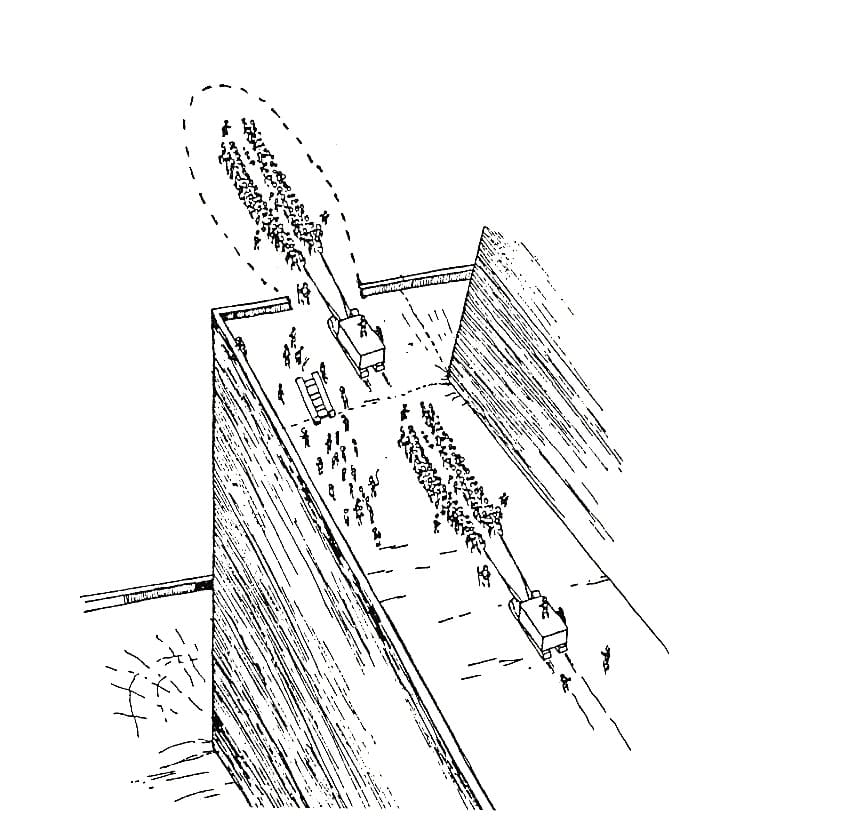
The theories proposed for this purpose—including direct ramps, spiral ramps, and pulley systems—each have significant technical and logistical weaknesses. Görlitz received a decisive impetus from the work of Austrian architect Prof. Oskar M. Riedl (1981). Riedl was one of the first to take Herodotus' accounts seriously and argued that a plausible lifting system could only have functioned from the lowest construction terrace. He considered it physically and technologically impossible to lift the granite blocks later onto the already erected pyramid stump.
However, Riedl's approach failed due to one crucial prerequisite: the supposed absence of iron as a building material in the Old Kingdom. This is precisely where the archaeometric results of the Cheops Project came in – paving the way for experimental verification.
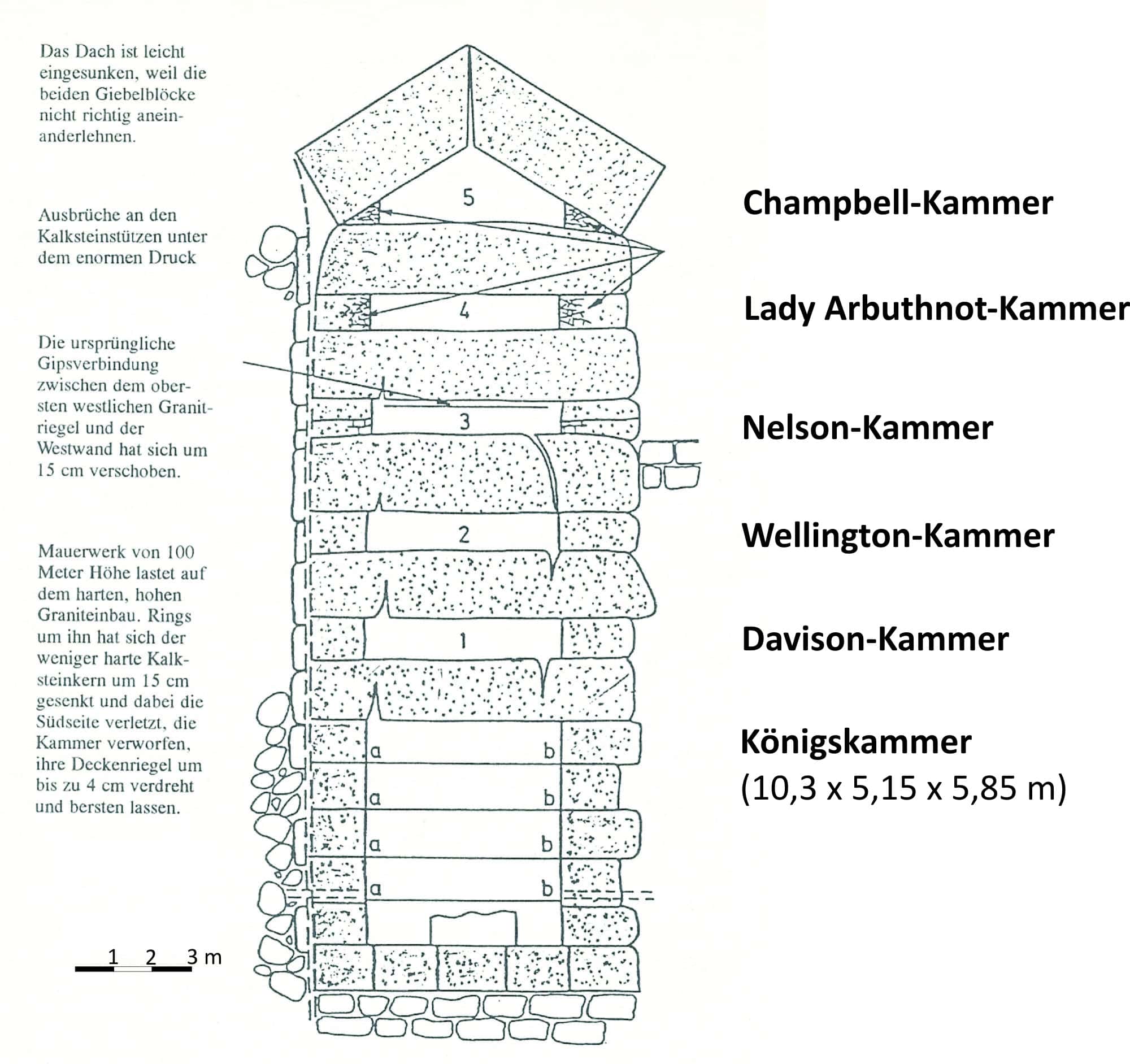
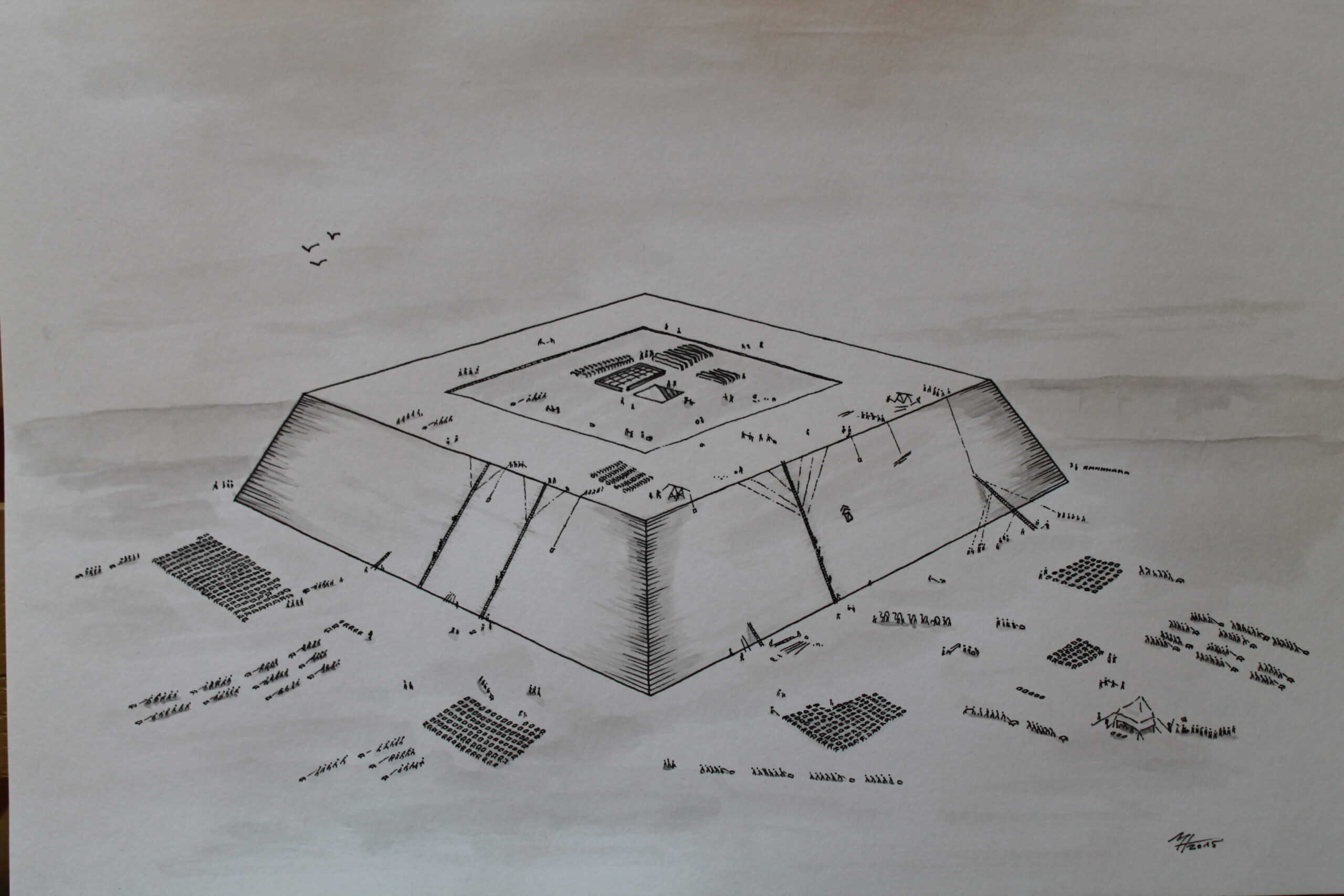
The cardinal problem of pyramid construction is how the approximately 5,000 tons of granite for the lining of the two “royal burial chambers” and the relief chambers were lifted onto the pyramid stump. According to the findings of the Cheops Project, they could only have been hoisted up layer by layer from the center of the pyramid stump by simply “carrying” them upwards.
Setup of the experiment
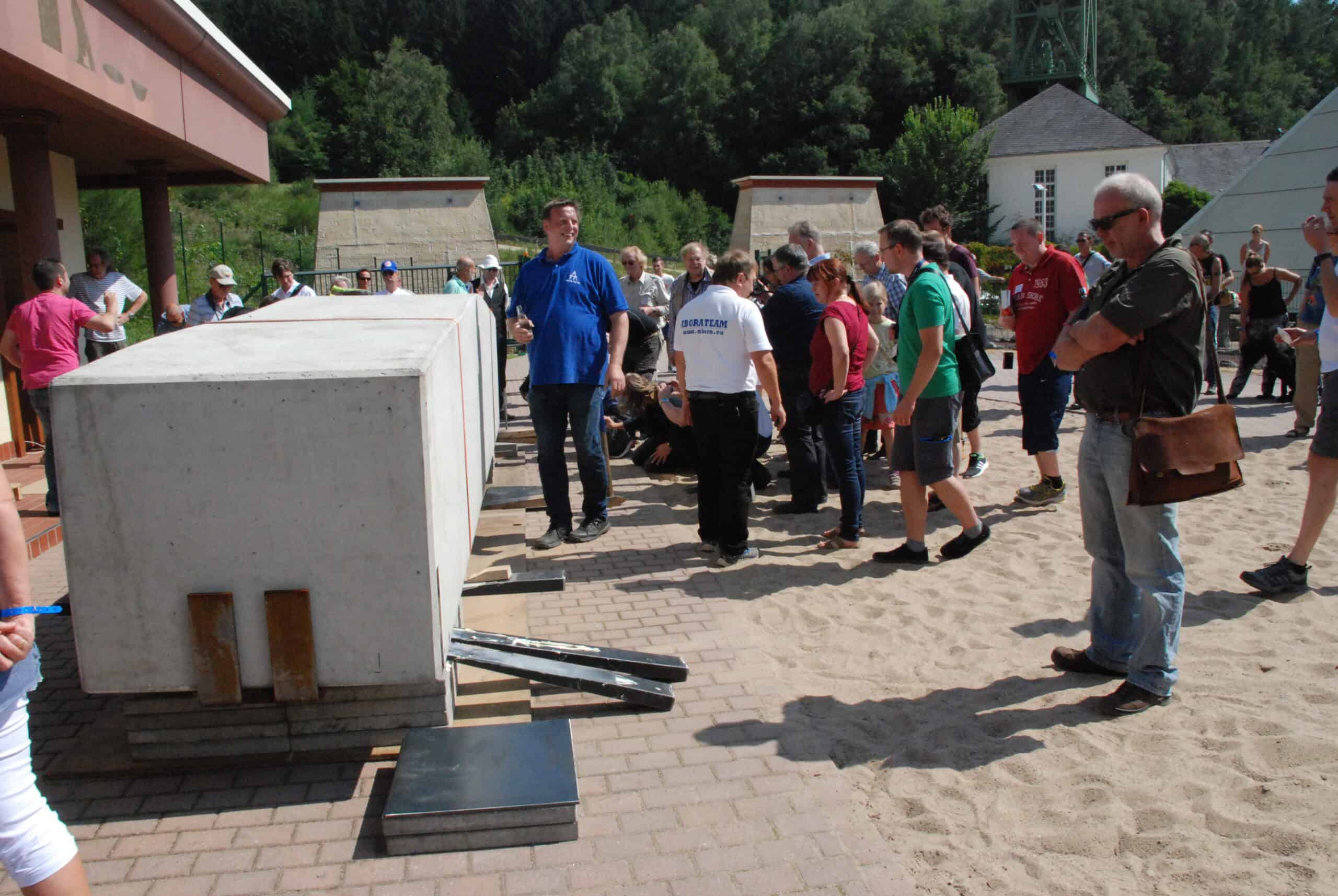
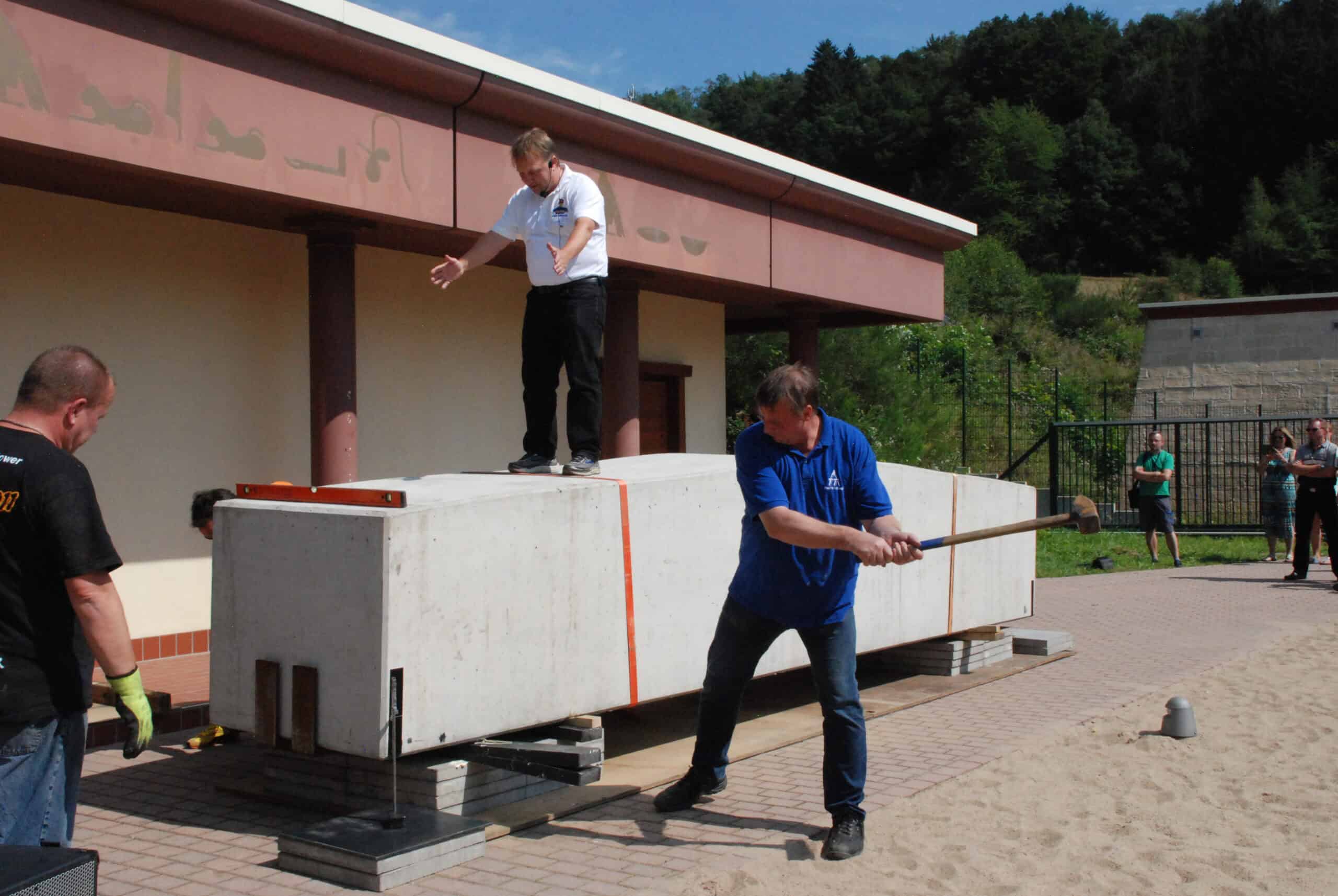
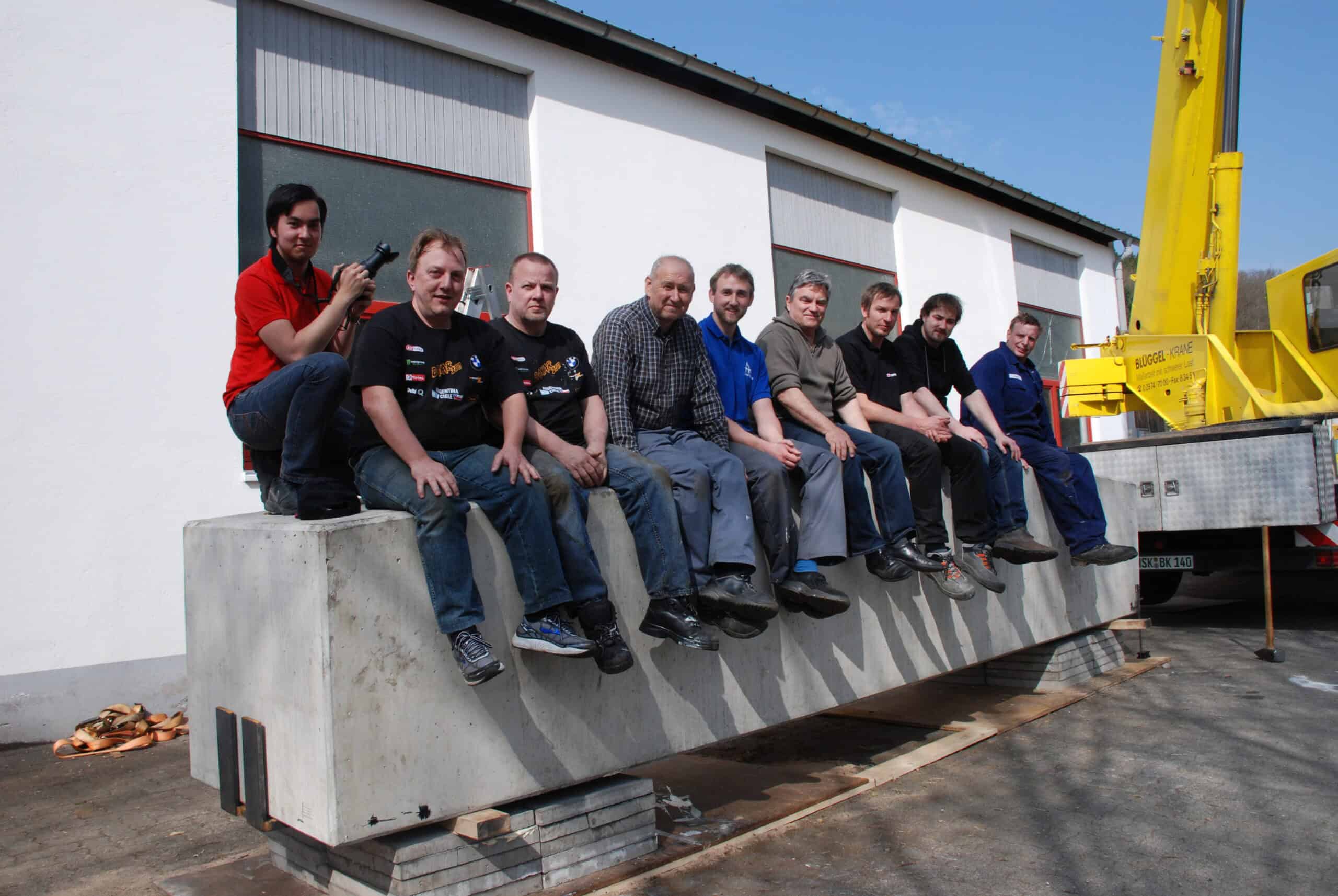
With the support of Sauerland-based sponsor and project partner Wolfgang Schmidt (Tracto-Technik / Galileo-Park Lennestadt), Görlitz had a large-scale test model built. The centerpiece was an 8-meter-long concrete block weighing almost 16 tons, modeled in shape and dimensions on a granite ceiling beam from the Pyramid of Cheops.
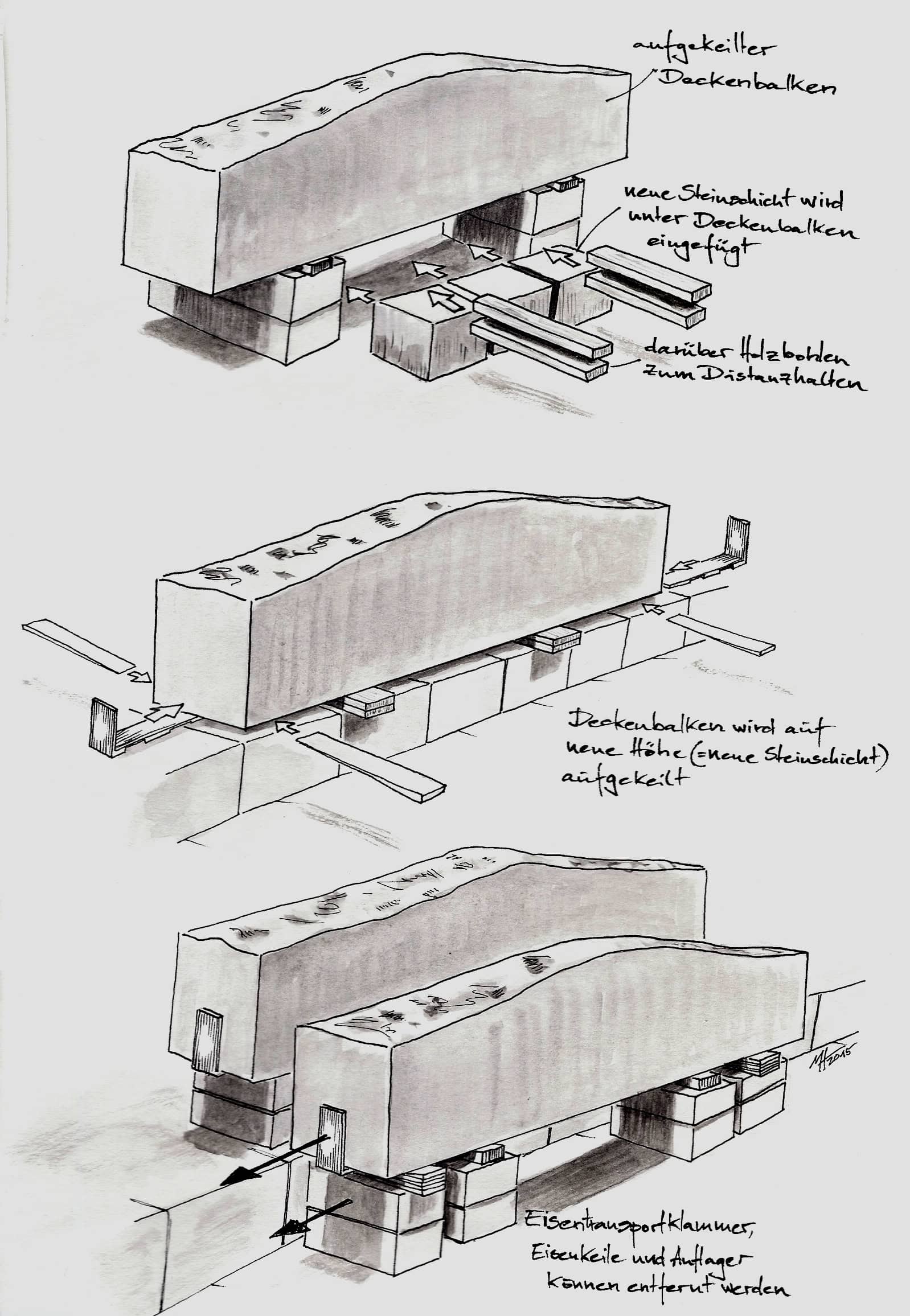
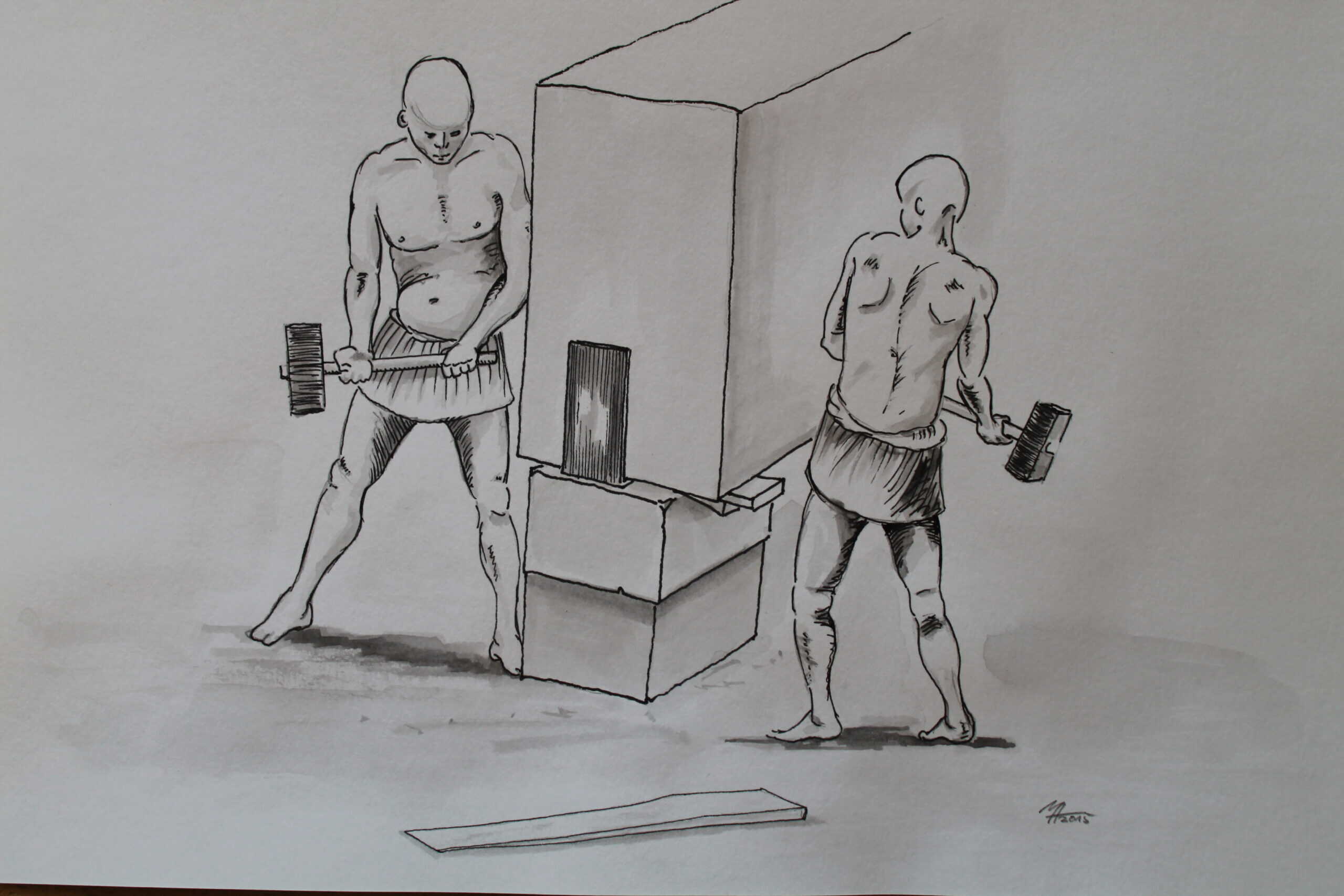
In addition, iron lifting plates and wooden and iron wedges were manufactured in order to compare different material properties. The aim was to test the gradual lifting of the block according to the principle of wedge lifting.
Implementation and results
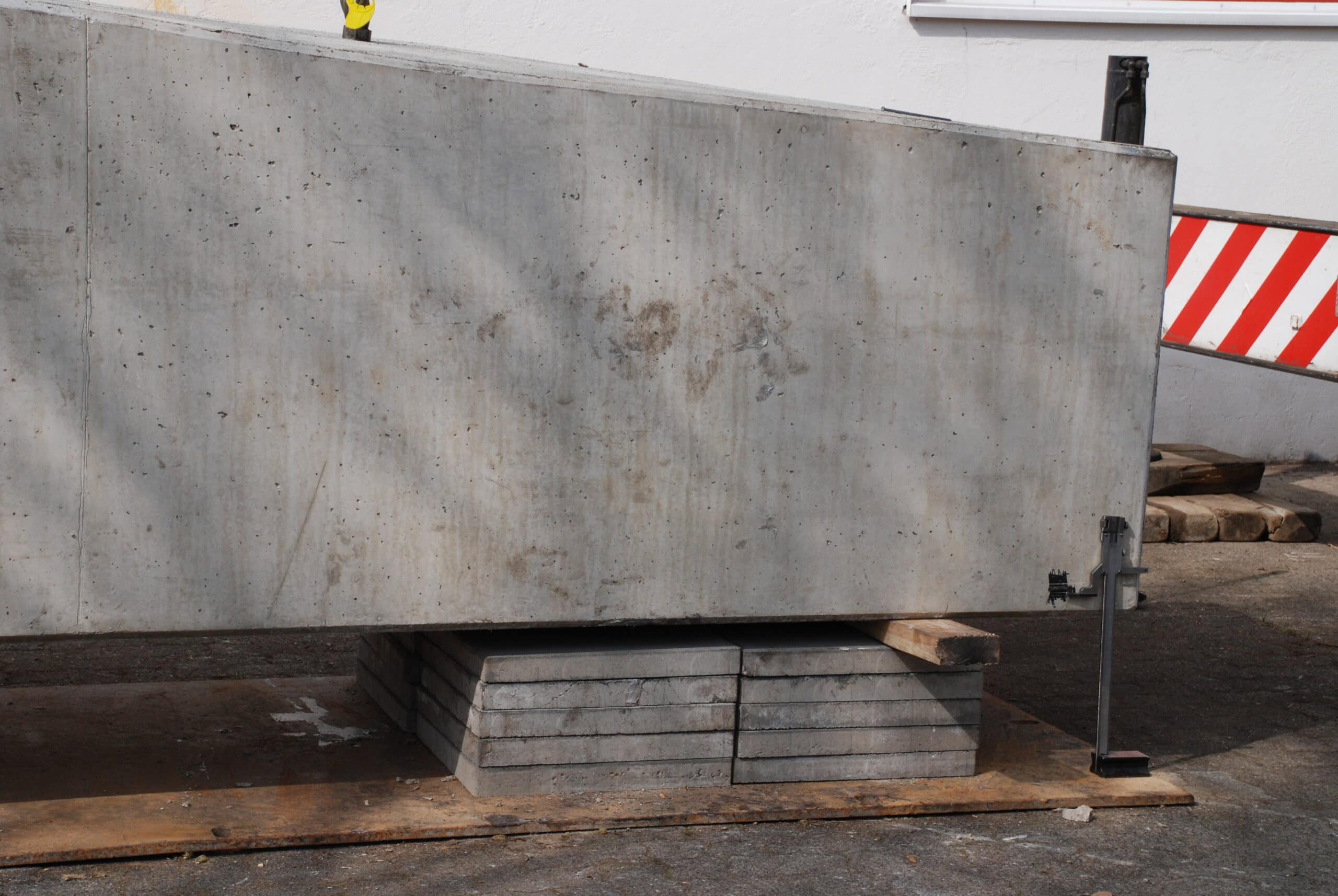
On the very first day of testing, a small team of experimenters managed to lift the concrete block by about 6 centimeters using just two wedges placed one on top of the other. This height was sufficient to slide an additional stone slab under the second support. The lifting process could then begin again.
On the second day, now better coordinated, the team achieved a lifting height of around 30 centimeters on both sides within just one hour. Extrapolating these values shows that a team of six to eight people would have been able to lift a massive granite beam by more than one meter within a day.
In this way, the granite beams could first have been lifted onto intermediate supports of the original stepped pyramid. From the corners, it would have been possible to move the next layer of stones to the center of the pyramid stump. The lifting system could then have been reattached at the next higher level. In this way, the structure could have grown layer by layer until the granite blocks were finally installed at the intended final height.
According to Oskar M. Riedl's calculations, this process would have taken around eight to eleven years—a period that corresponds well with the known construction phases of the Pyramid of Cheops.
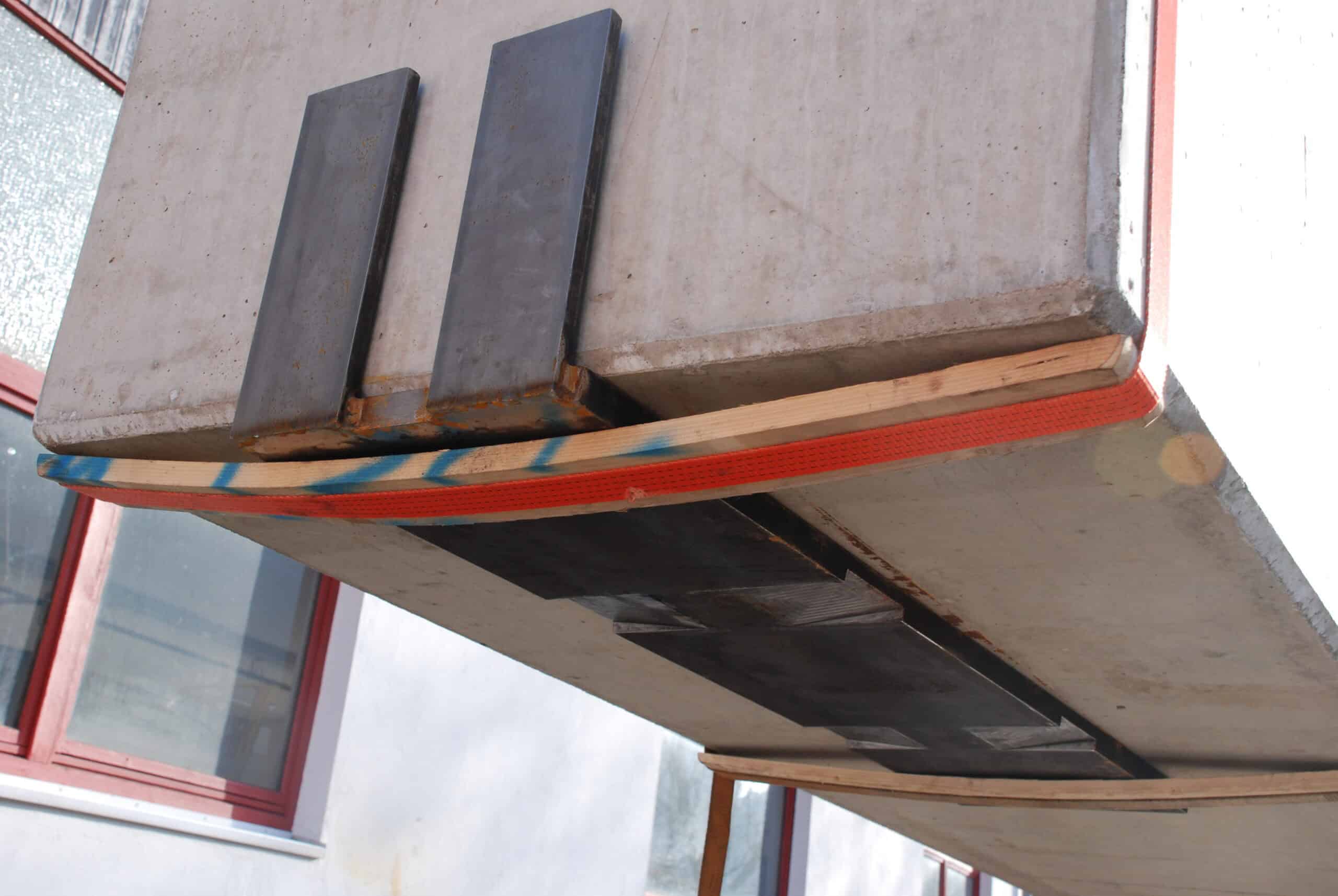
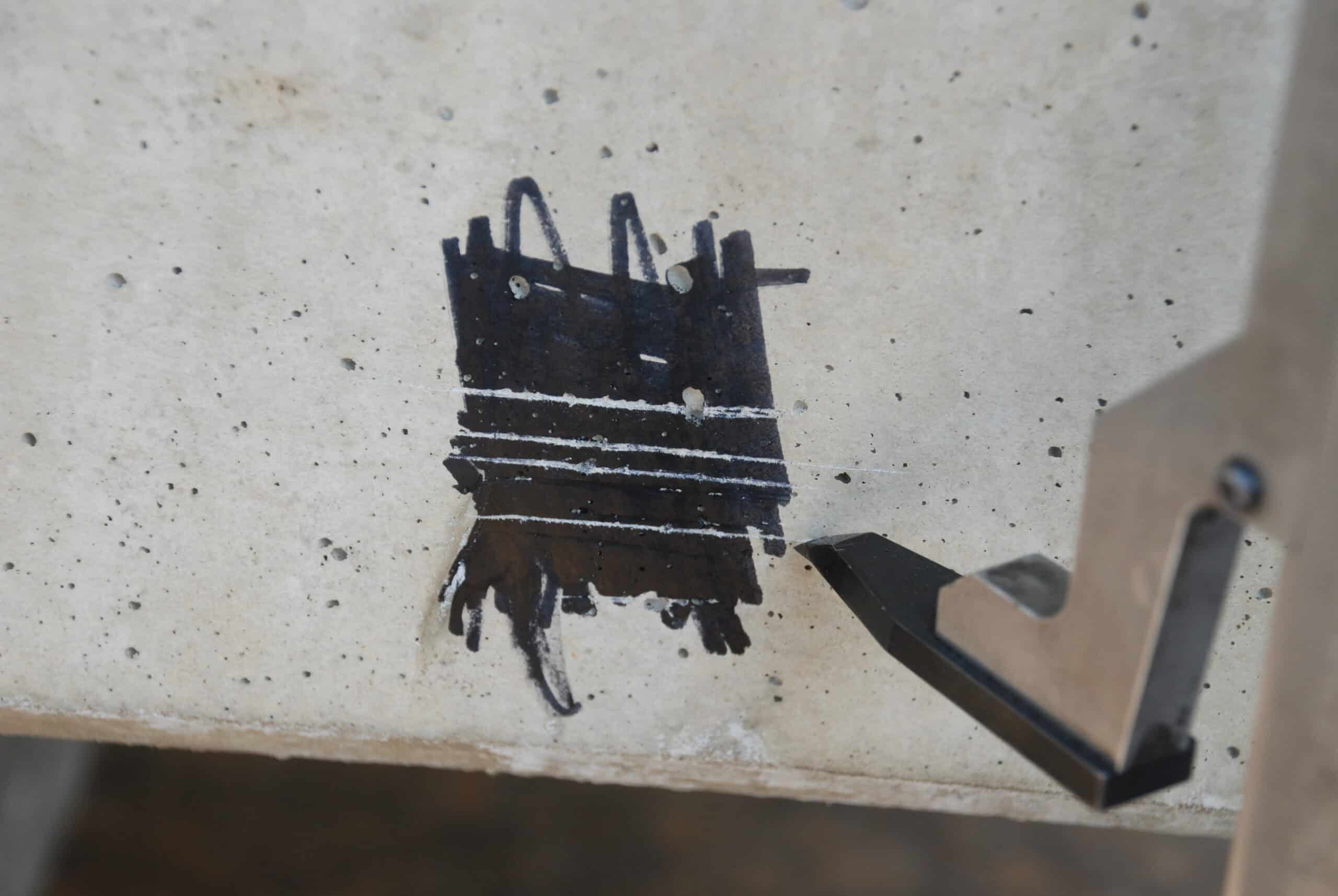
During this long construction period, the granite blocks would have lain on iron transport and lifting plates for years. This offers a plausible explanation for how the scale layer produced during forging could have been mechanically pressed into the granite surface. After only a few weeks, the concrete block used in the Lennestadt experiment showed almost identical impressions – in the modern experiment, however, these took the form of rust marks (hematite, Fe₂O₃), as the plates used were made of rolled steel. In contrast, magnetite (Fe₃O₄) would be expected in the Old Kingdom, as was actually detected in the Cheops project.
Conclusion
The wedge-lifting experiment conducted in Lennestadt confirmed Dominique Görlitz's technological approach several times over. It was particularly revealing to observe that the wooden wedges worked more efficiently than iron wedges due to their more plastic behavior, as they enabled faster form closure and thus better force transmission when hammered in.
In summary, the experiment shows that:
- it is possible to gradually lift heavy stone blocks using simple technical means,
- No complex machines were required, but rather simple lifting devices, as Herodotus reported.
- and the proven iron residues provide a functional explanation for Herodotus' account of iron.
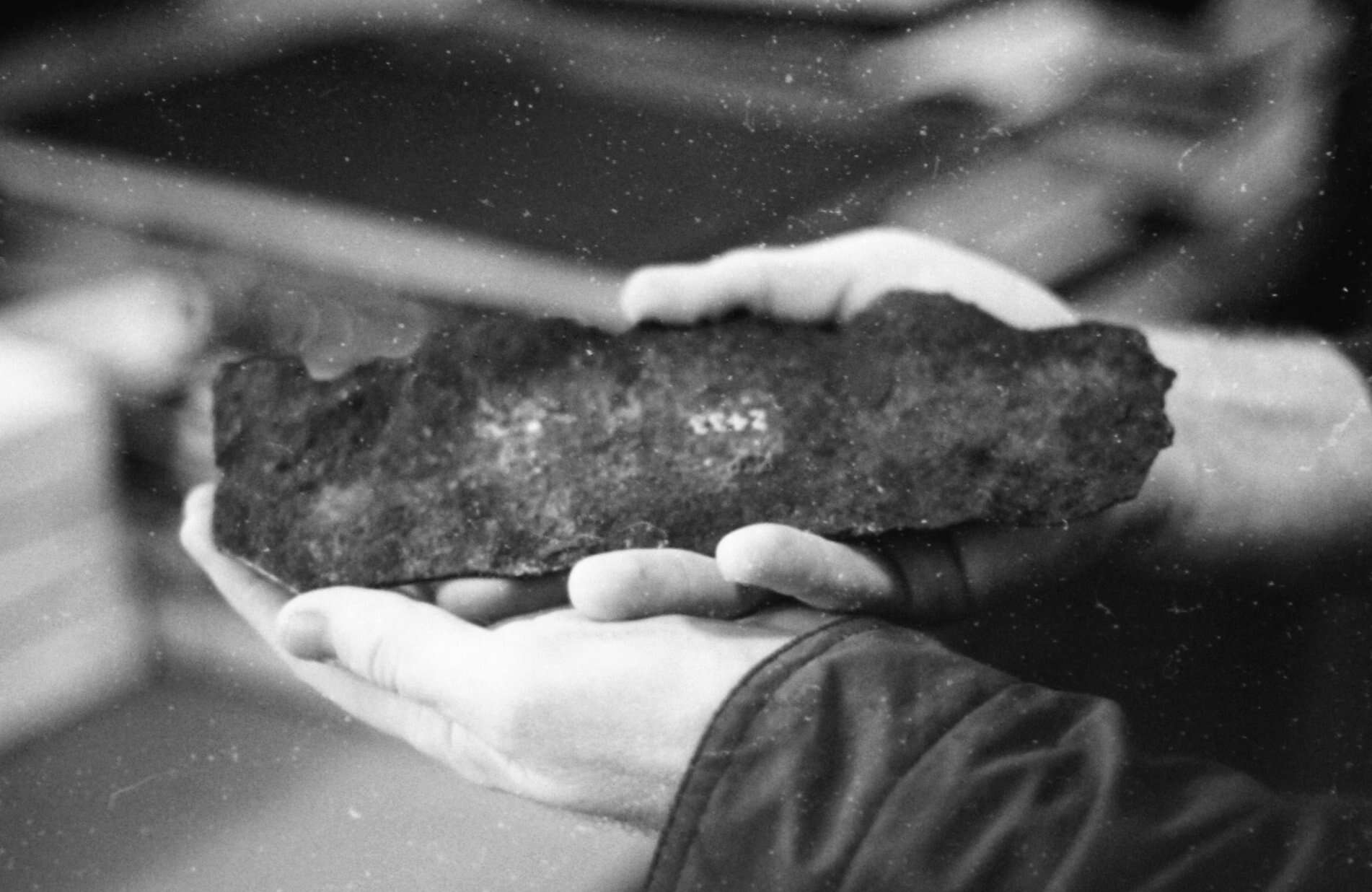
This also applies to the iron sheet found by Cornel Hill in 1832 in the southern air shaft of the Pyramid of Cheops (left image). It was not examined archaeometrically until 1989 in London (El Gayar & Jones). It was determined that it was produced using the ancient Renn process. The results of this study are almost identical to those of Dominique Görlitz. This would be a second piece of evidence for the use of iron in the 4th Dynasty!
The majority of Egyptologists still reject the findings of Görlitz, Riedl, and El Gayar & Jones. The main argument is the absence of iron slag in the Nile Valley. According to Egyptologists, this would definitely have survived the passage of time. These facts explain the misinterpretation of Görlitz's Cheops project. However, Carl Sagan impressively demonstrated that “the absence of evidence is not evidence of absence.” Görlitz therefore set out in search of the iron of the pharaohs. Once again, he found what he was looking for in Herodotus and other ancient authors! This discovery ultimately led to the organization of the ABORA IV Expedition.
The Lennestadt Lifting Experiment, as part of the Cheops Project, thus brings together archaeometric findings, historical sources, and experimental archaeology into a coherent construction concept—and provides a robust contribution toward resolving one of the greatest mysteries in the history of human construction.
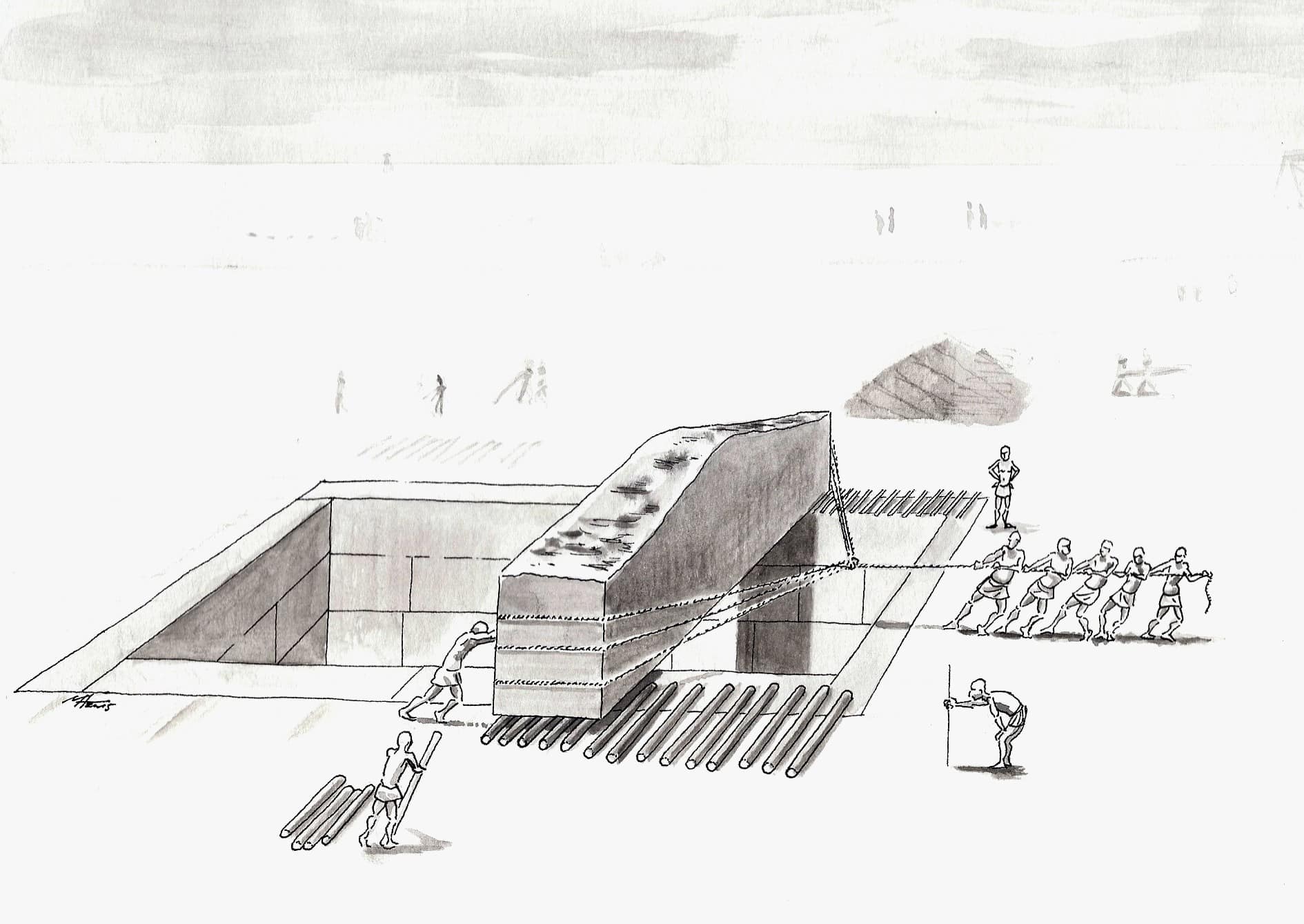
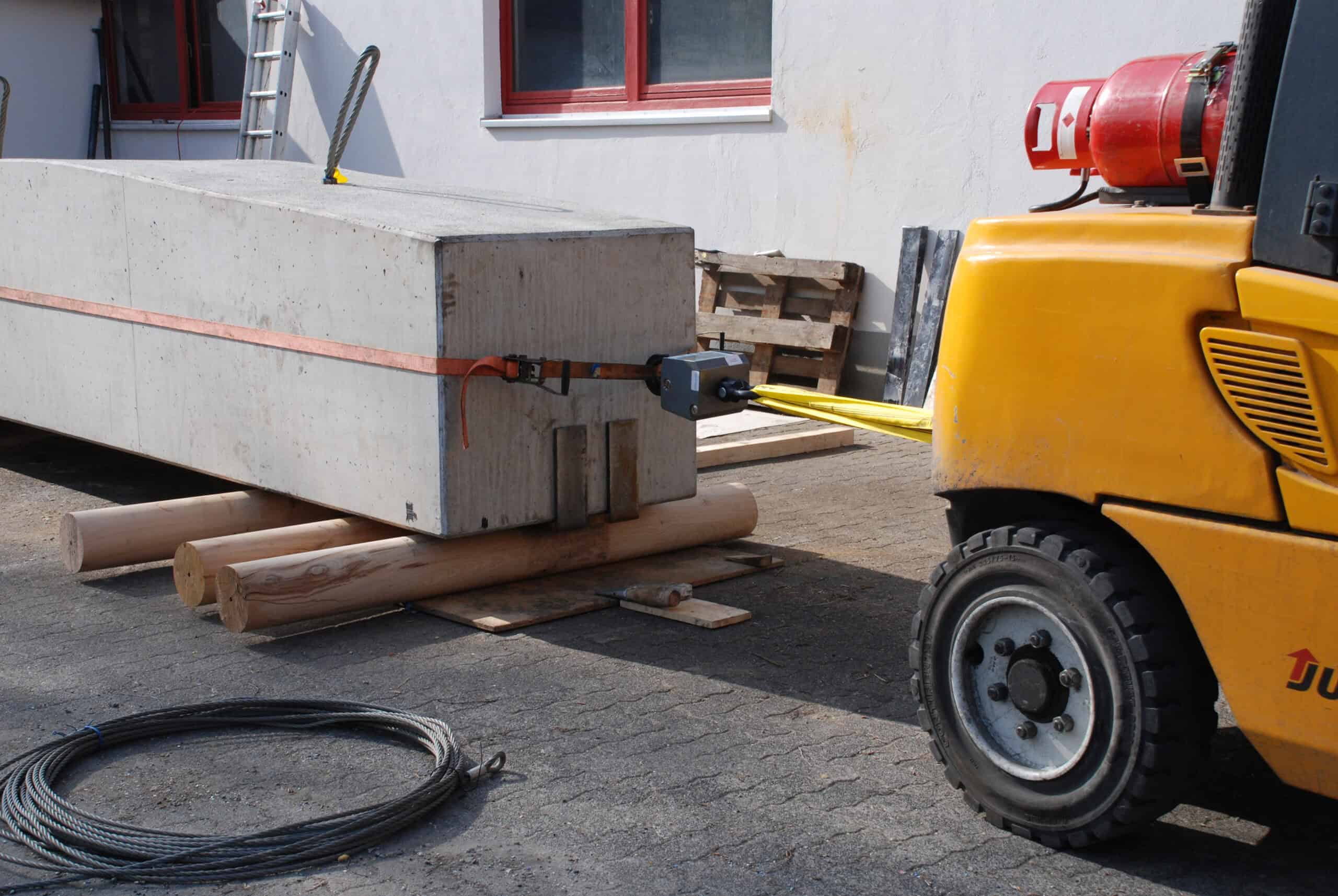
In Lennestadt, we also investigated the question of how many people are needed to drag a 16-ton block under optimal conditions. Using a forklift with a towing device, we measured 720 kp. This corresponds to the pulling force of approximately 15-20 people, which was necessary to get the block rolling. This technology seems plausible for moving the blocks across the “King's Chamber” (picture on the left).