back
DILMUN IV
Constructive consequences from the North Atlantic
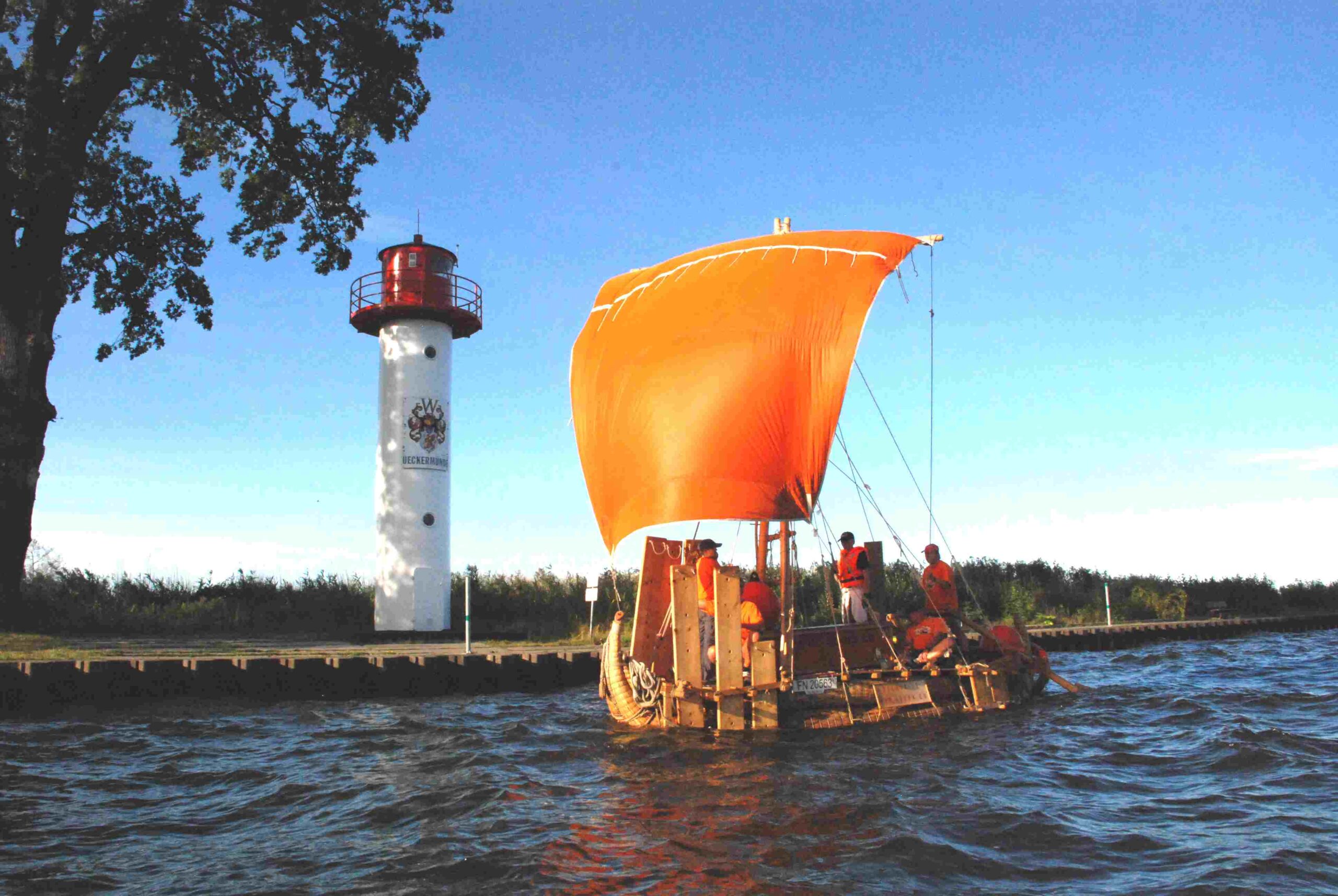

Goal
Testing a new lower sword mount
Size
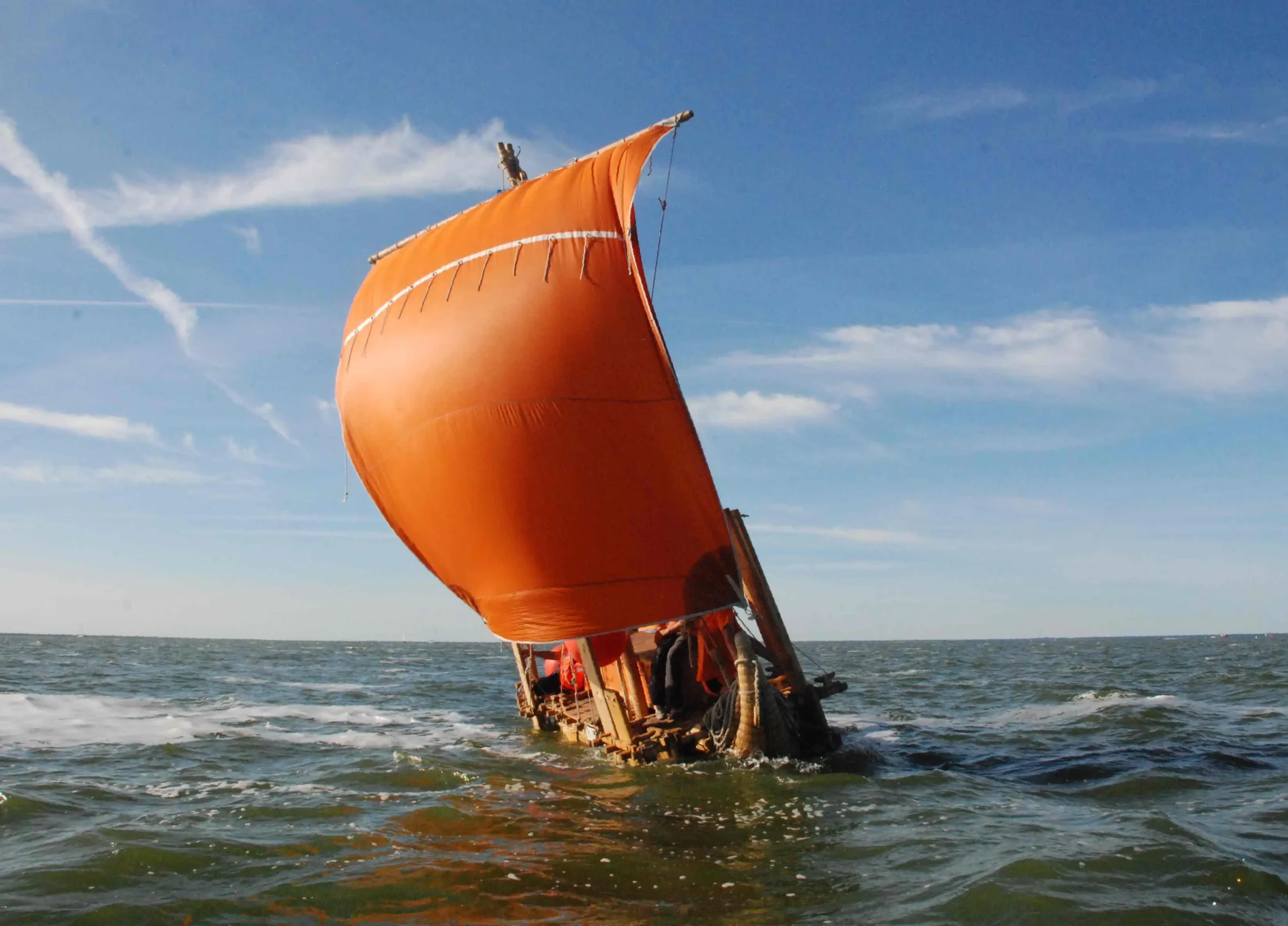
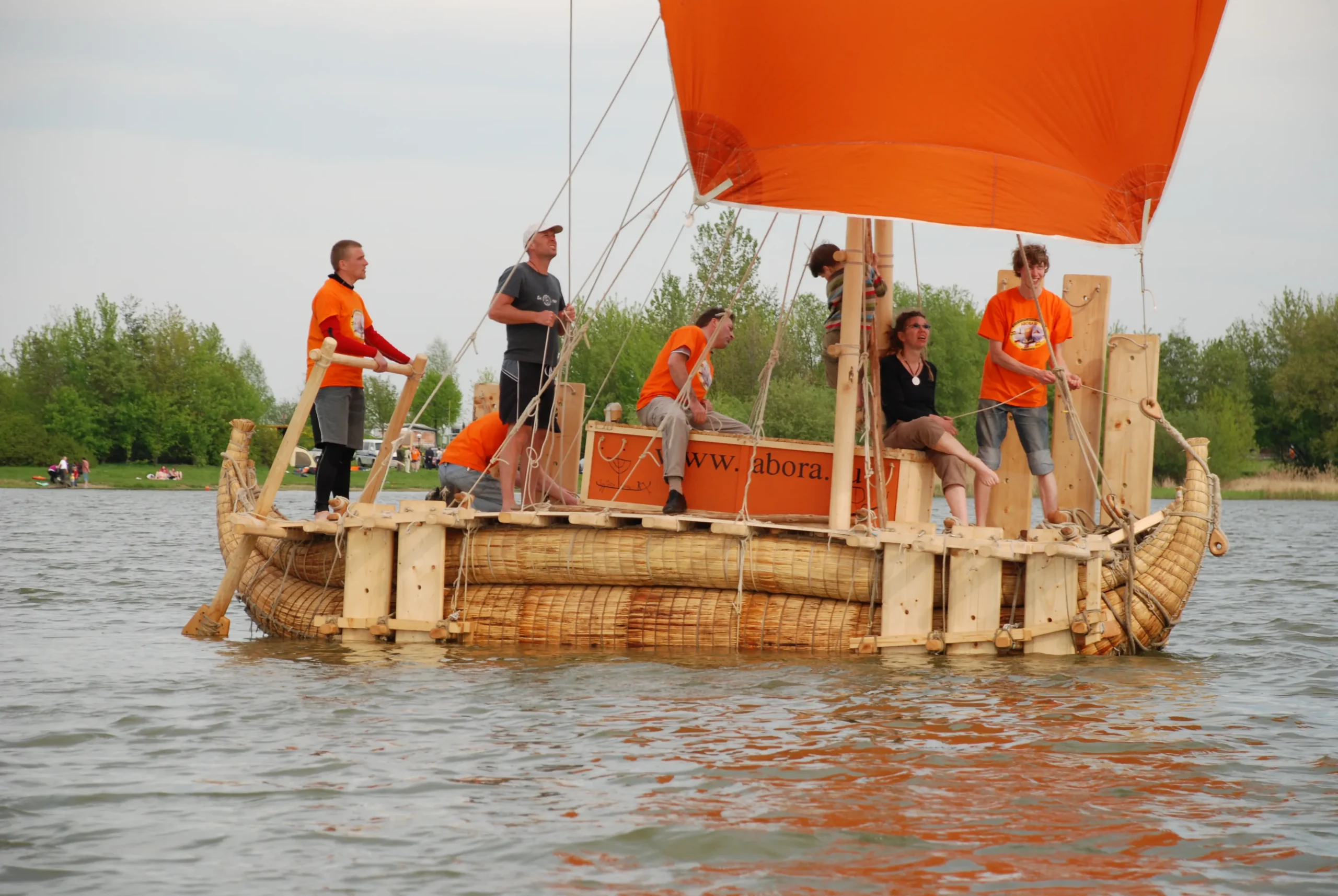
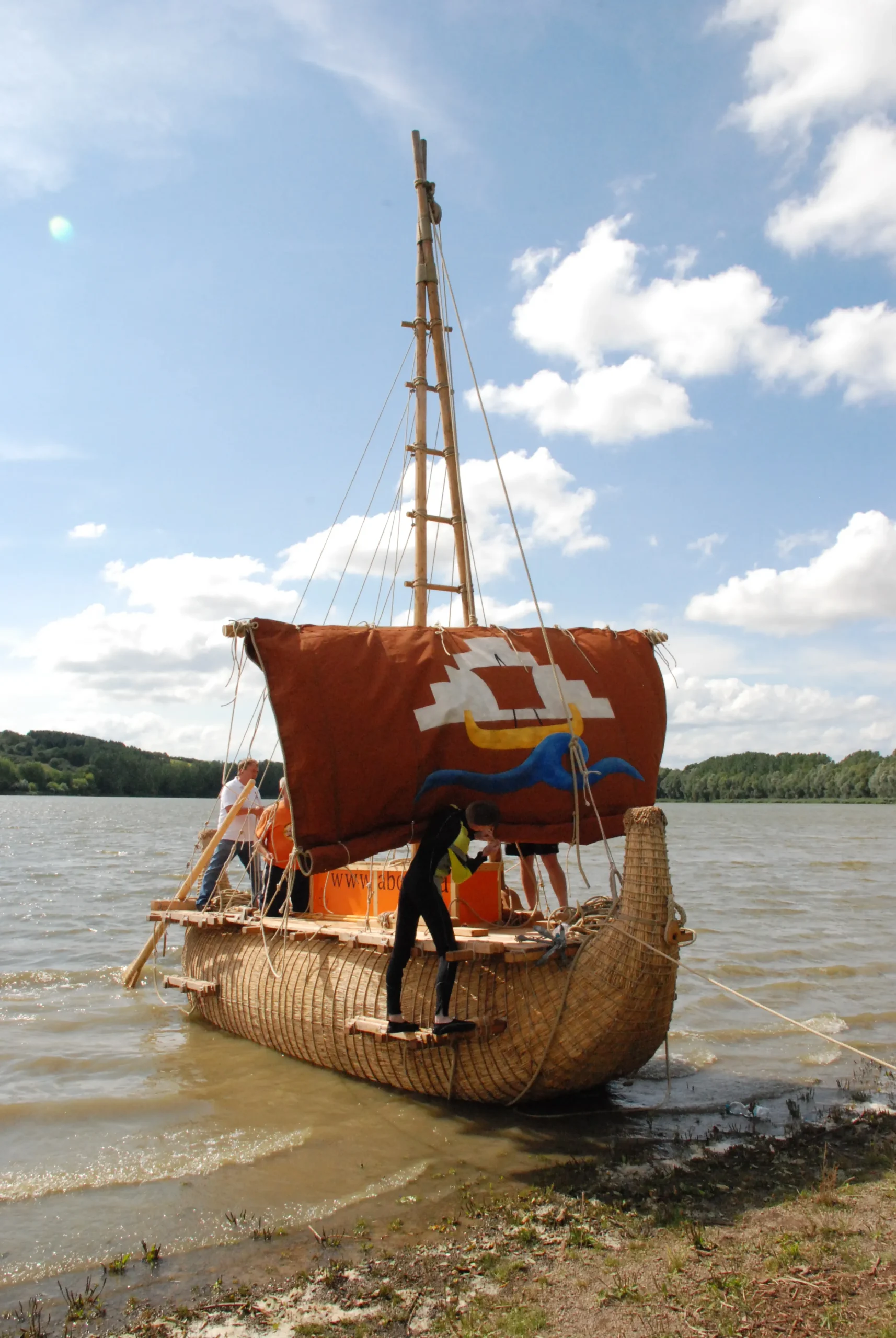
Length 6 m, width 2 m, weight 1.5 t, sail area approx. 20 m²
Material
Bolivian totora reed
Sailing performance
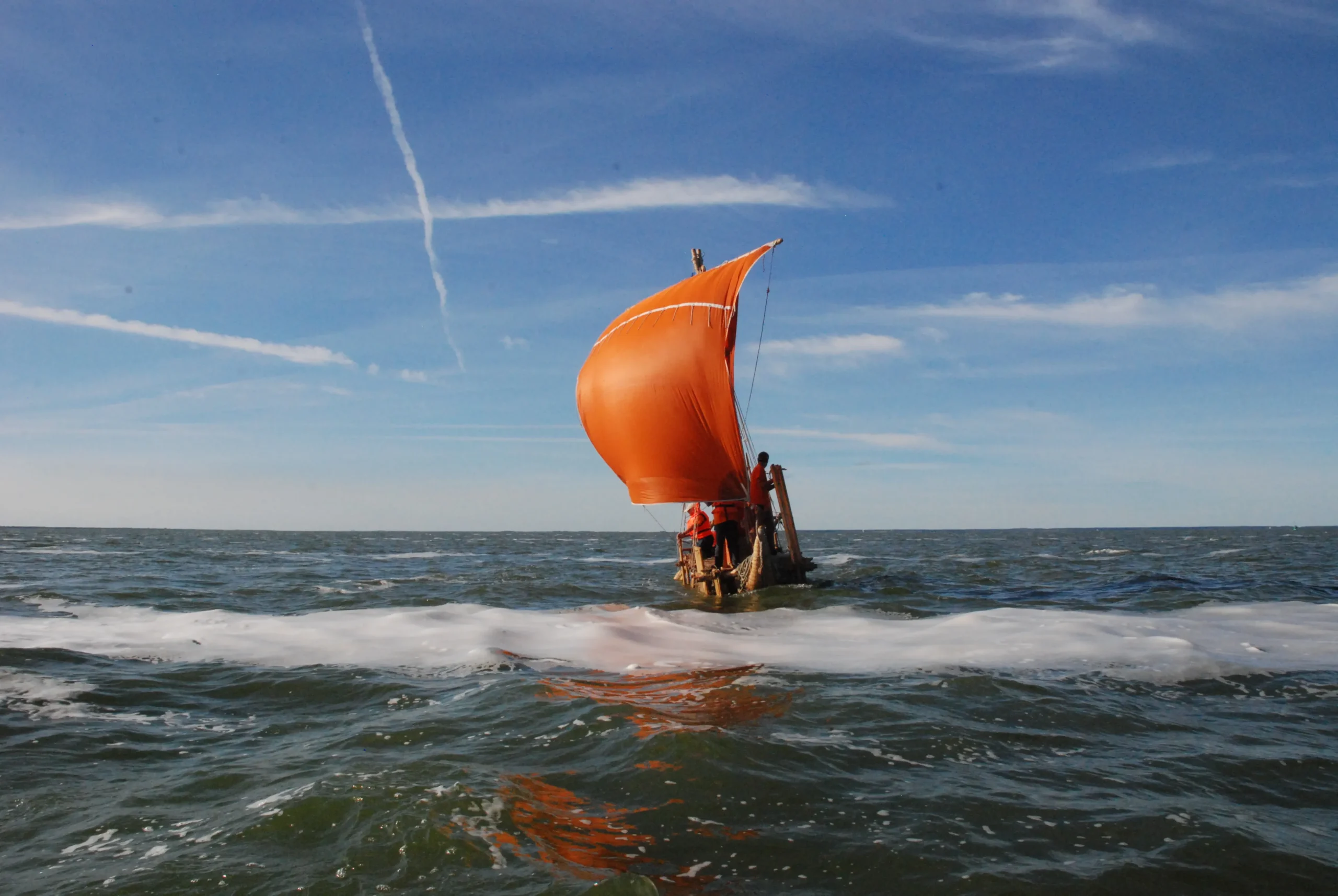
High courses close to the wind (approx. 70° to the apparent wind)
Field of application
Baltic Sea, North Sea, Lake Constance, Wangenheim Reservoir
Objective and background
DILMUN IV was developed as a direct result of the experiences gained during the ABORA III North Atlantic expedition. While the DILMUN I to ABORA III projects demonstrated the basic maneuverability and seaworthiness of reed boats, a previously underestimated technical problem became apparent on the stormy and wave-tossed Atlantic: the long-term stability of the lower centerboard mountings.
Until then, all lower sword mountings had been secured with rope slings and technically complex triangulated with ropes. This solution had proven itself on inland waters, coastal areas, and even over longer ocean voyages. However, under the extreme conditions of the North Atlantic, these connections regularly loosened—usually after 200 to 300 nautical miles. This meant that repairs had to be carried out on the open sea.
These repairs proved to be extremely dangerous: heavy seas, the rolling of the ship, spray, and the exposed deck beams made every repair a considerable accident risk. The experiences on ABORA III made it clear that a fundamentally new design solution was needed for future large-scale expeditions.
Technical innovation: the wooden sword holder
Against this backdrop, Dominique Görlitz and Peter Schmolke teamed up with experienced craftsmen—including Peter Usbeck, among others—to develop an alternative design. Görlitz had long had the idea of a wooden lower sword mount, but it was only the experiences in the North Atlantic that made the need for action imperative.
Parallel dazu bestanden ab 2008/2009 konkrete Planungen für eine zeitnahe ABORA-IV-Fortsetzungsmission. Ermöglicht wurden diese Ambitionen auch durch den neuen Sponsor Fred Olsen (Oslo), der noch kurz vor dem Start von ABORA III eine größere Menge Geld in ABORA III investierte. Aus den daraus entstandenen Überschüssen beauftragte Görlitz bereits 2008 den Bootsbauer Fermin Limachi mit dem Bau eines neuen 6 Meter langen und 2 Meter breiten Schilfbootes.
The boat was exported to Germany and rigged at Holzbauwerke Gotha, creating another vessel in the DILMUN series.
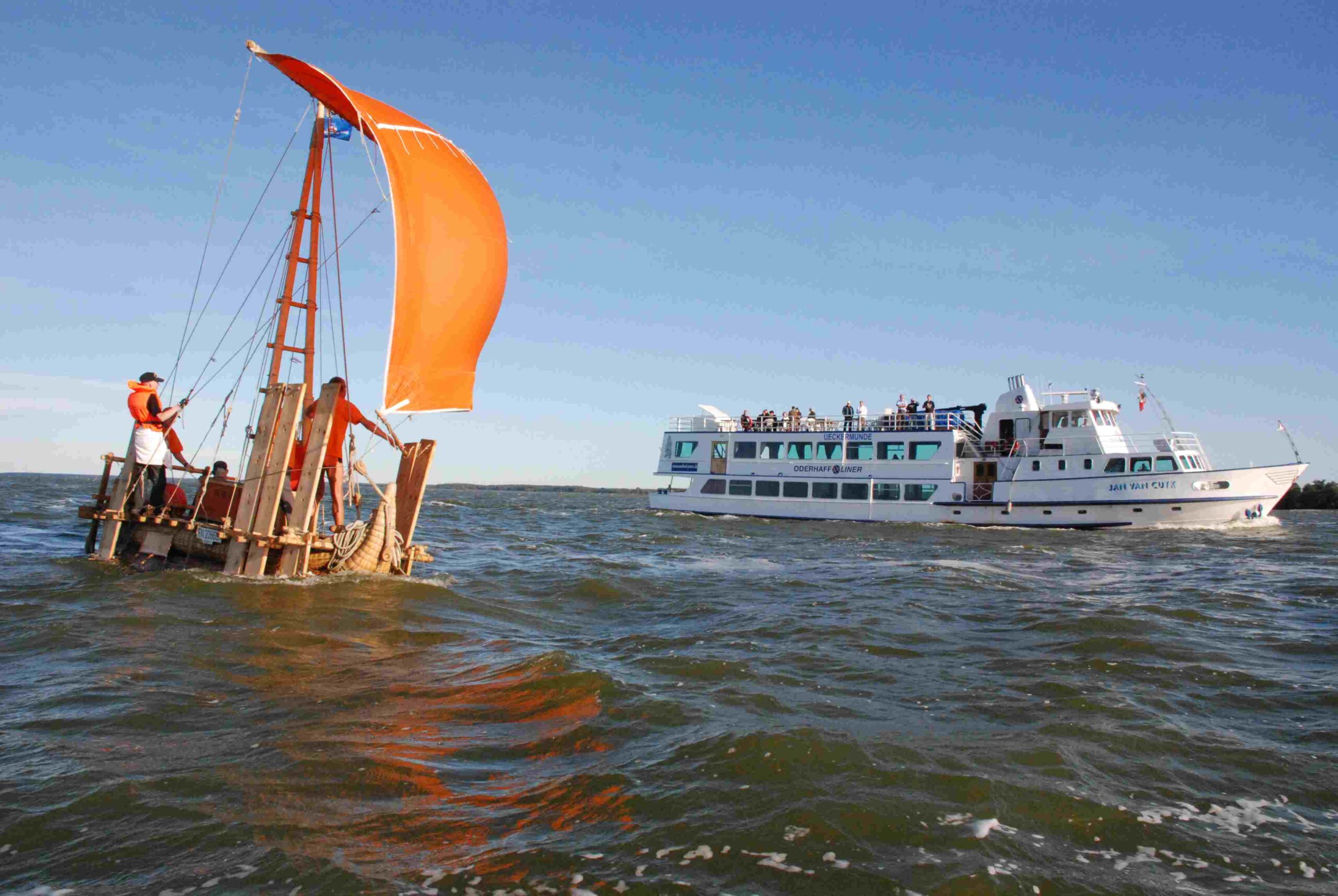
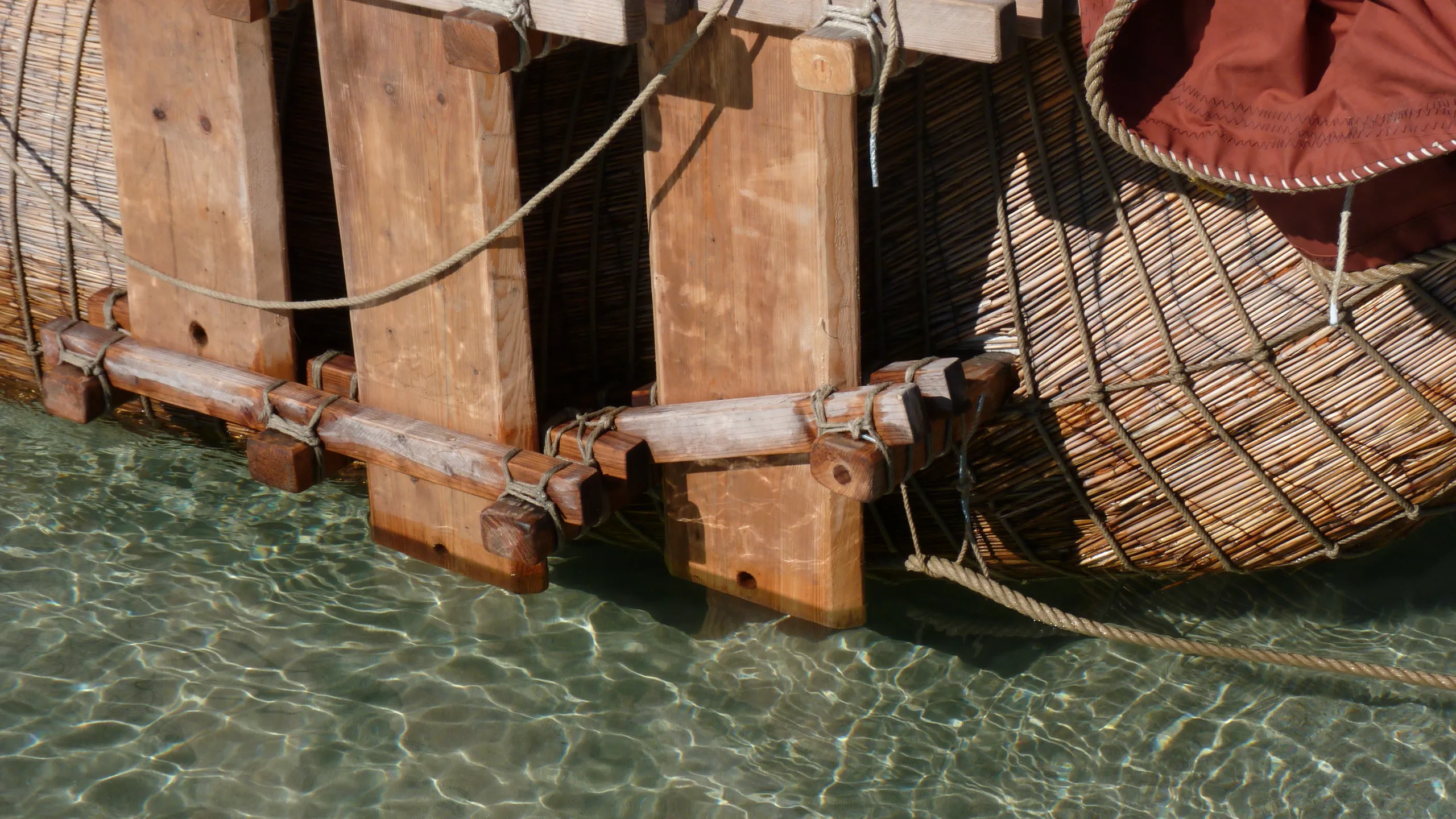
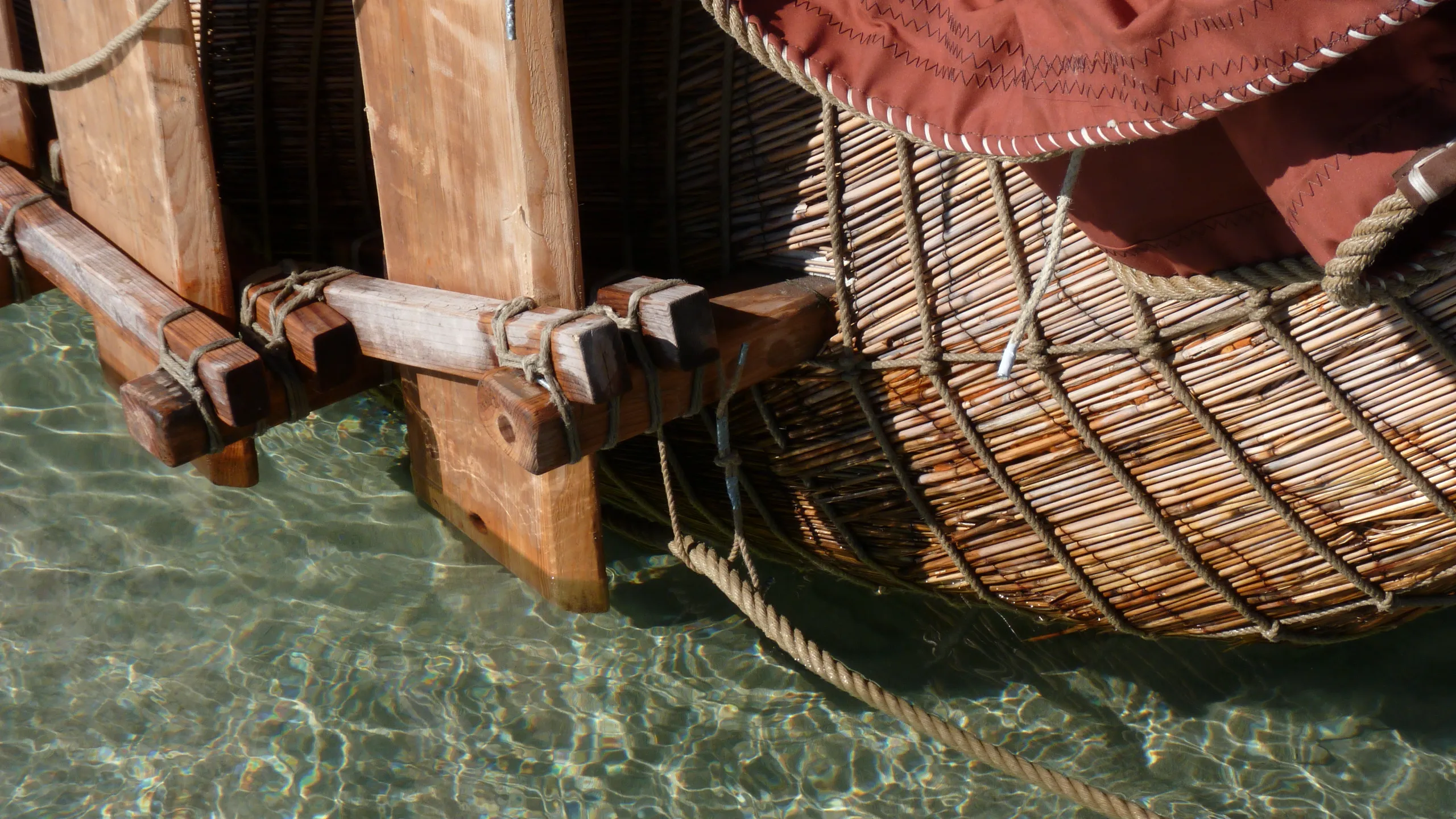
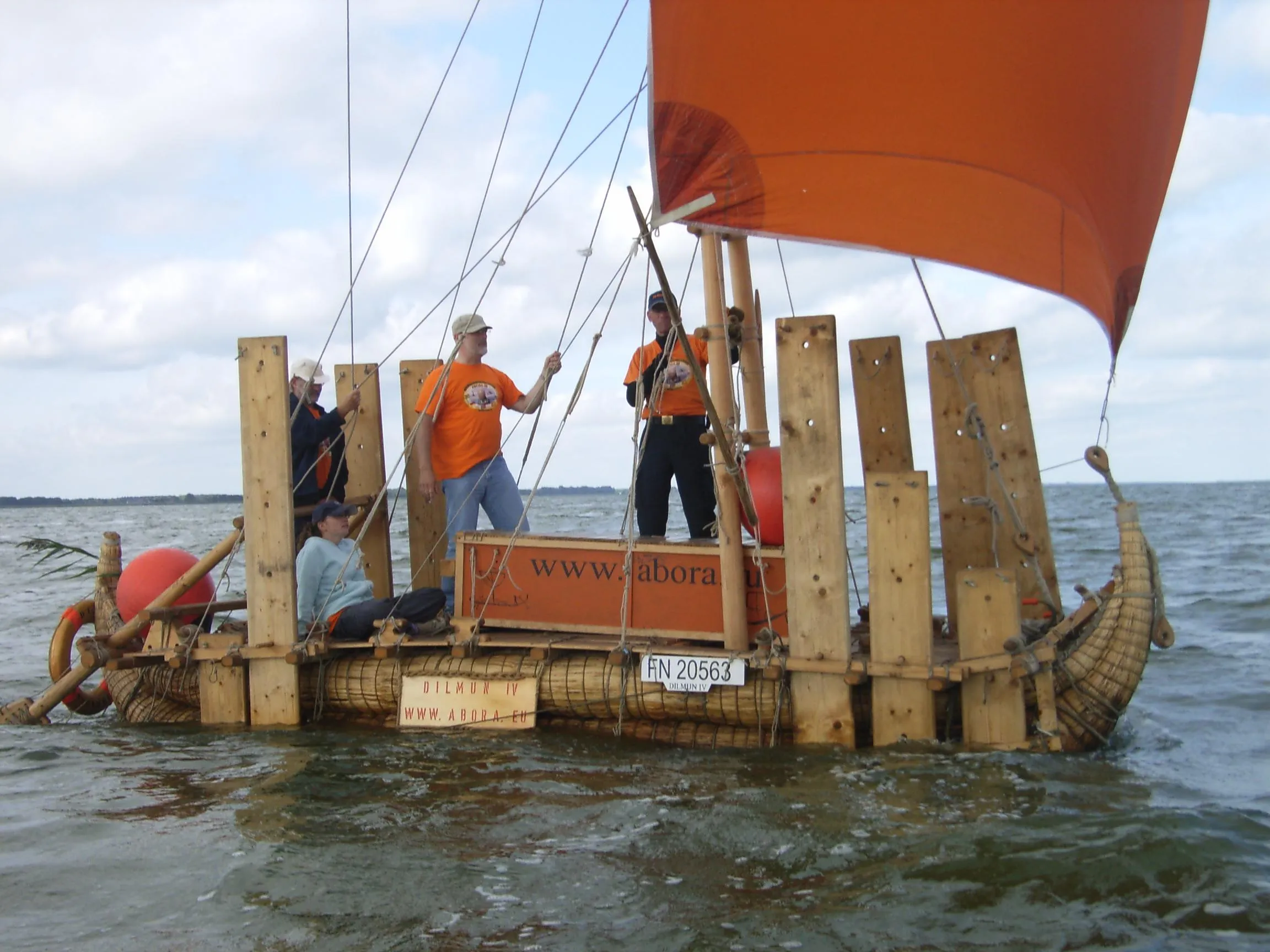
The central innovation of DILMUN IV was a wooden lower sword mount. It was attached to the hull using solid wooden spikes, which also served as the upper deck beams. The aim was to replace the rope-based technology with a form-fitting and force-fitting construction.
Testing and road trials
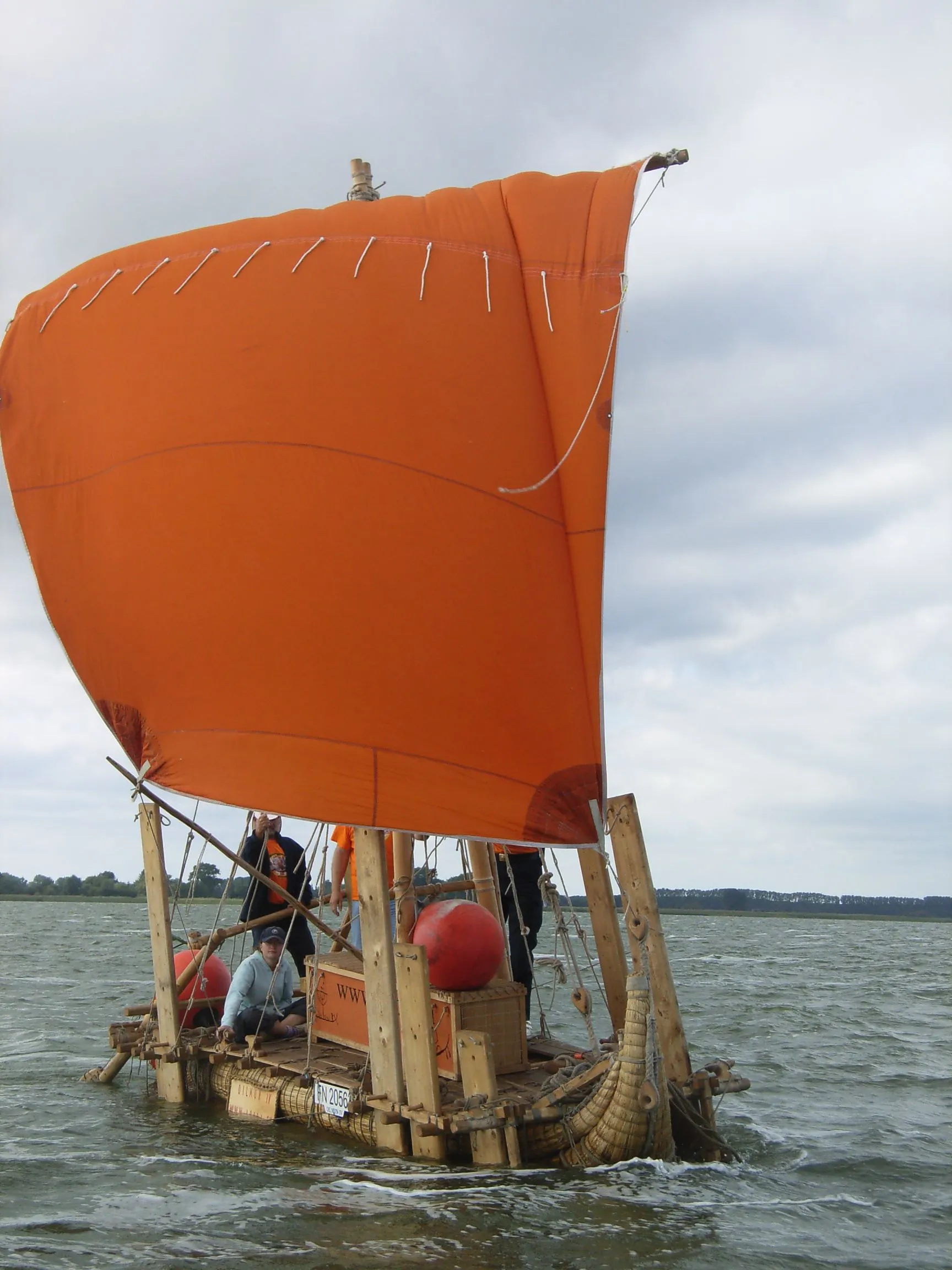
The launch of DILMUN IV took place once again at the Wangenheim Reservoir near Gotha. Even the first few sailing trips showed a significant improvement in the boat's maneuverability. The new centerboard mount in particular proved to be stable and low-maintenance.
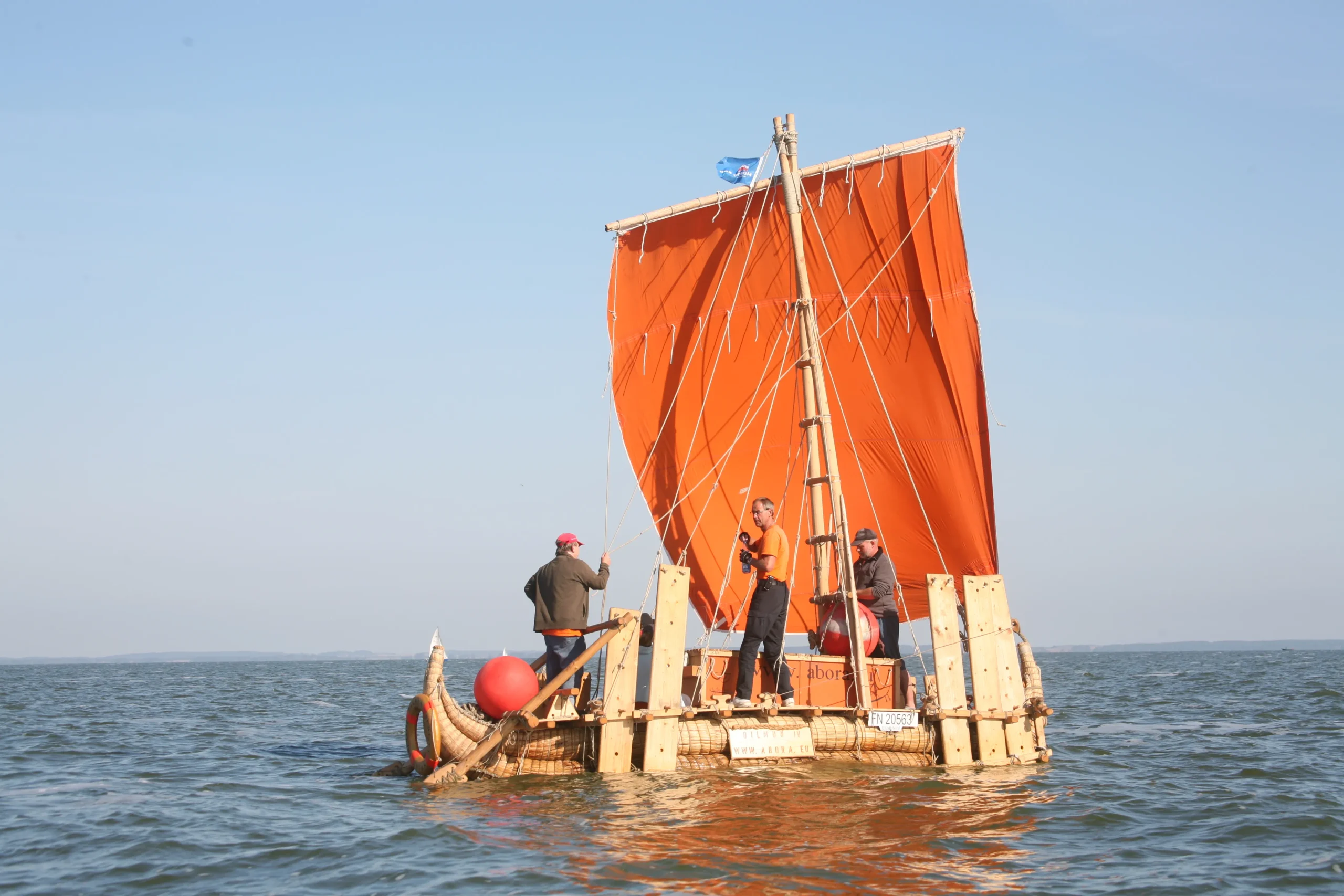
The actual maiden voyage took place during Warnemünder Woche 2009. In Warnemünde, the ABORA team received comprehensive support from the Hanse Sail Society and was able to conduct systematic test runs from the Hohe Düne marina.
The highlight of the trial was sailing against the wind through the narrow harbor entrance. The crew, which consisted mainly of experienced members of the ABORA III expedition, tacked within the marina until they reached the landing stage. This trip is still considered one of the best and most significant in the entire history of the project.
He not only confirmed the functionality of a reed boat equipped with Negada rock paintings, but also impressively documented the level of nautical experience that Dominique Görlitz's team had achieved in over 20 years of experimental research.
Conclusion and outlook
The main objective of DILMUN IV was fully achieved during numerous voyages. The lower centerboard holder, constructed from simple pieces of wood, functioned reliably—even under demanding conditions. What's more, when the hull was used again a year later on the Baltic Sea and Lake Constance and was already showing the first signs of aging, such as softening and shrinkage, the new construction continued to withstand the stresses.
Diese Ergebnisse untermauerten die zentrale Erkenntnis, dass sich das neue System auch für zukünftige Großexpeditionen eignet. Der Schilfsegler wurde anschließend aufwendig restauriert und steht heute in der Zentralwerkstatt Pfännerhall in Braunsbedra im Mittelpunkt der ABORA Sonderausstellung „Kam Kolumbus 15.000 Jahre zu spät?“.
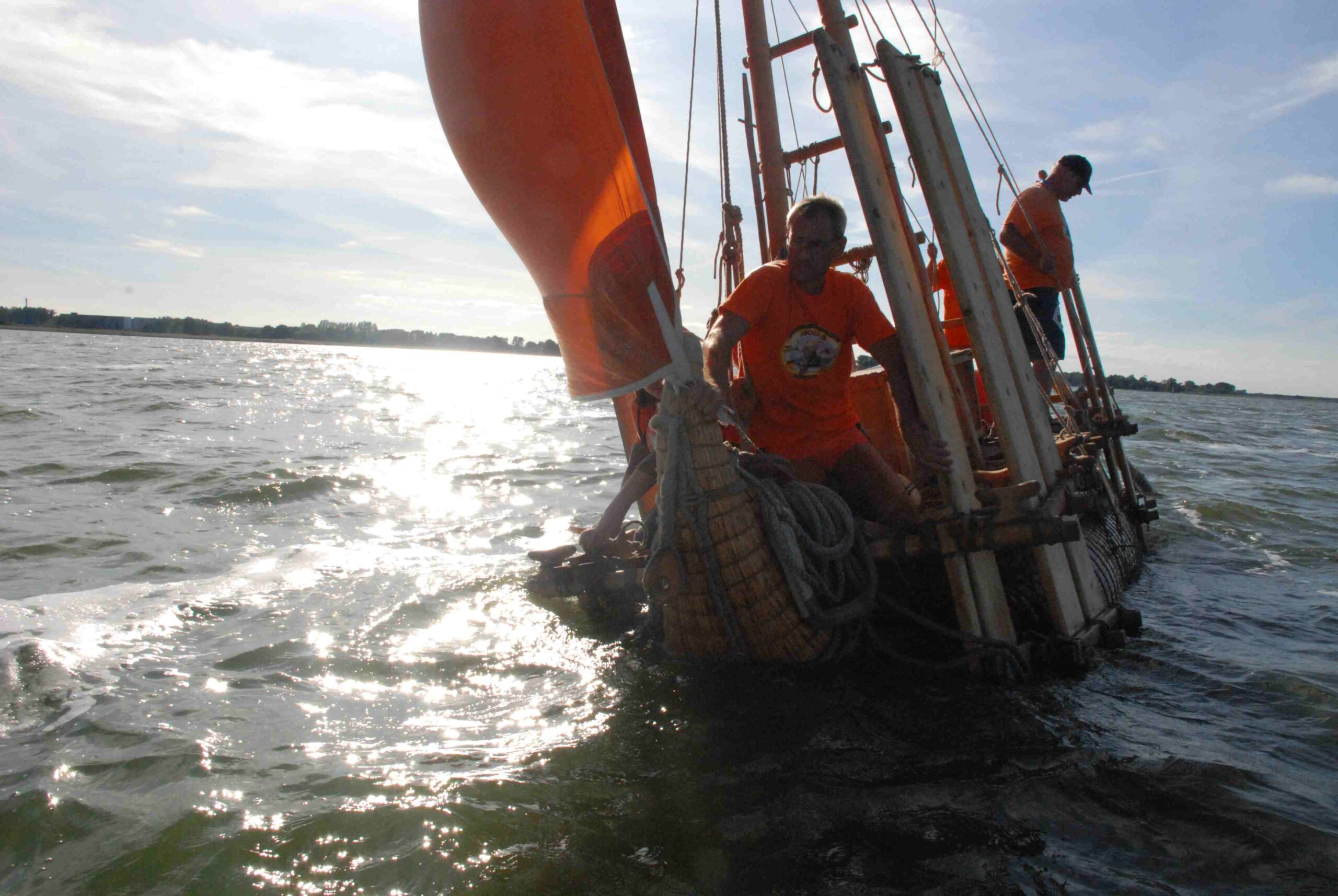
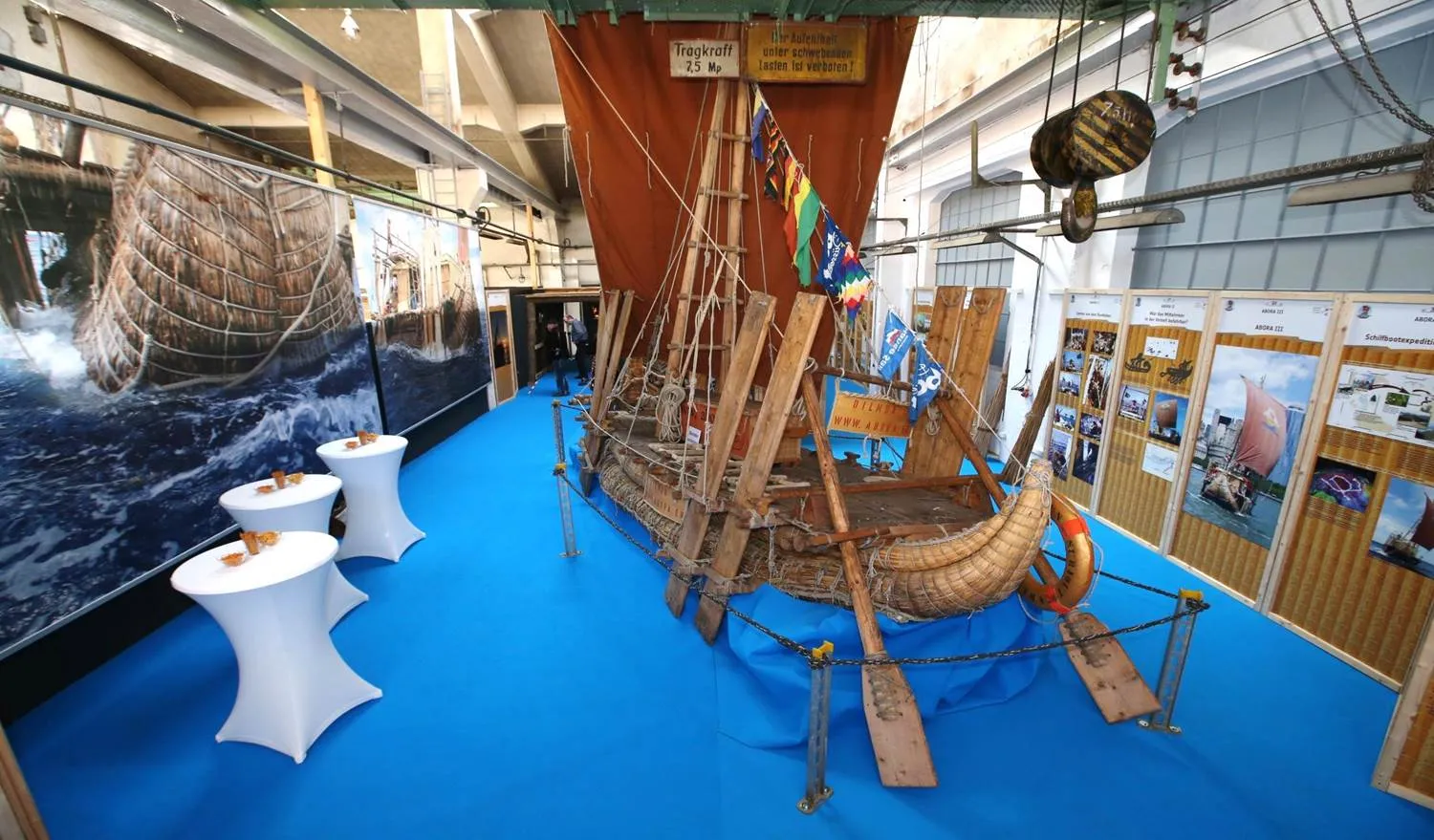
A look at the permanent exhibition at the ABORA Science Center in the Pfännerhall Braunsbedra. Since 2018, the DILMUN IV has been the centerpiece of an interactive exhibition about all major ABORA expeditions.
The practical implementation on ABORA IV was delayed longer than originally planned. The main reason was the so-called Cheops scandal triggered by the Cheops Project, which placed a considerable strain on Dominique Görlitz’s reputation. Only after extensive appeal proceedings in Cairo, which fully exonerated him, was it possible to look ahead once again.
With the support of new sponsors, the way was finally clear to implement the innovations developed at DILMUN IV in a new ABORA IV expedition.