back
DILMUN II
The first reed boat with lee boards

Goal
Learning the side lee board sailing technique
Size
Length 6 m, width 2 m, weight 1 t, sail area approx. 20 m²
Material
European reed
Sailing performance
First time sailing close-hauled (90°)
Field of application
Wangenheim Reservoir near Gotha/Thuringia
Objective
DILMUN II was developed as a direct consequence of the experiences gained with DILMUN I. Despite all the disappointment, the premature termination of the first large-scale experiment had provided a key insight: reed boats react to wind and waves in a more differentiated way than previously assumed. In particular, the observation that DILMUN I occasionally aligned itself perpendicular to the wind challenged the prevailing dogma that reed boats could only be maneuvered on pure downwind courses.
The aim of *DILMUN II* was therefore to systematically verify these observations. The central question was whether simple structural additions to the hull —particularly in the form of steering centreboards—could enable controlled course-keeping. This was based on newly acquired archaeological evidence from Egypt, which pointed to previously overlooked steering aids on prehistoric reed boats.
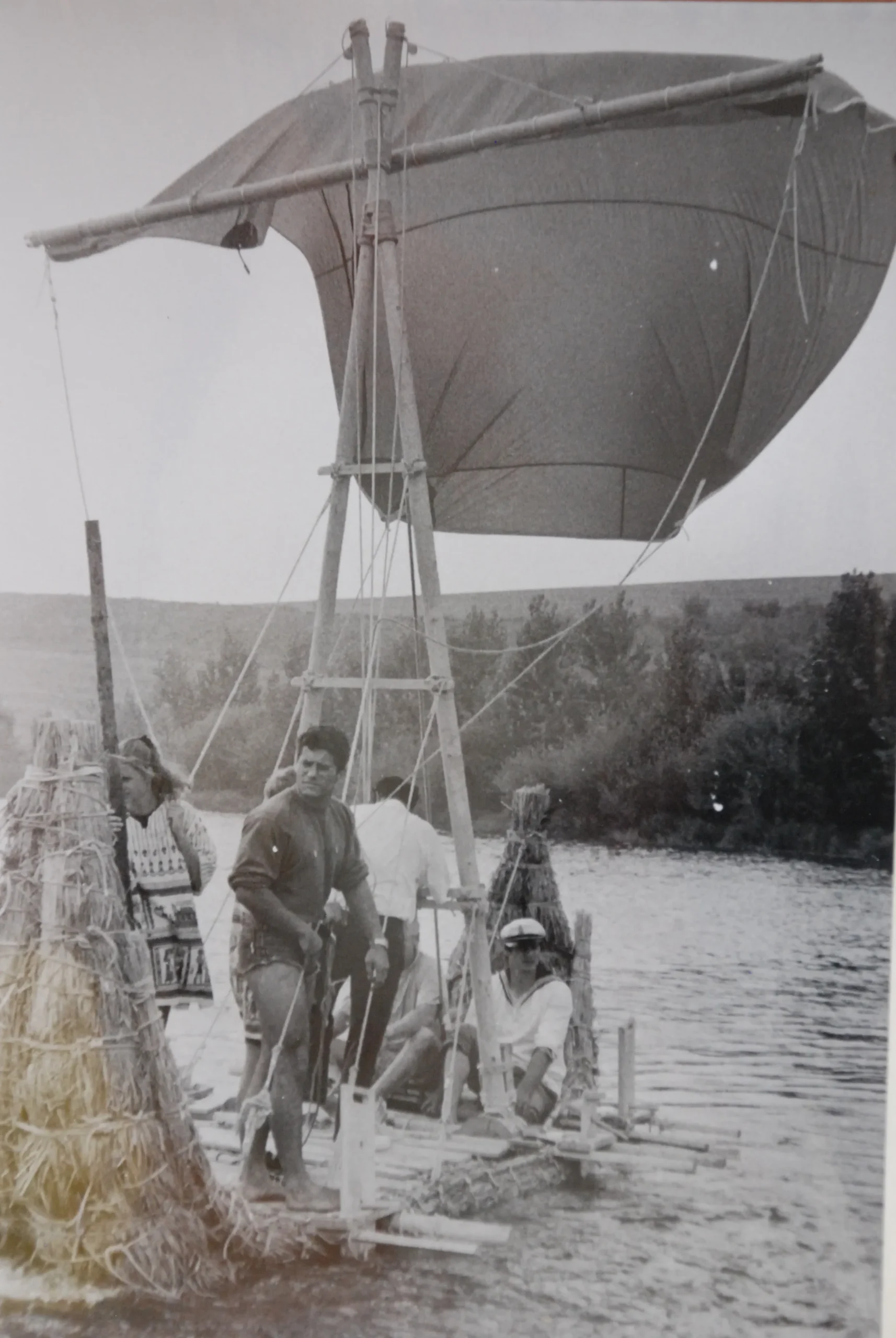
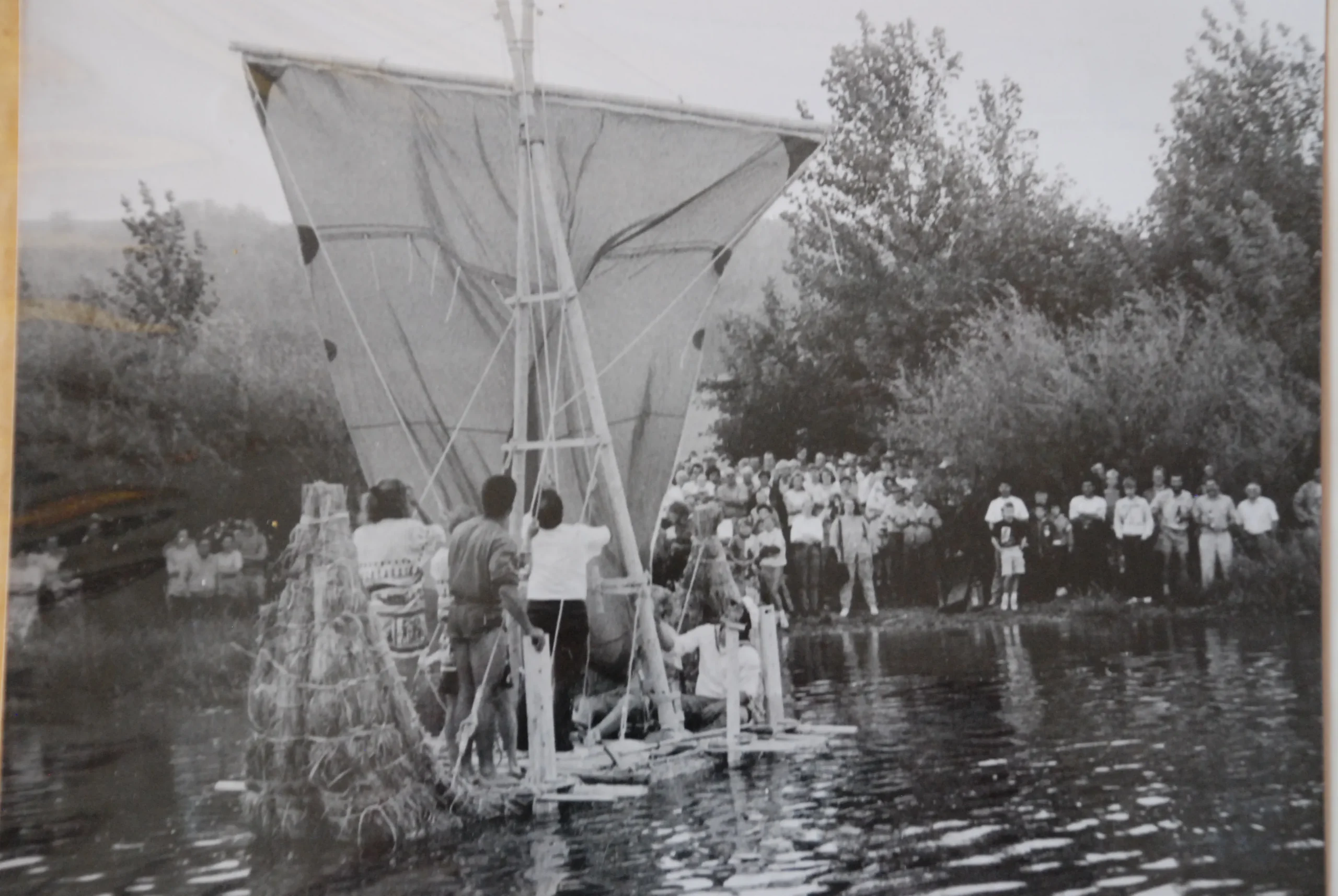
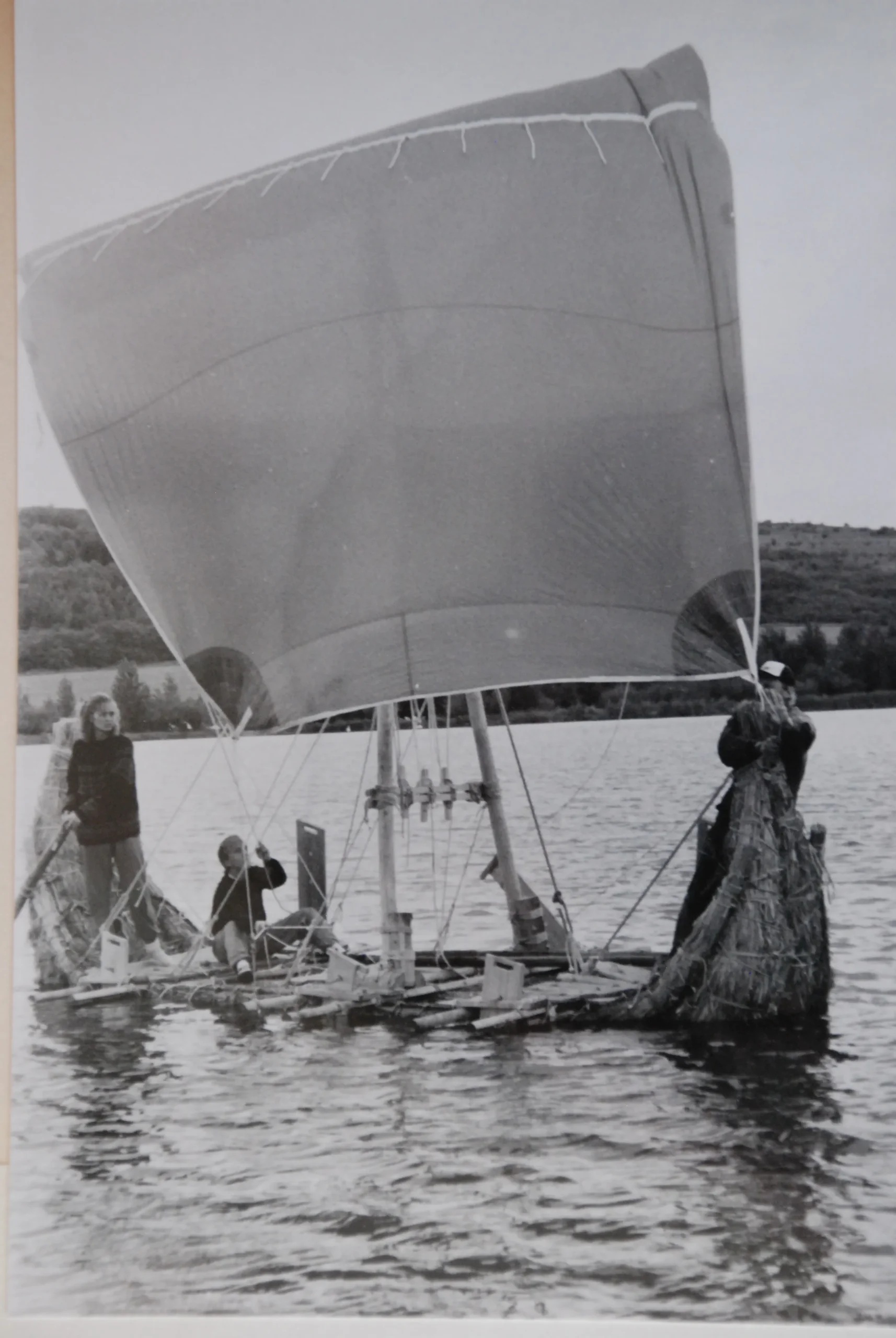
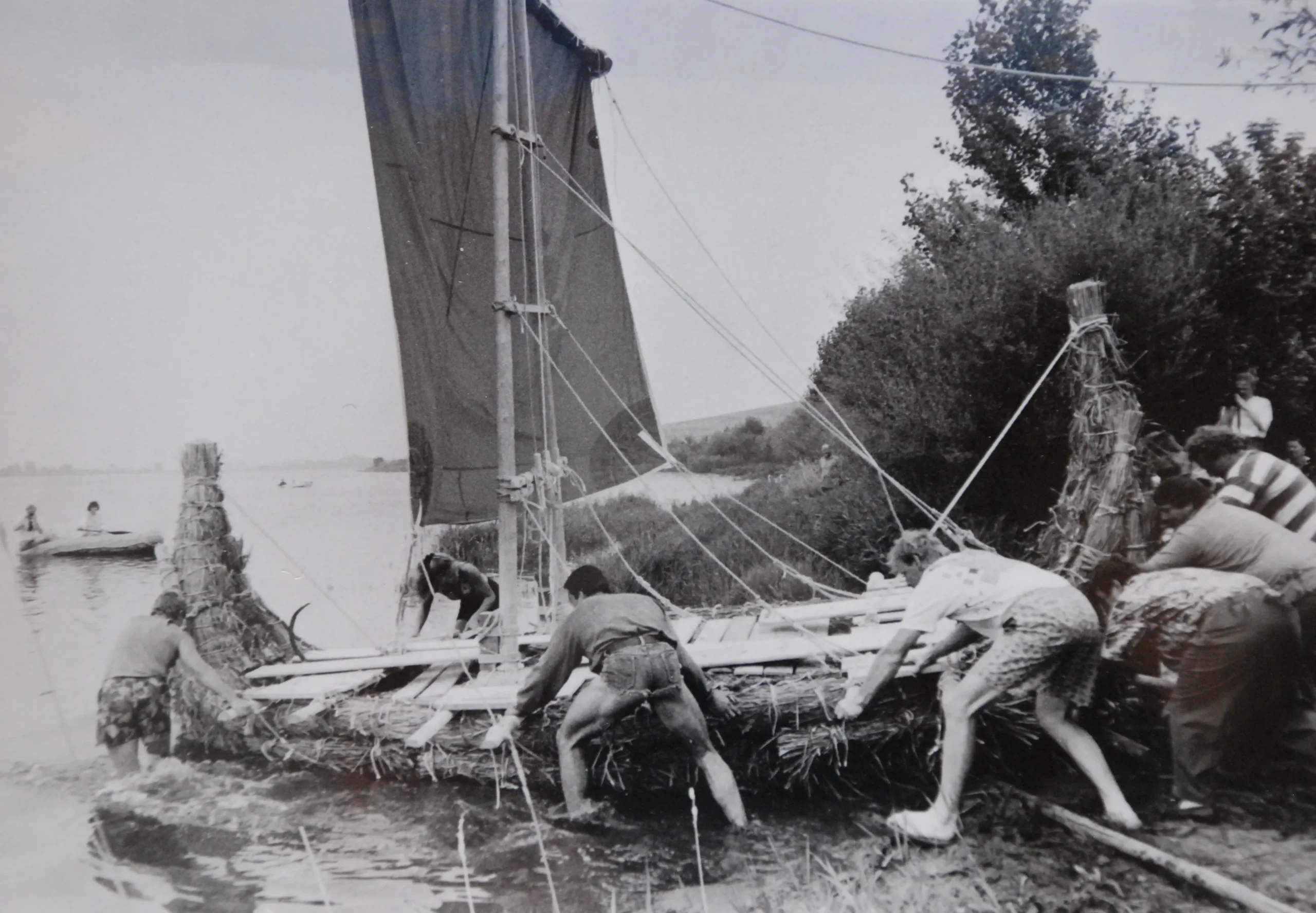
The experiment was documented for the first time by MDR. In addition, the editor of the Thüringer Allgemeinen Claudia Klinger produced a comprehensive black-and-white photo series documenting the different phases of the experiment.
Archaeological impulse
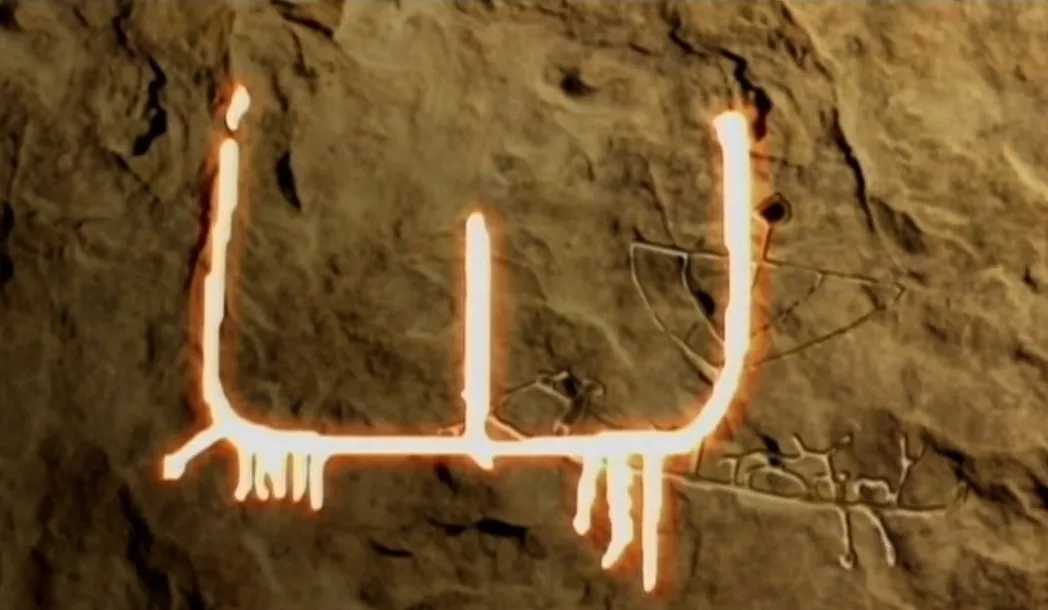
During their trip to Egypt in 1992, Dominique Görlitz and Cornelia Lorenz were made aware of the predynastic Negada culture. Rock paintings from Wadi Hammamat (Upper Egypt) in particular showed depictions of reed boats with simple line markings visible on their bows and sterns.
Görlitz did not interpret these markings as purely decorative elements, but rather as indications of primitive keels or leeboards that served for stabilization and steering. This hypothesis contradicted the prevailing academic view, according to which prehistoric reed boats were considered largely unsteerable.
DILMUN II was designed to test this hypothesis experimentally.
Construction and technical innovations
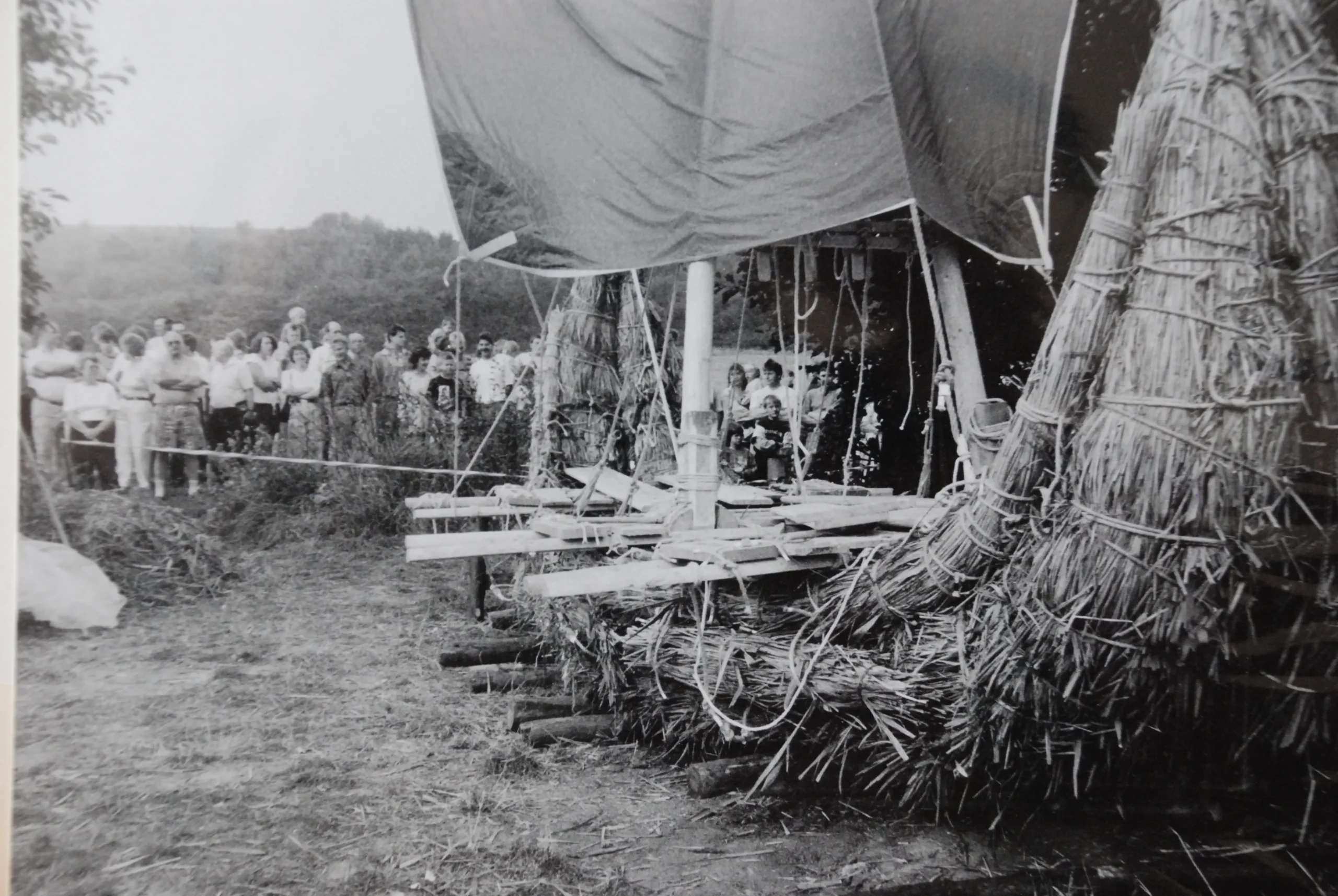
DILMUN II was once again built near Gotha, incorporating the experience gained from the preliminary experiments with DILMUN I. The hull remained true to the basic form of a classic reed raft. In just two weeks, the crew built a six-meter-long raft weighing around 1 ton. This was first rigged according to pre-Egyptian rock paintings.
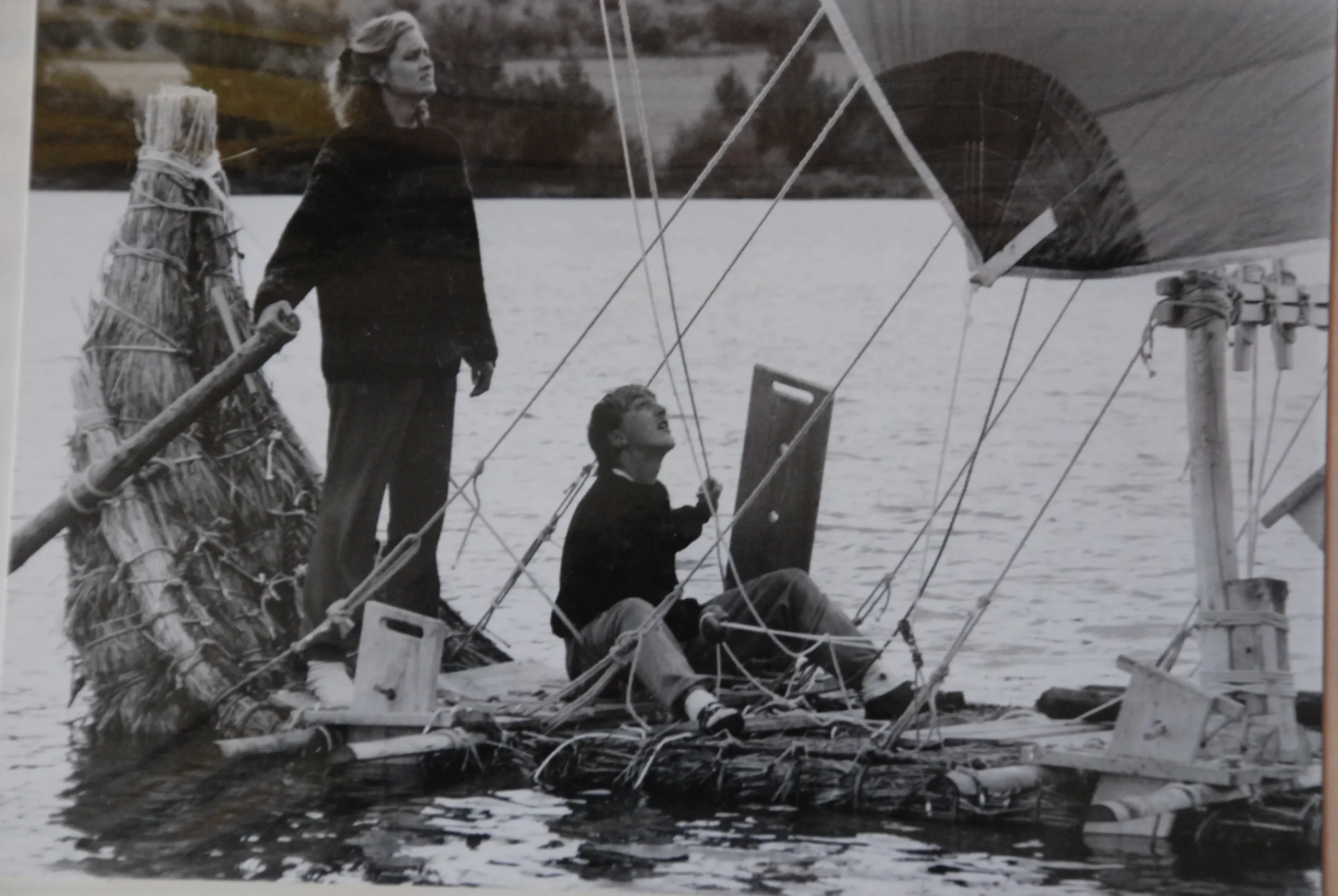
The key innovation was the simple design of keels and side keels, which were attached to the bow and stern – directly inspired by pre-dynastic rock paintings in Upper Egypt. In addition, the position of the mast and the size of the sails were more carefully coordinated in order to better control the influence of wind pressure and lateral resistance.
The goal was not perfection, but rather an experiment: DILMUN II was explicitly conceived as a floating test laboratory.
Testing and road trials
DILMUN II was once again built near Gotha, incorporating the experience gained from the preliminary experiments with DILMUN I. The hull remained true to the basic form of a classic reed raft. In just two weeks, the crew built a six-meter-long raft weighing around 1 ton. This was first rigged according to pre-Egyptian rock paintings.
The central innovation consisted of simple keel or leeboard constructions mounted at the bow and stern. In combination with a more deliberate adjustment of mast position and sail size, the influence of wind pressure and lateral resistance could be controlled much more effectively. The Wangenheim *DILMUN II* project thus confirmed, two years after the discovery of previously unknown rock carvings in Upper Egypt, the remarkable sailing and manoeuvrability of reed boats equipped with sails. At the same time, the “prophecy” of a young Egyptologist from Cairo (1992) was fulfilled, who had called for a departure from the classical theses of Thor Heyerdahl and the consideration of new sources.
The experience gained on the reservoir in central Thuringia, which covered only around 60 hectares, was to become of great significance for his later research:
“For my later research, this experience would prove to be very important, because the remains of the Predynastic Naqada cultures (3,900–3,100 BC) would, 30 years later, unexpectedly catch up with me on the Atlantic …” Canary islands & Cuba Project“For my later research, this experience would prove to be very important, because the remains of the Predynastic Naqada cultures (3,900–3,100 BC) would, 30 years later, unexpectedly catch up with me in the Atlantic …”
The goal was not perfection, but experimentation: DILMUN II explicitly saw itself as a floating experimental laboratory.
Significance within the DILMUN series
DILMUN II marked a decisive step: a bold but largely intuitive experiment evolved into a targeted, hypothesis-driven experimental setup. The findings from DILMUN II formed the technical basis for all subsequent reed boat projects by Dominique Görlitz.
For the first time it became clear that:
- prehistoric reed boats may be steerable,
- simple constructive means are sufficient to enable beam reach and upwind courses,
- and many traditional assumptions about early seafaring need to be reassessed.
*DILMUN II* thus marked the transition from observation to insight—and opened the way for larger, more ambitious experiments. The logical next step was to preserve a still largely intact reed vessel, extend it with a layer of fresh reeds, and test it again on the Baltic Sea a year later. Encouraged by the initial success of *DILMUN II*, Görlitz dared to contact the organizers of the Kiel Week, who in fact invited him and his crew to the 100th Kiel Week in 1994 at the Olympic harbour in Schilksee. einluden.
go to DILMUN III