back
DILMUN S
ein Regelbruch mit großem Erfolg

Goal
Construction of a highly durable raft as a functional replica
Size
Length 6 m, width 2 m, weight 1.8 t, sail area approx. 25 m²
Material
Modern materials made of wood, polystyrene, and reed mats as floats
Sailing performance
Good courses close to the wind (approx. 80°)
Field of application
Baltic Sea, Mediterranean Sea, Geiseltal Lake, and Wangenheim Reservoir
Objective
Nach dem Erfolg von DILMUN IV und angesichts noch ausstehender Großsponsoren, die einer zeitnahen Fortsetzung mit ABORA IV entgegenstanden, entschieden sich Dominique Görlitz und sein Co-Skipper Peter Schmolke zu einem innovativen Zwischenschritt: dem Bau eines Funktionsreplikats aus modernen Materialien, das alle wesentlichen Eigenschaften eines frühzeitlichen Schilfbootes nachbilden sollte.
The trigger was not only technical advances, but also an organizational necessity. The media presence of DILMUN IV led to a sharp increase in the number of association members. Many of the new members hoped to participate in ocean expeditions in the future. However, since real reed boats made of totora or European reeds have a limited lifespan of only about two to three years, new training boats would have had to be built regularly—an expense that would have been impossible to sustain in the long term, both financially and in terms of manpower.
The solution was a bold move: a durable, robust training and experimental boat that combines archaic sailing characteristics with modern durability.
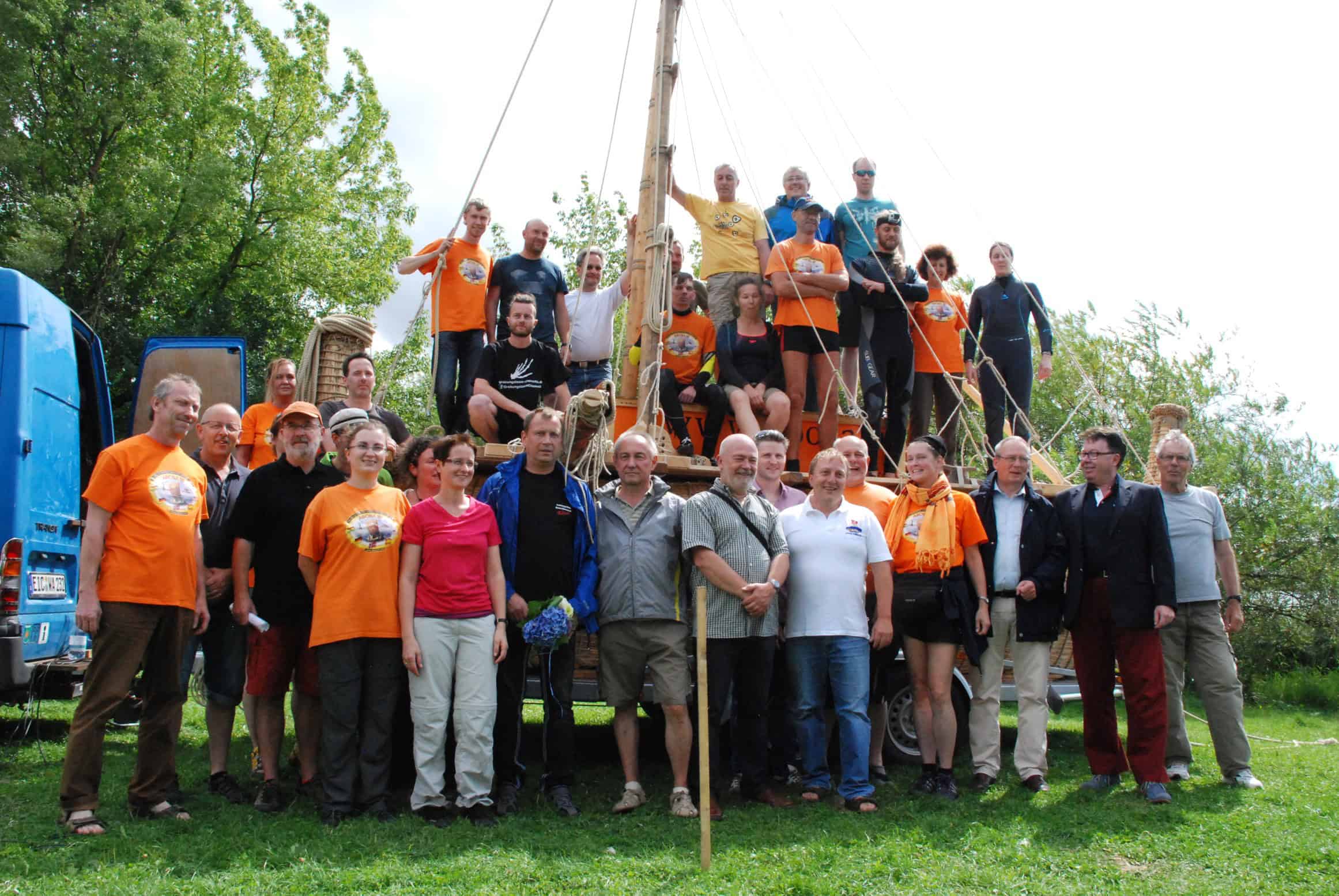
Design and construction
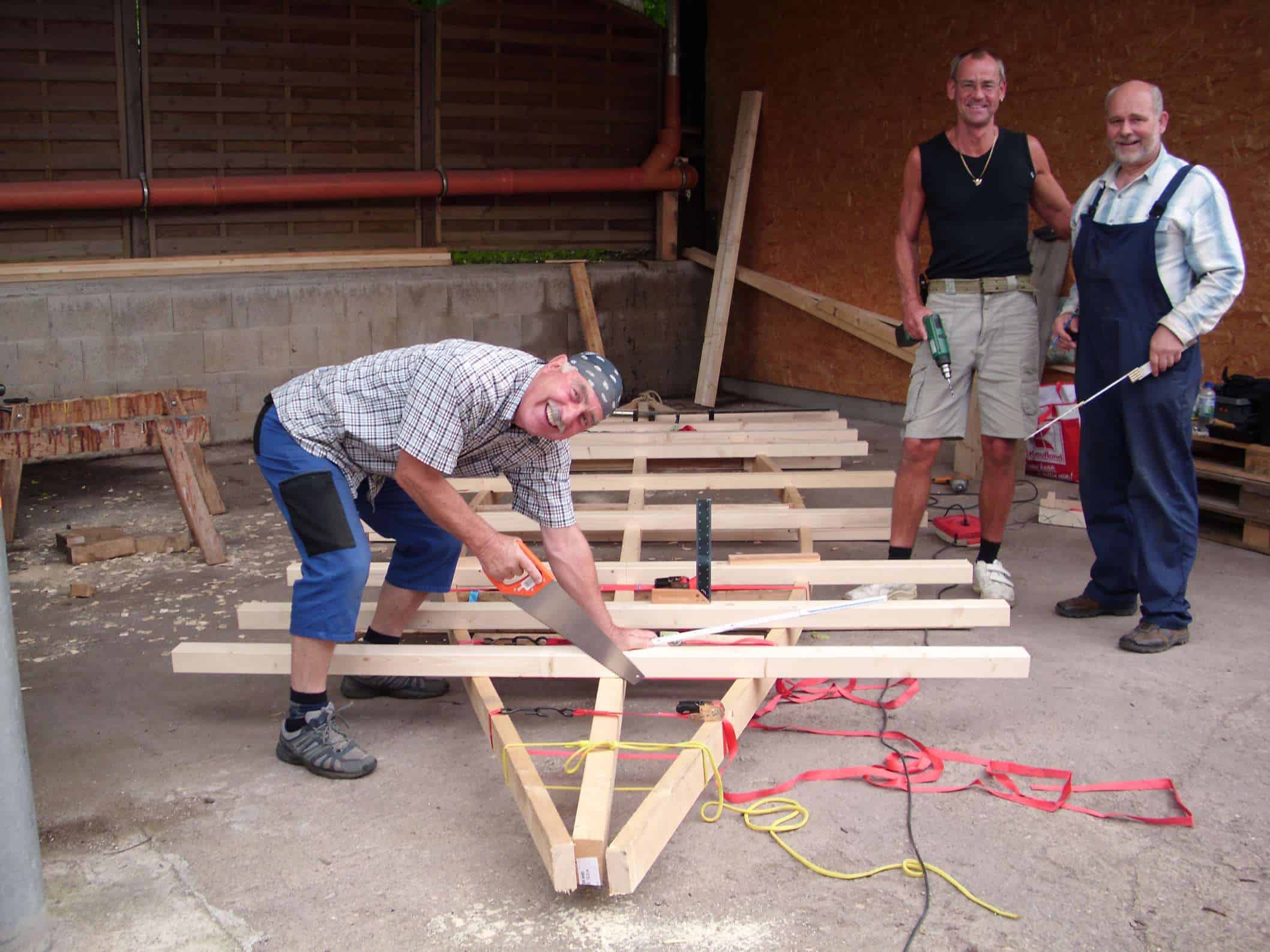
Getreu dem Leitmotiv „Aus Altem entsteht mit genügend Motivation immer auch etwas Neues“ entwickelte Peter Schmolke, unterstützt von Dominique Görlitz und Thomas Lübker, über einen Zeitraum von fast zwei Jahren in den Holzbauwerken Gotha ein neuartiges Wasserfahrzeug
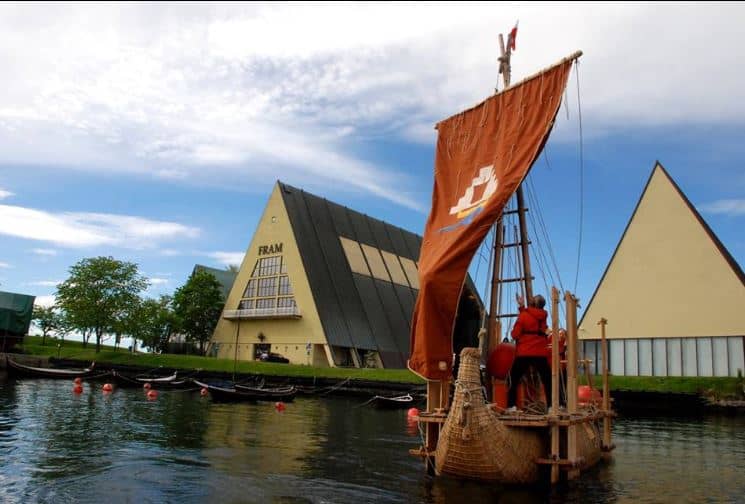
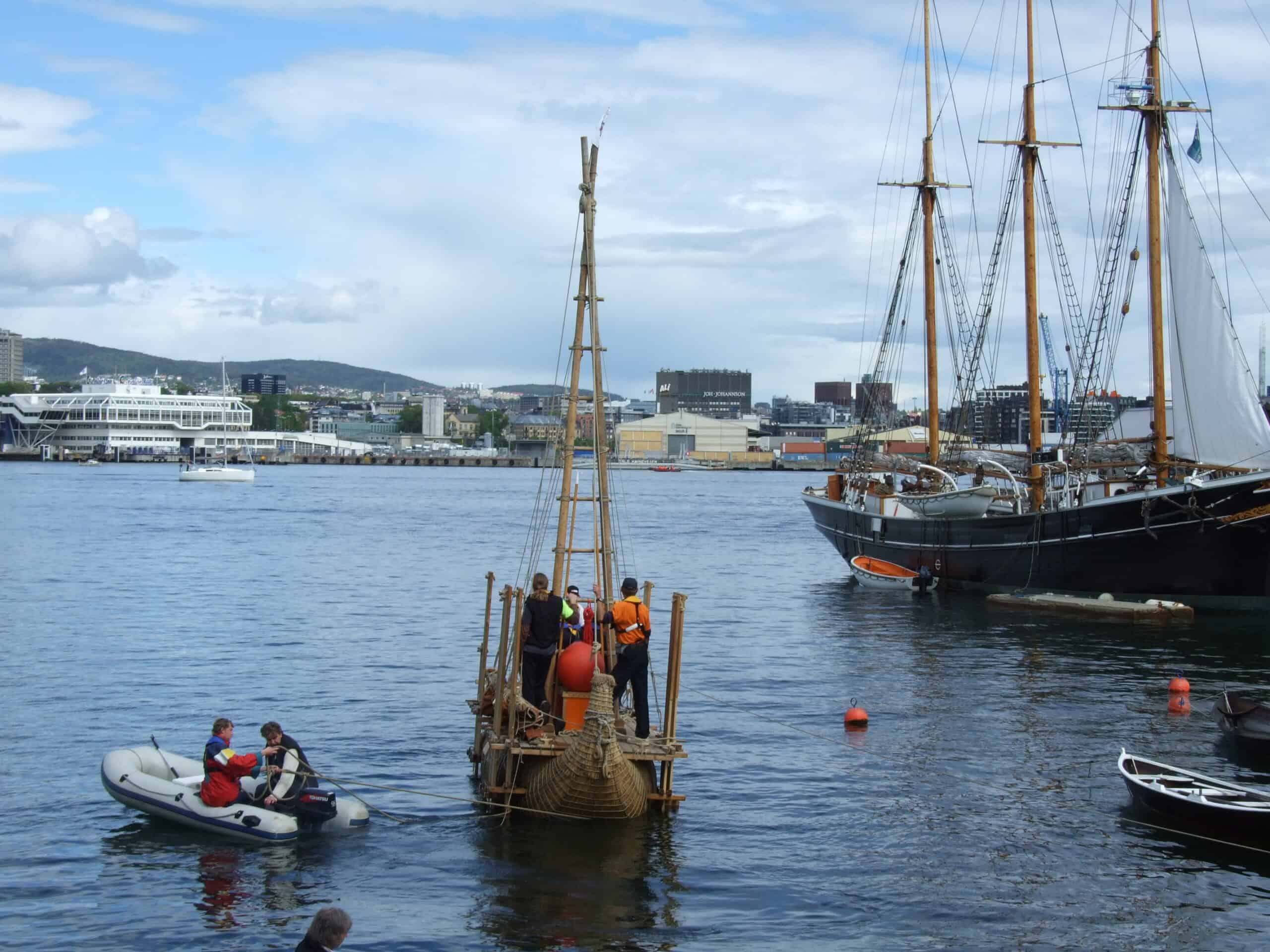
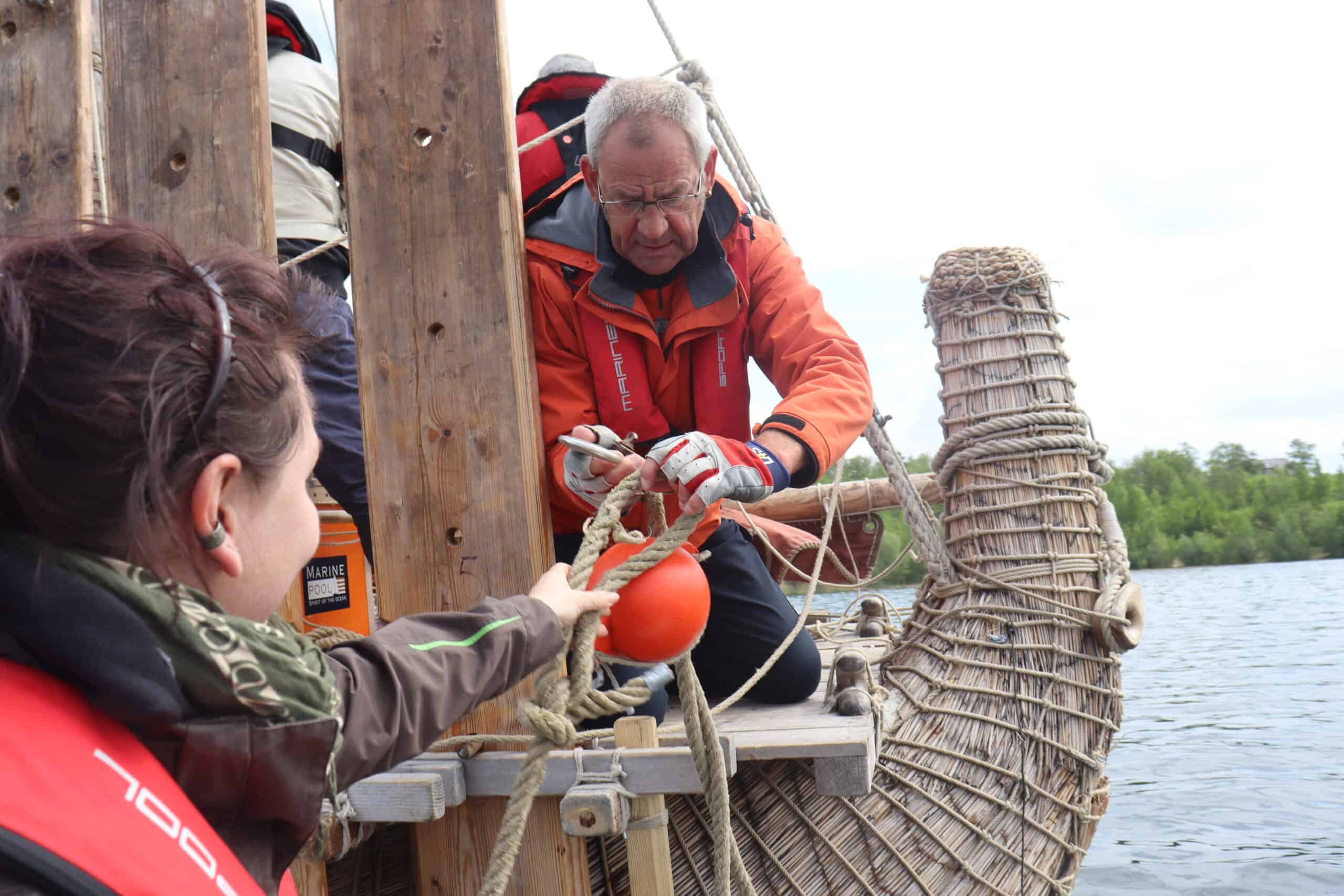
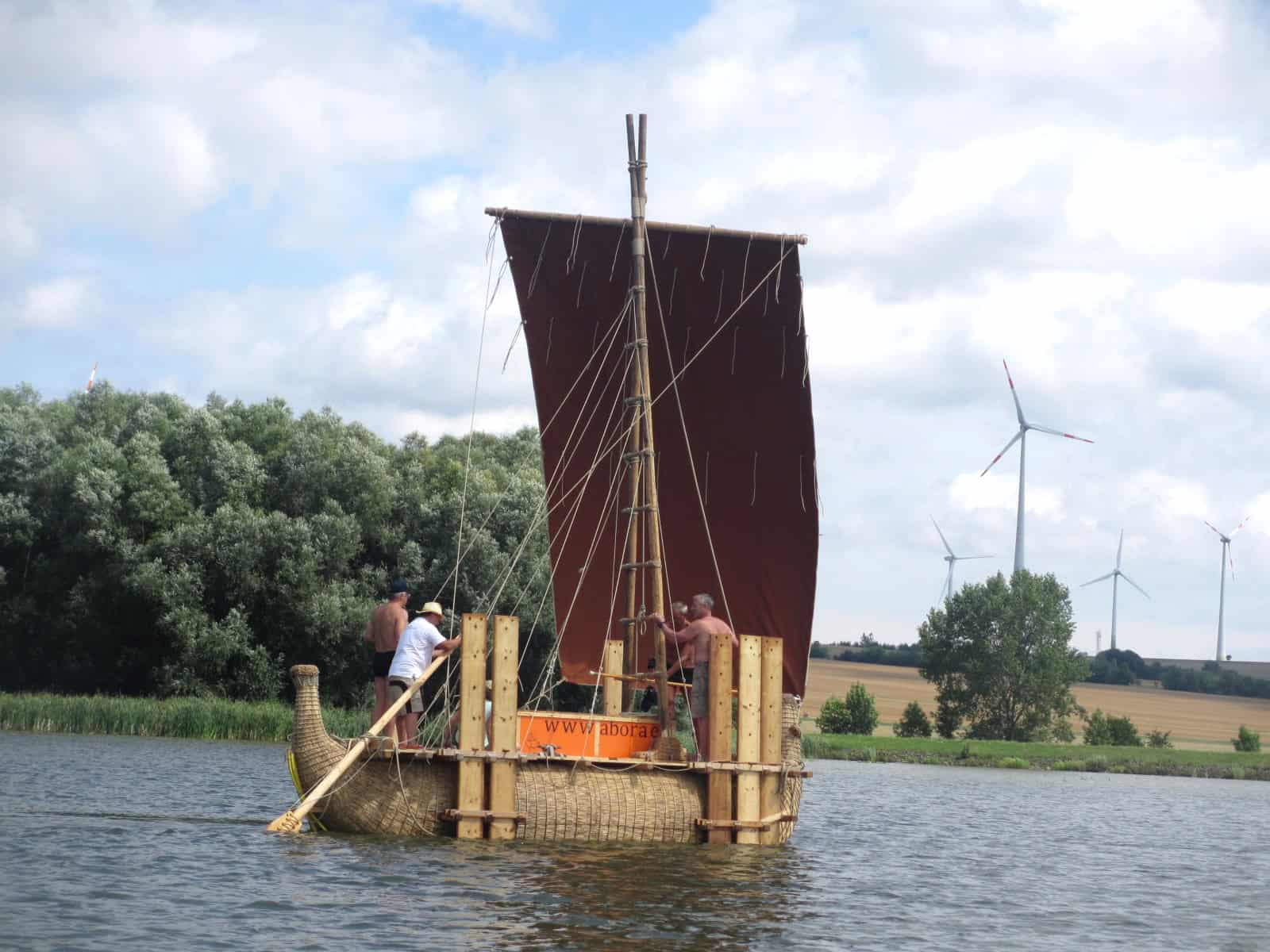
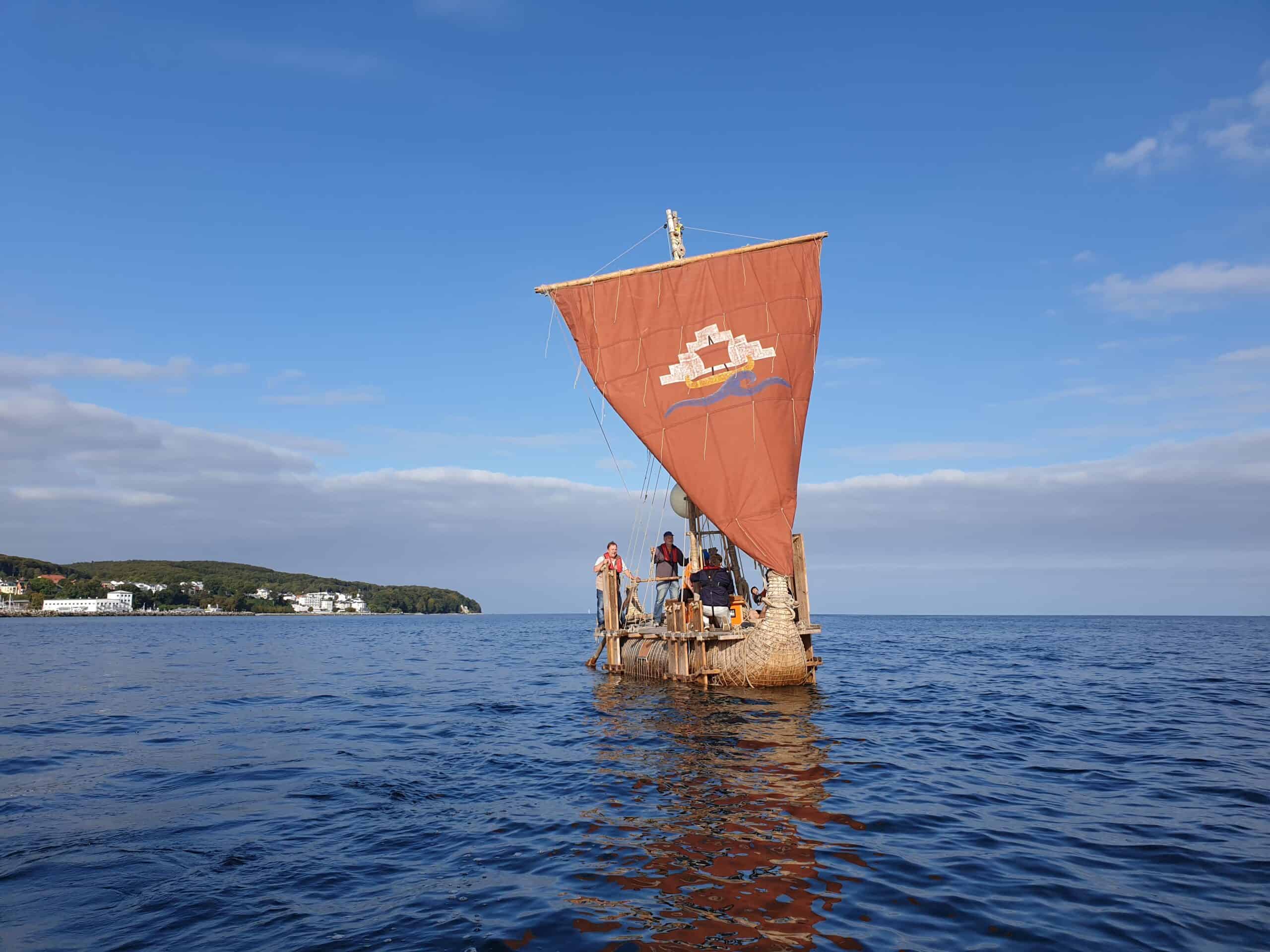
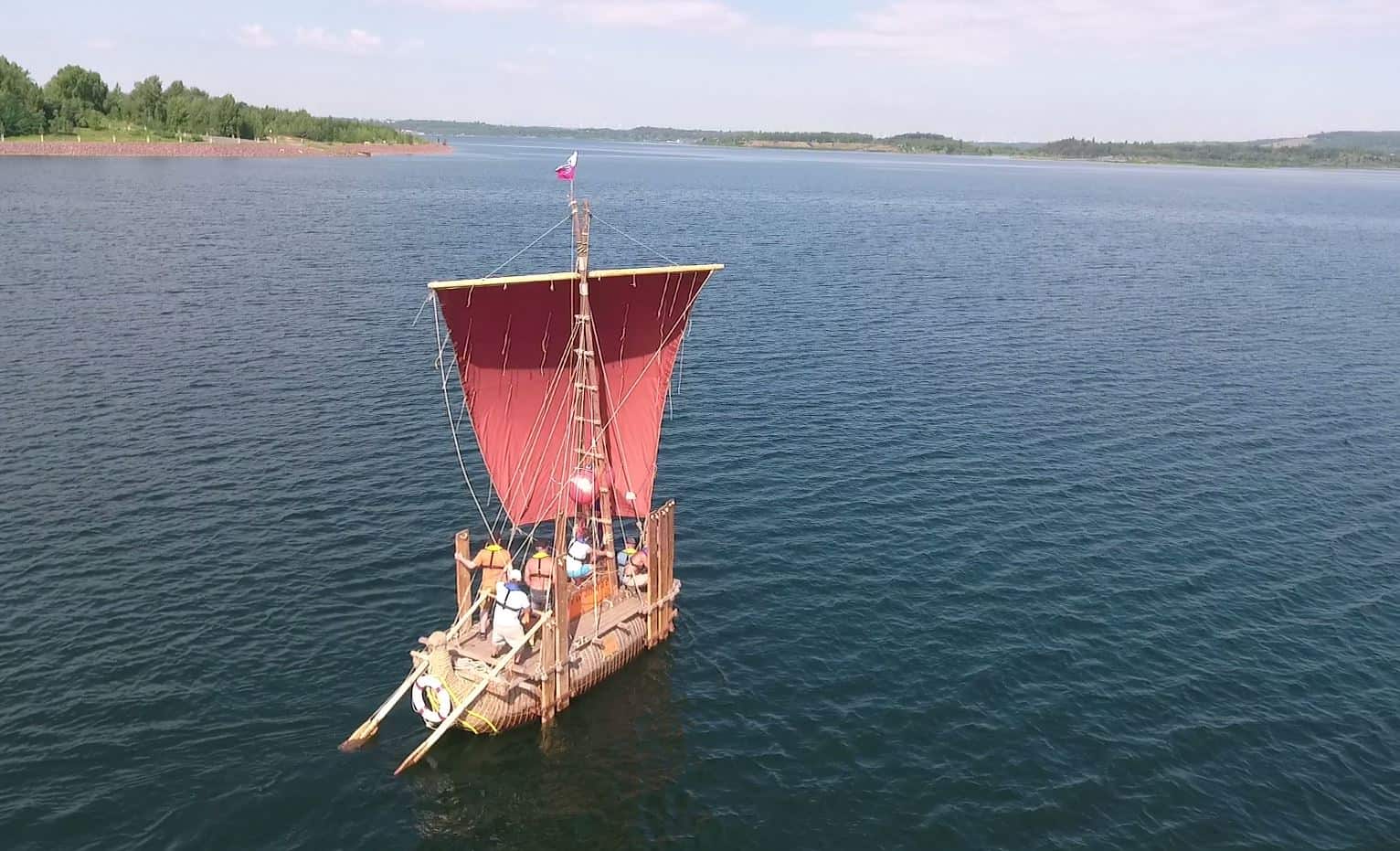
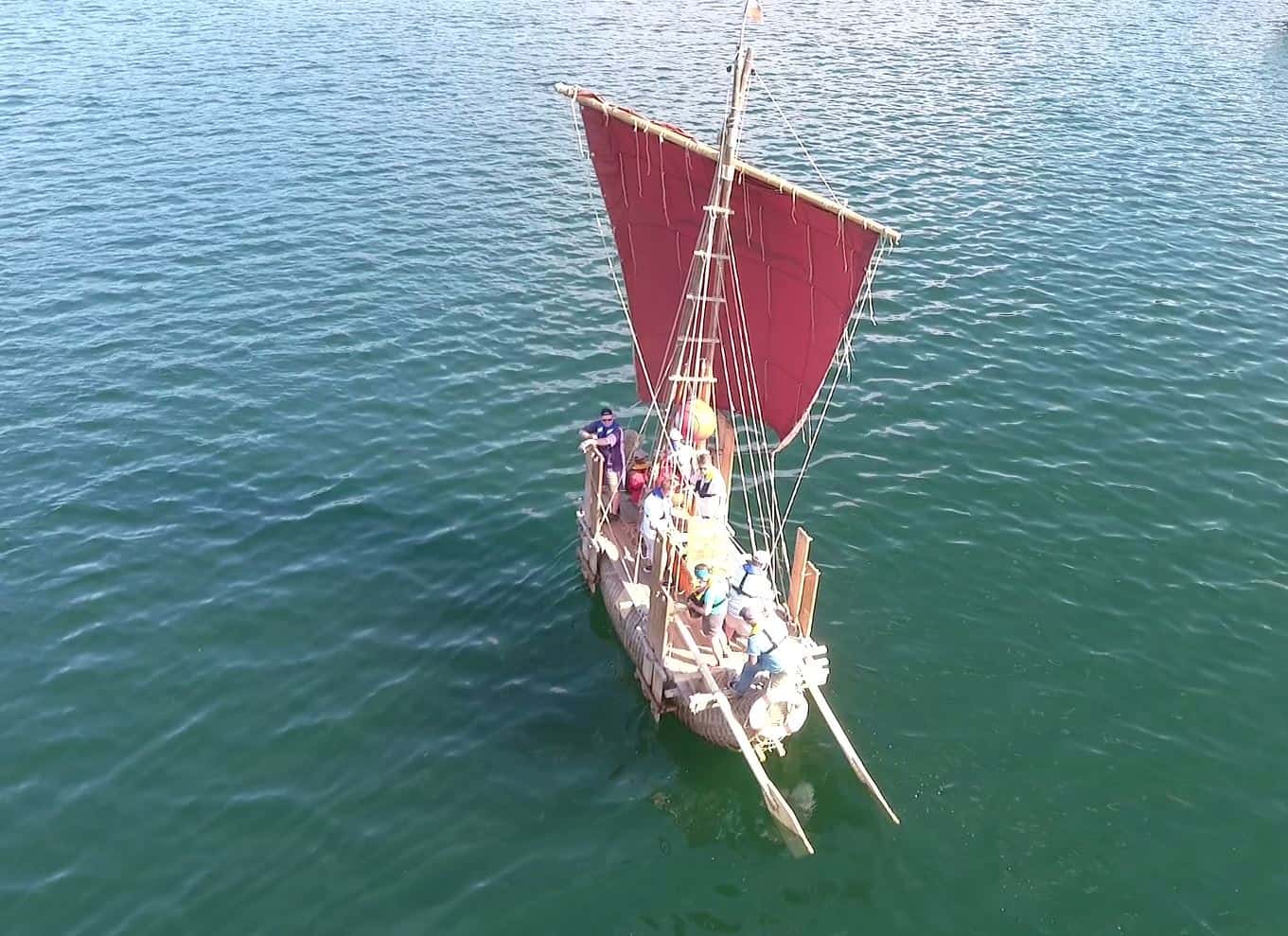
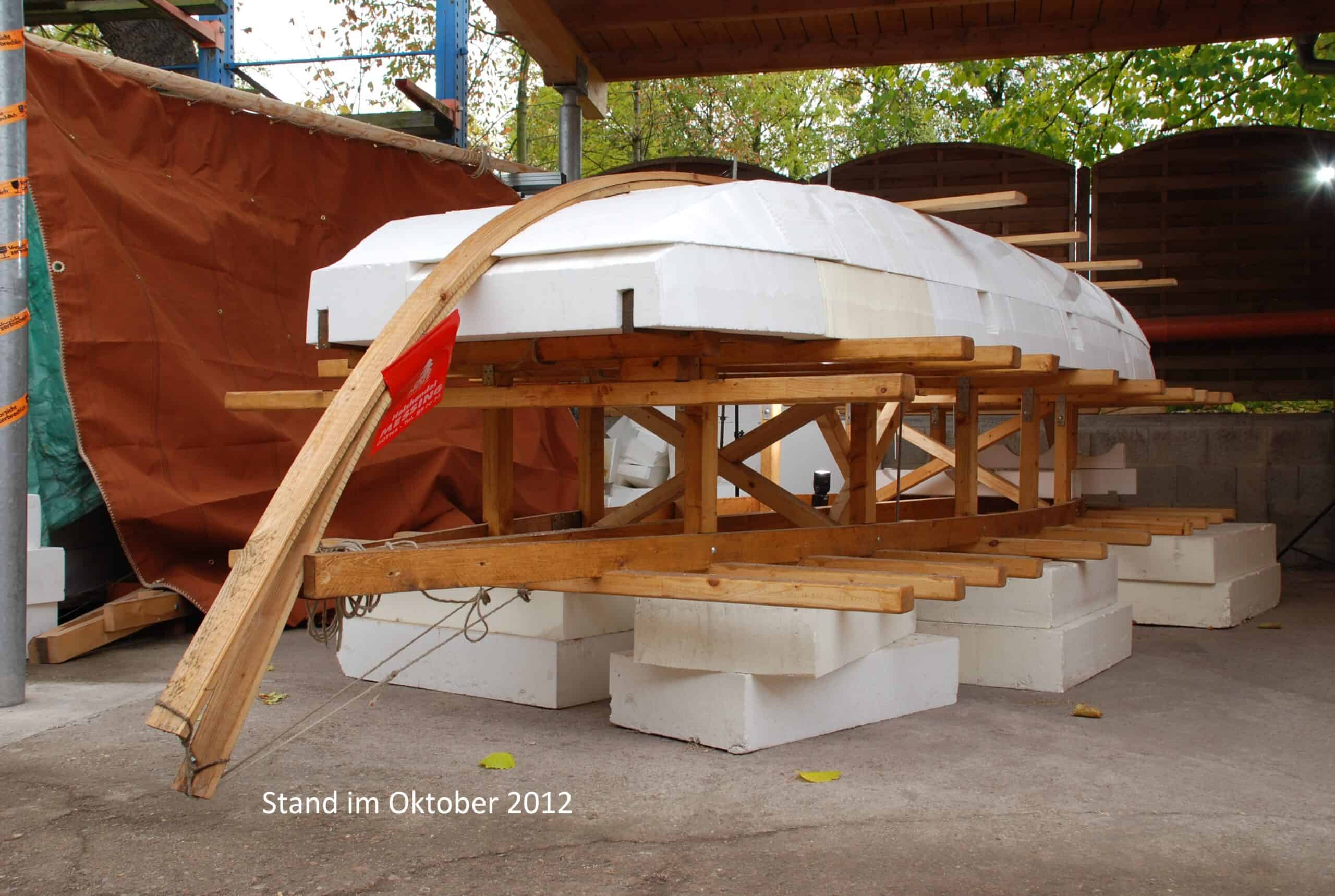
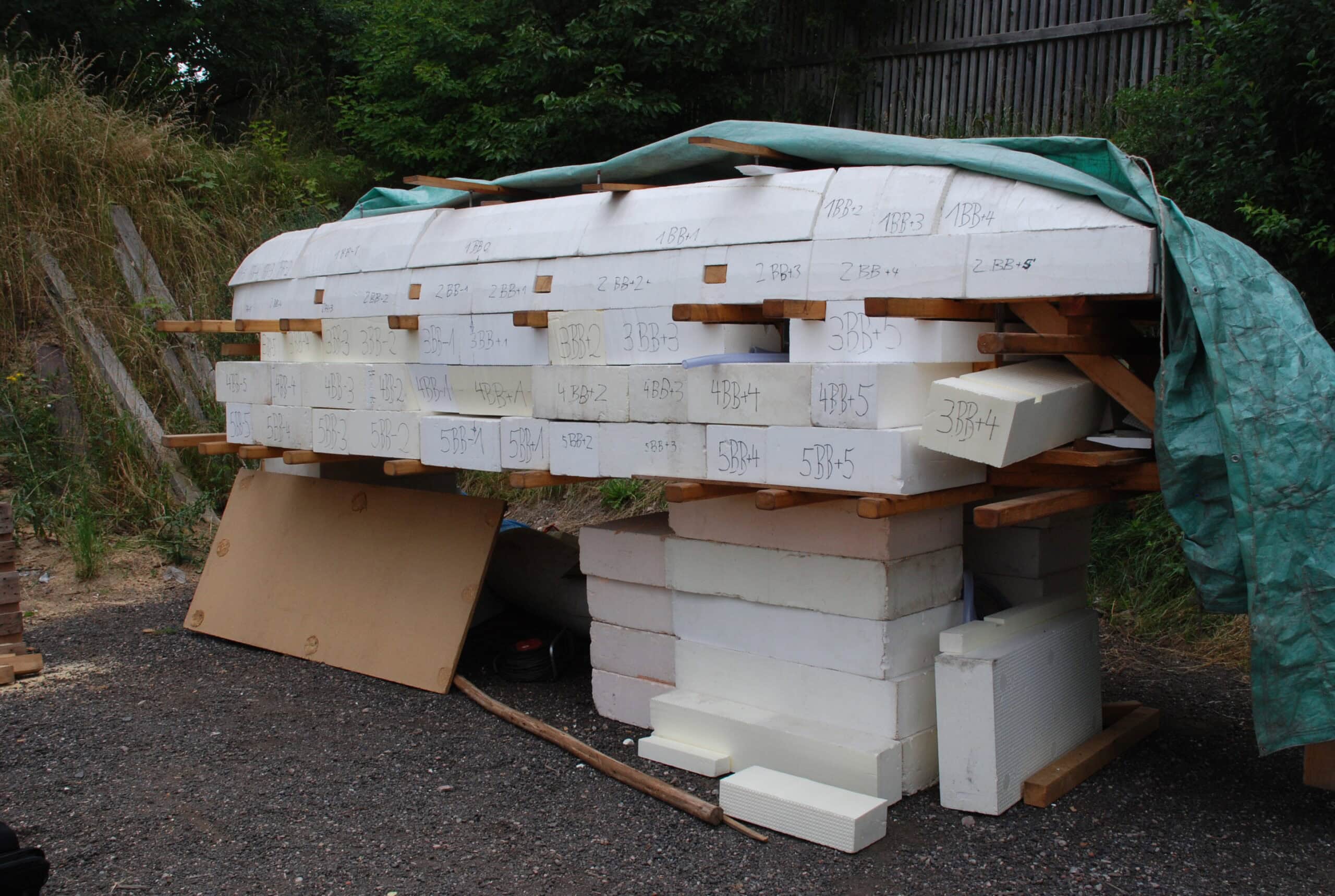
The hull of the DILMUN S consists of a wooden inner skeleton that supports four GRP tubes as water ballast (approx. 800 liters in total). The spaces between the tubes were filled by hand with precisely cut polystyrene blocks in a complex process. On this basis, the team formed the typical reed boat architecture, which was then wrapped with reed rolls and ropes by numerous helpers.
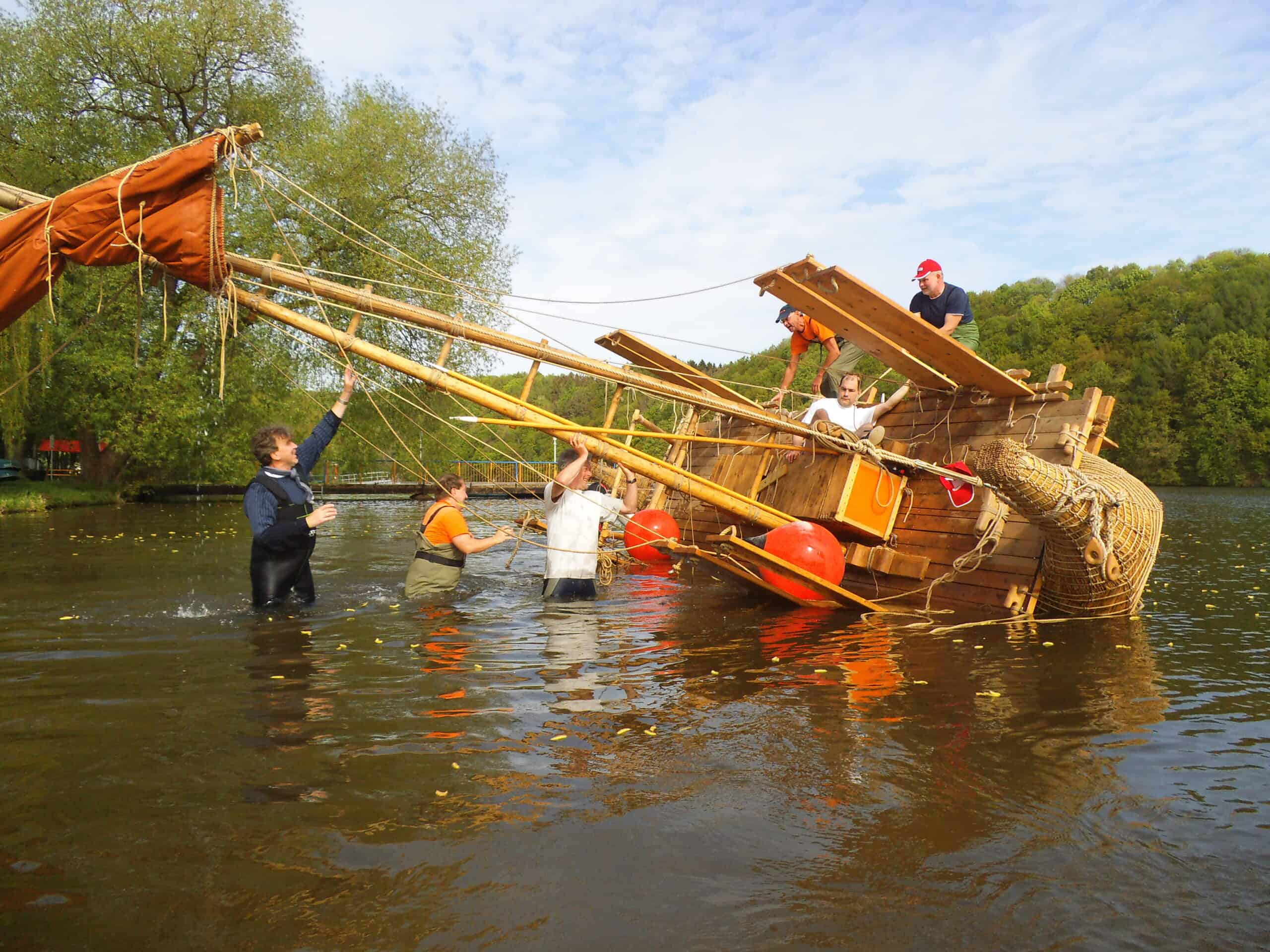
Once the work was complete, the rigging was installed based on Stone Age models. The wooden lower sword mount developed for DILMUN IV was also used again for DILMUN S. The launch took place at the Wangenheim Reservoir near Gotha.
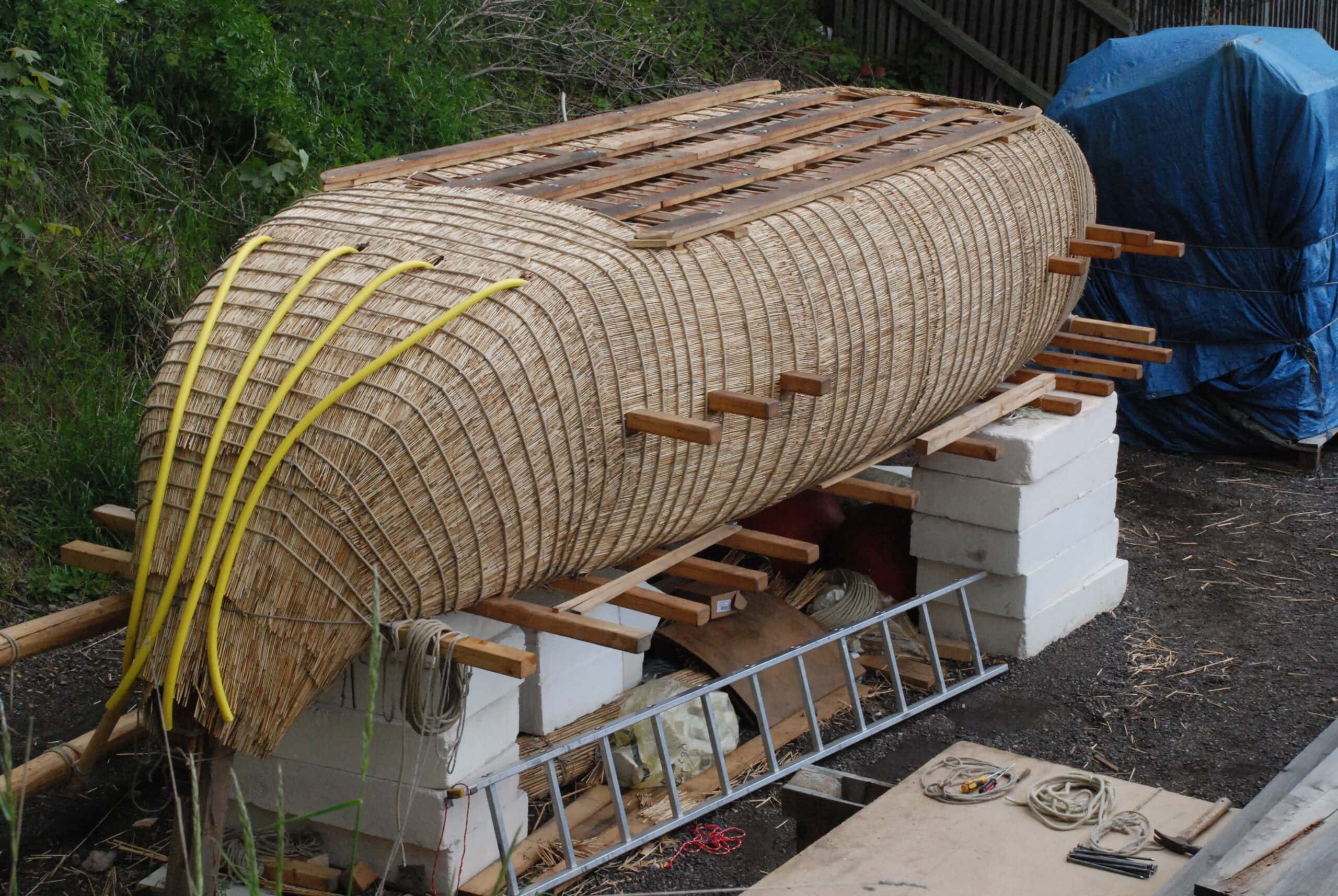
Testing and road trials
The first tests quickly showed that the DILMUN S was an exceptionally successful experimental vehicle. Although the keel-less raft proved to be somewhat less stable than a real reed boat, its dead weight of around one ton and the water ballast enabled very good control with the appropriate experience.
Der Styroporkörper erzeugt so viel Auftrieb, dass nur etwa 20 Zentimeter des Rumpfes eintauchen. Dadurch fehlt dem Boot ein ausgeprägter Lateralplan, was bedeutet, dass es nicht sehr hoch am Wind segeln kann. Die an Bug und Heck angebrachten Schwerter reichen nicht aus, um die Seitabdrift wie an einem echten Schilfboot zu kompensieren. In der Praxis erreicht DILMUN S daher meist etwa 90° über Grund.
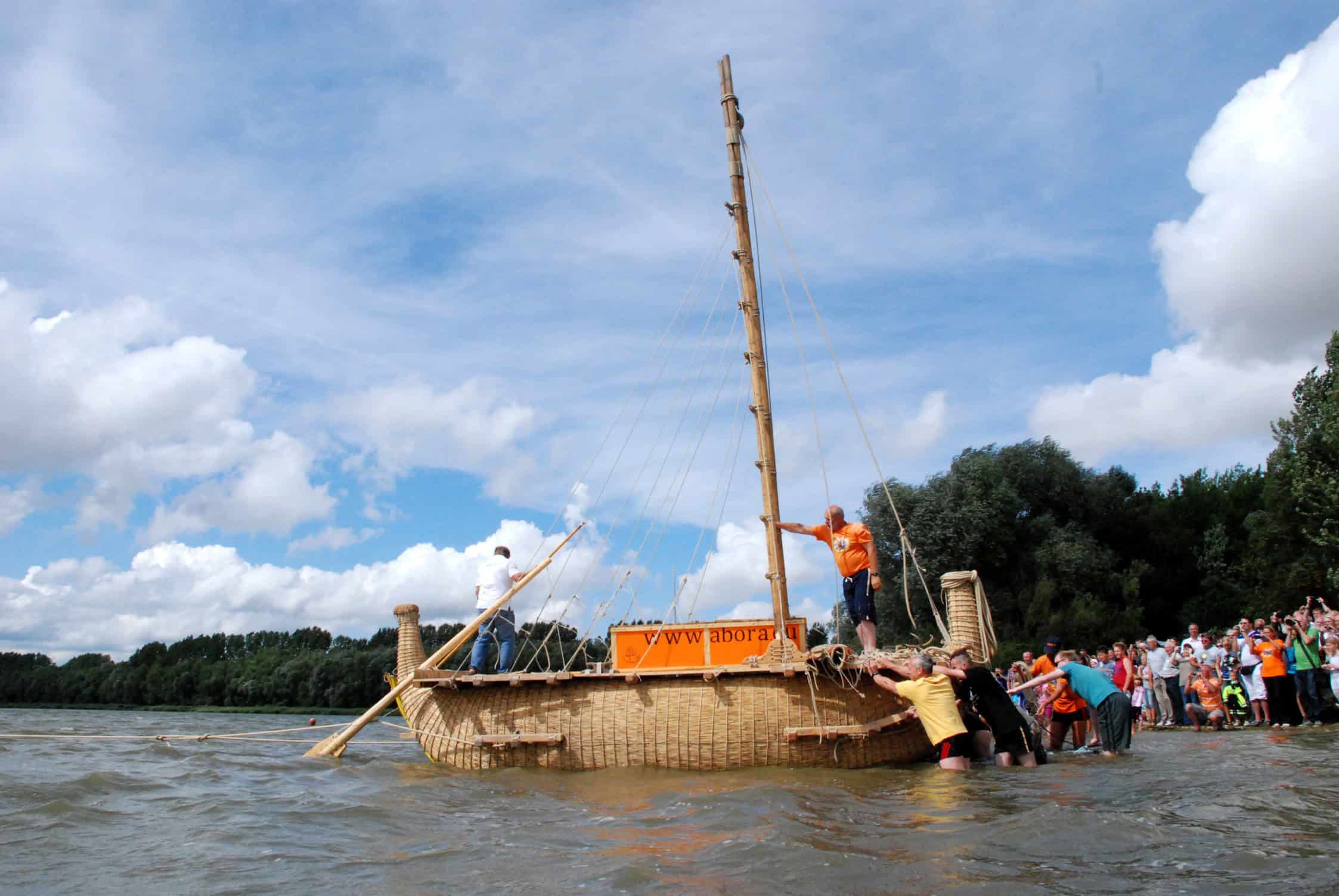
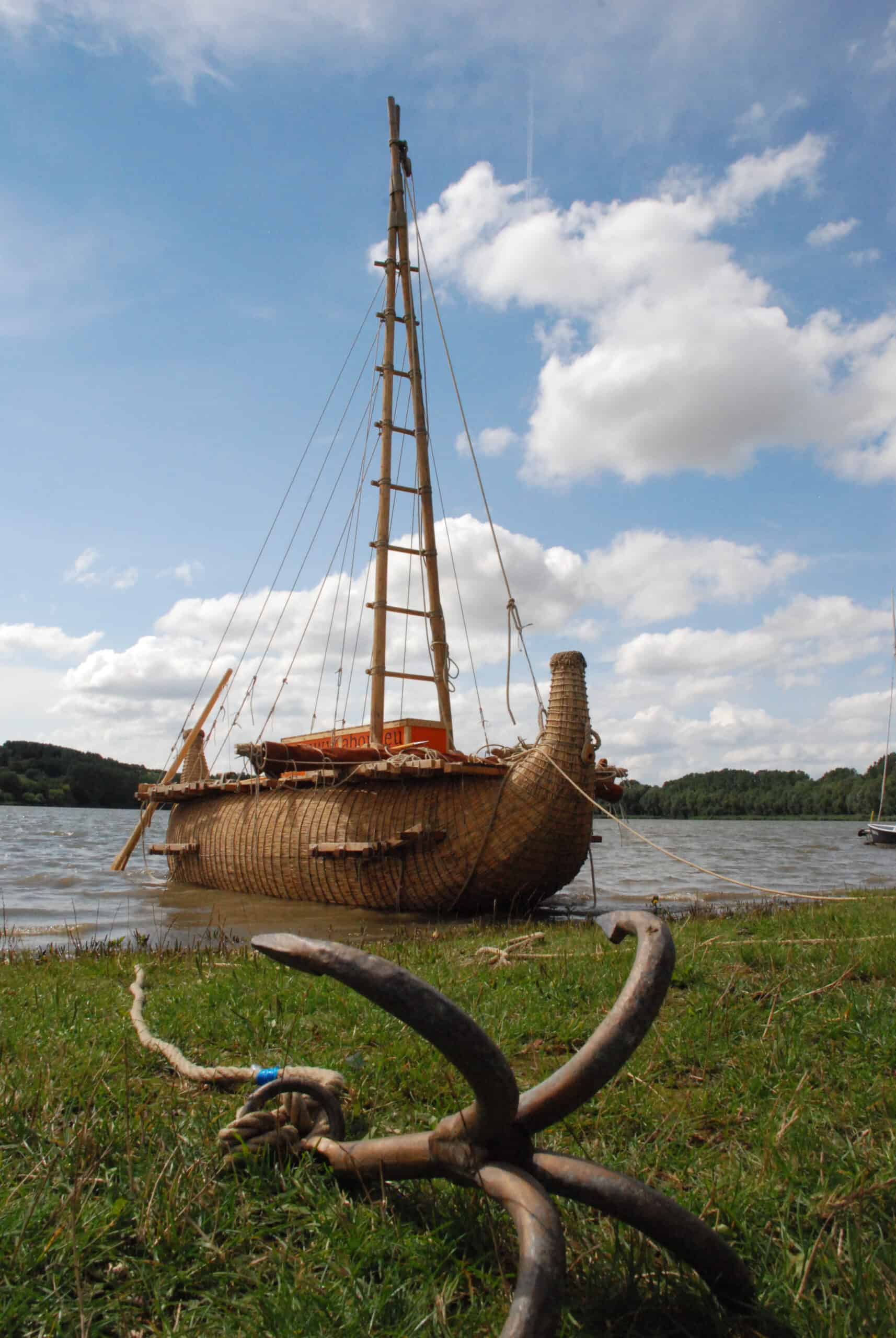
New sailing concepts
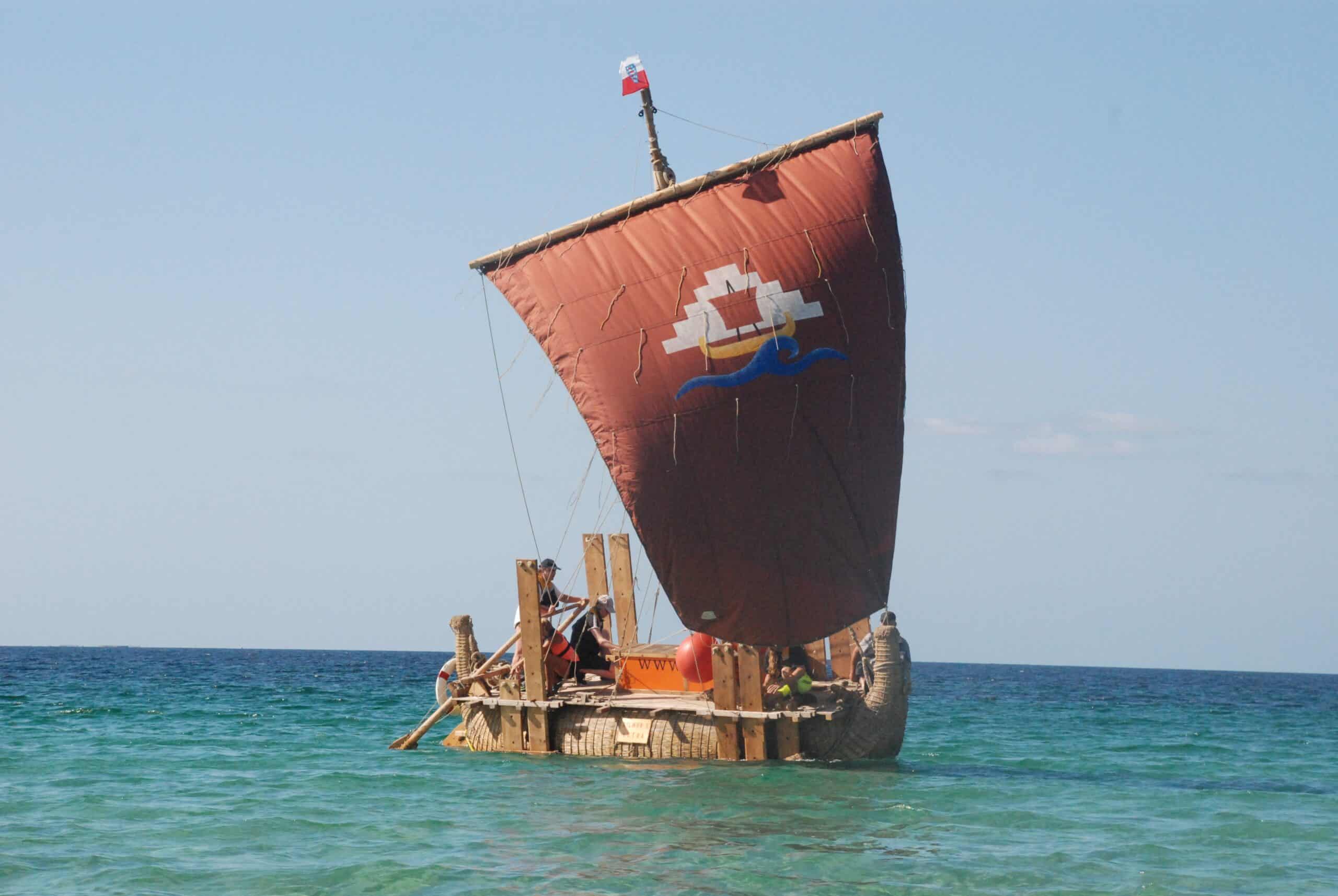
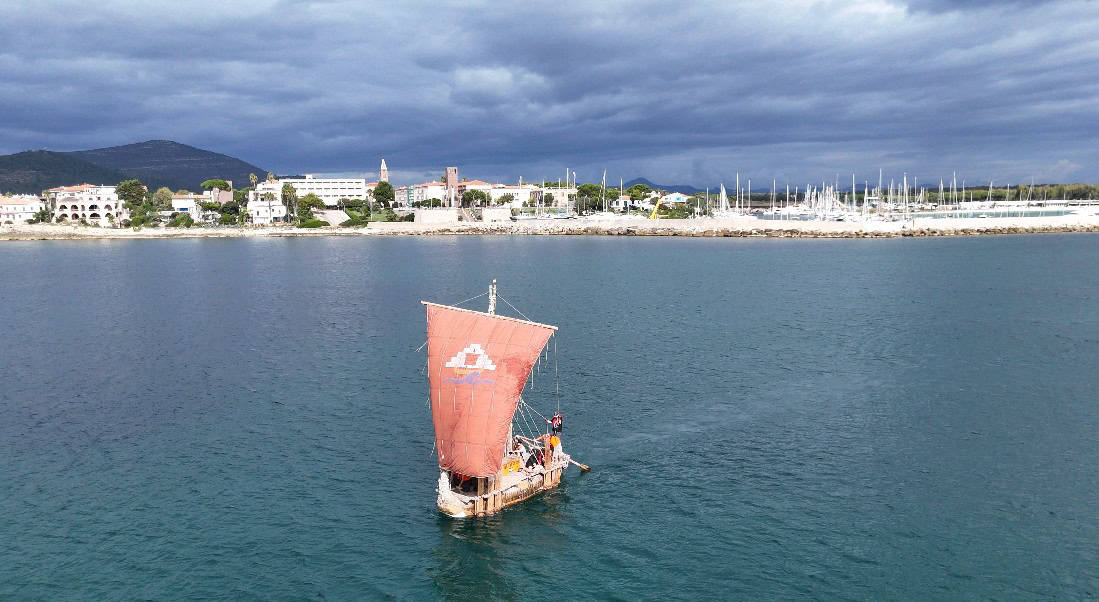
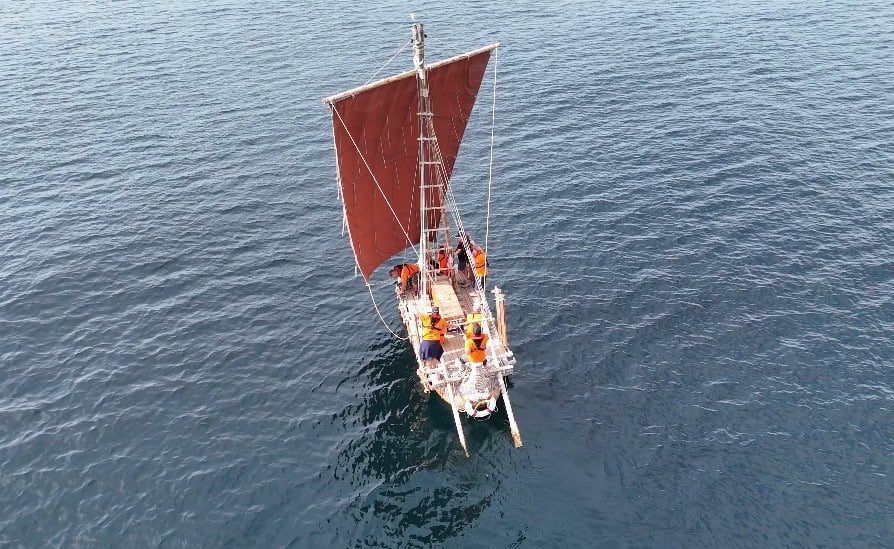
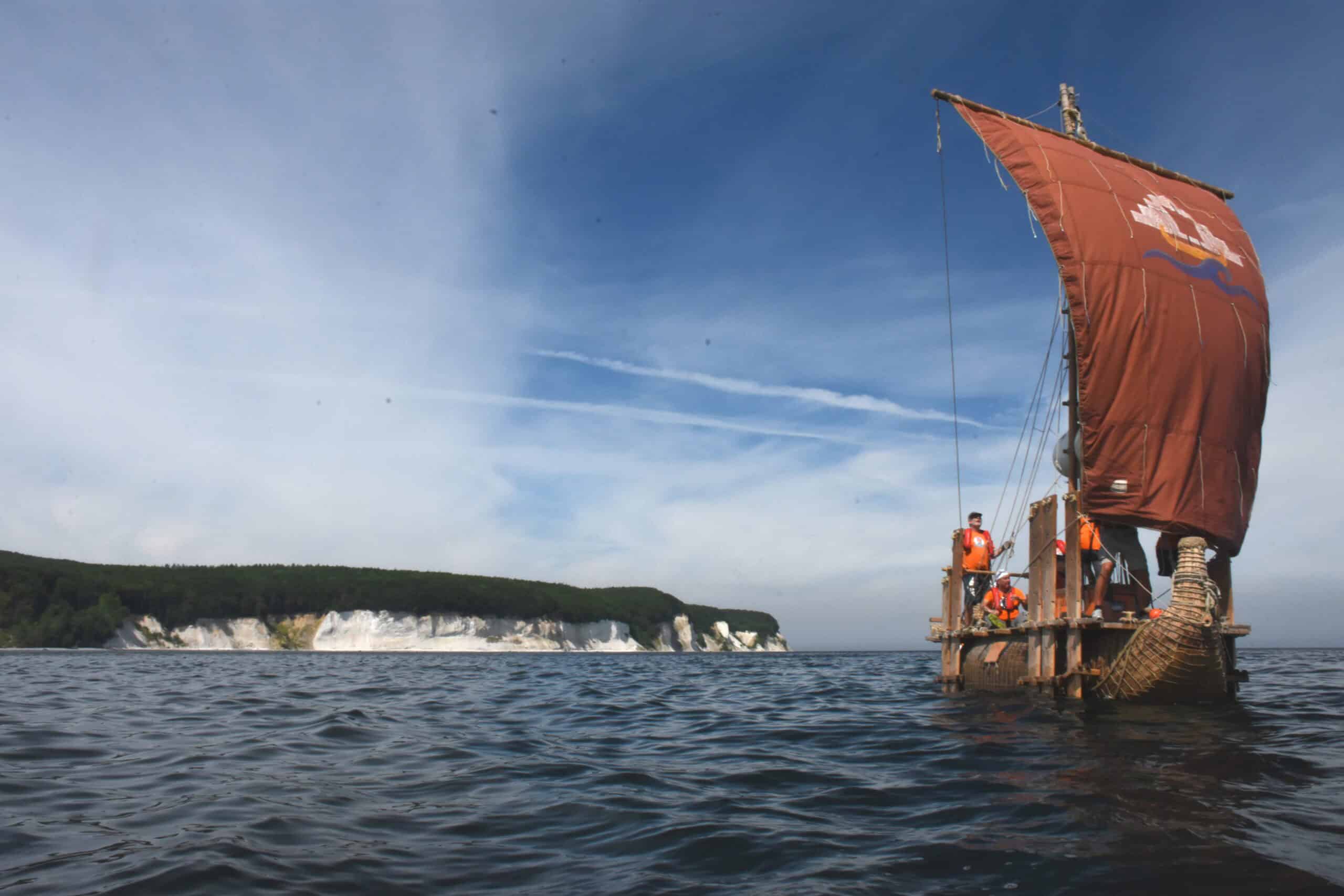
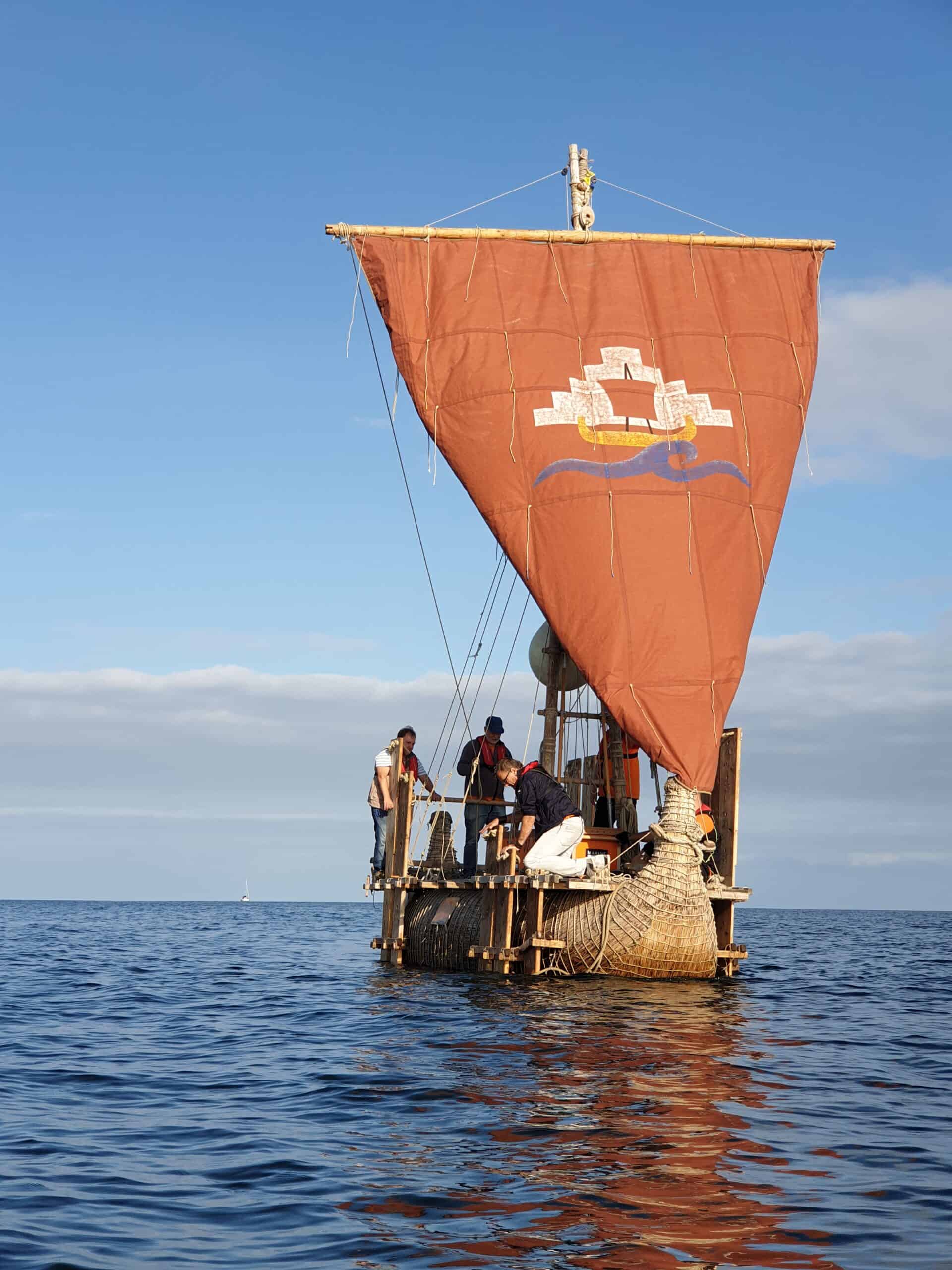
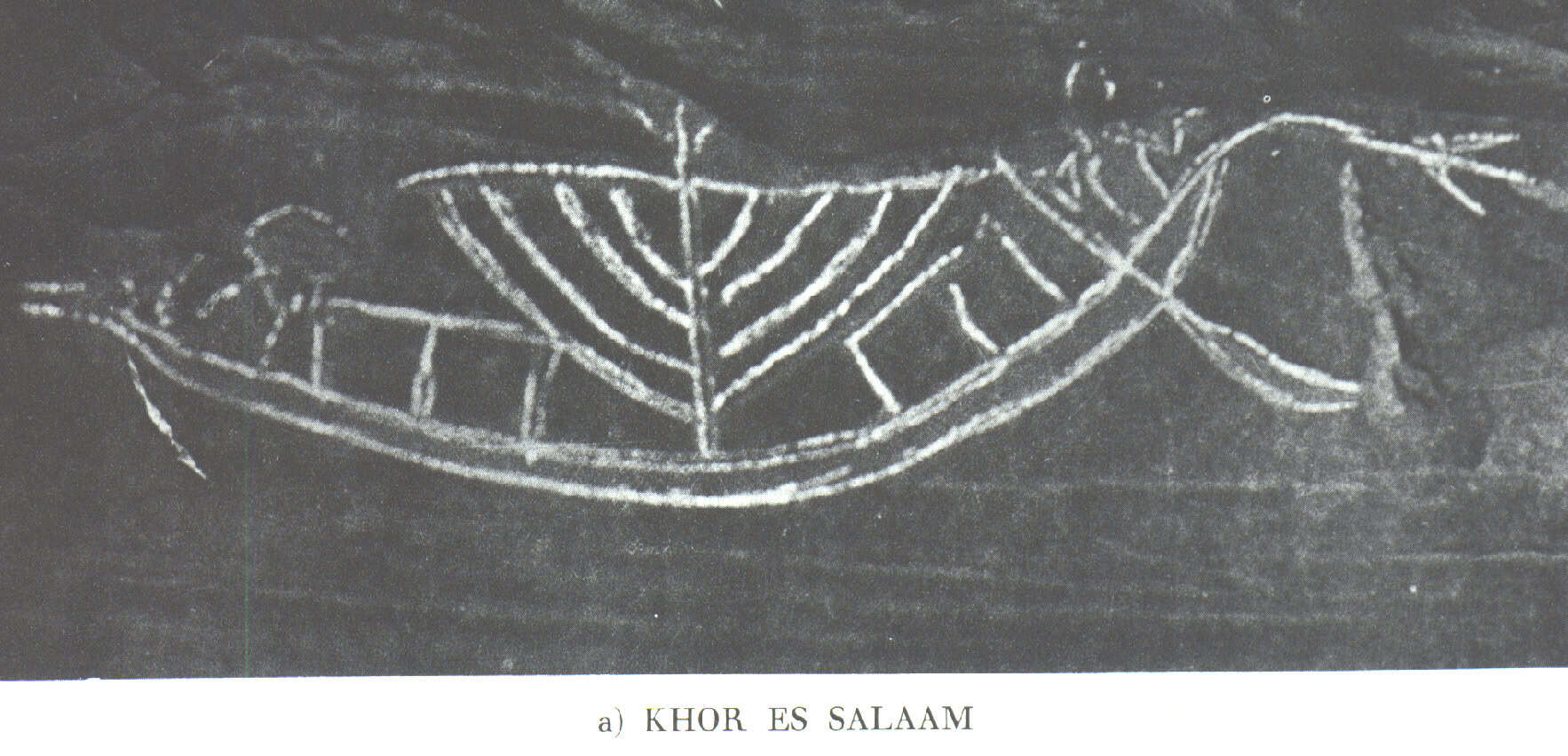
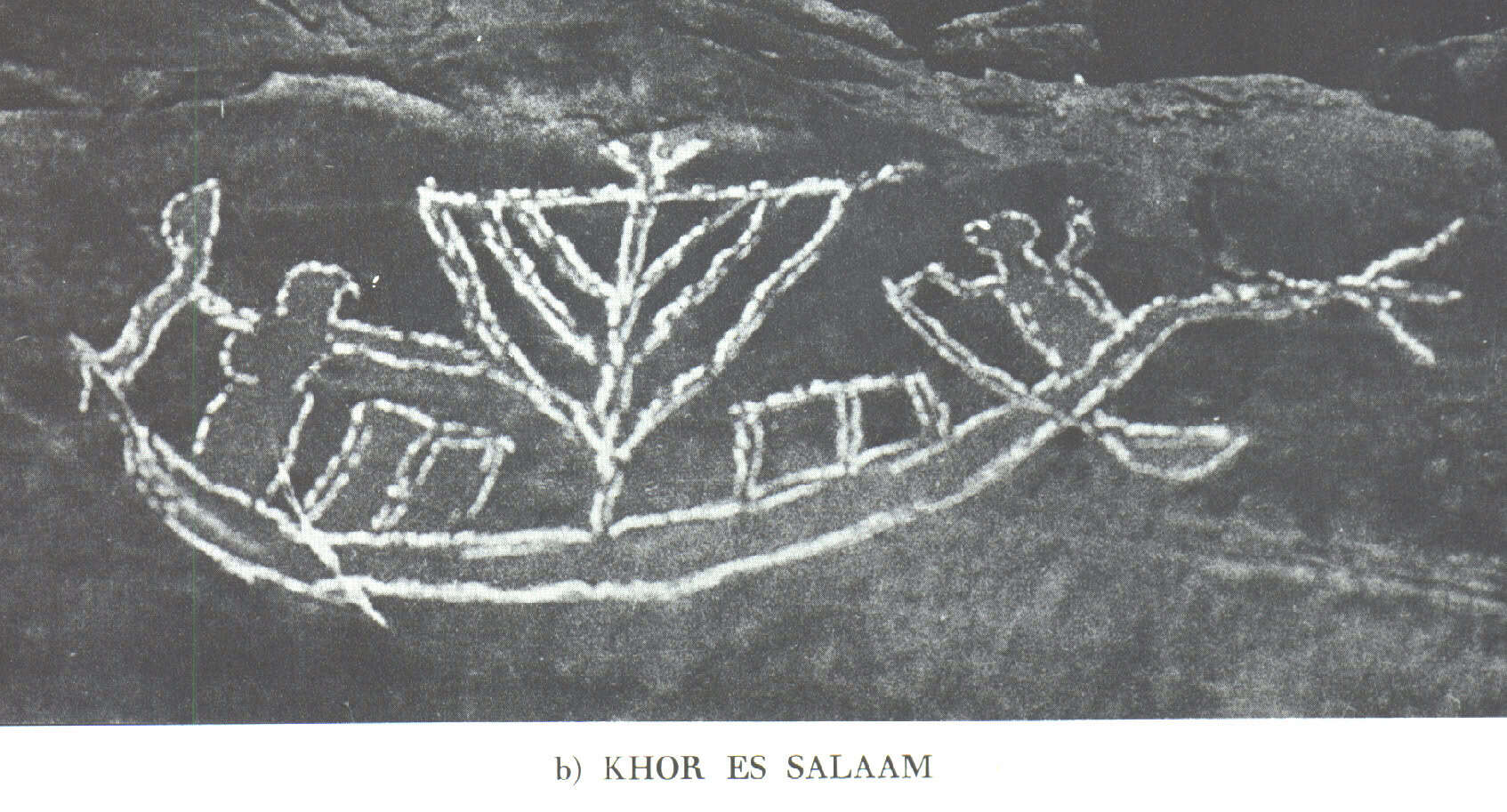
Since 2021, the team has also been experimenting with authentic triangular sails, as seen in rock paintings in Upper Egypt, southern Spain, Tenerife, and even Cuba. This rigging—an early precursor to the lateen sail—demonstrated surprisingly good aerodynamic properties.
With this sail shape, DILMUN S reaches around 60° to the apparent wind. With good trim, courses below 90° to the true wind are also possible. These results provide a plausible explanation as to why these particular sail types appear so frequently in the rock art of island cultures: they allow for significantly better navigation between the island channels against the wind.
Turning point DILMUN S engl.:
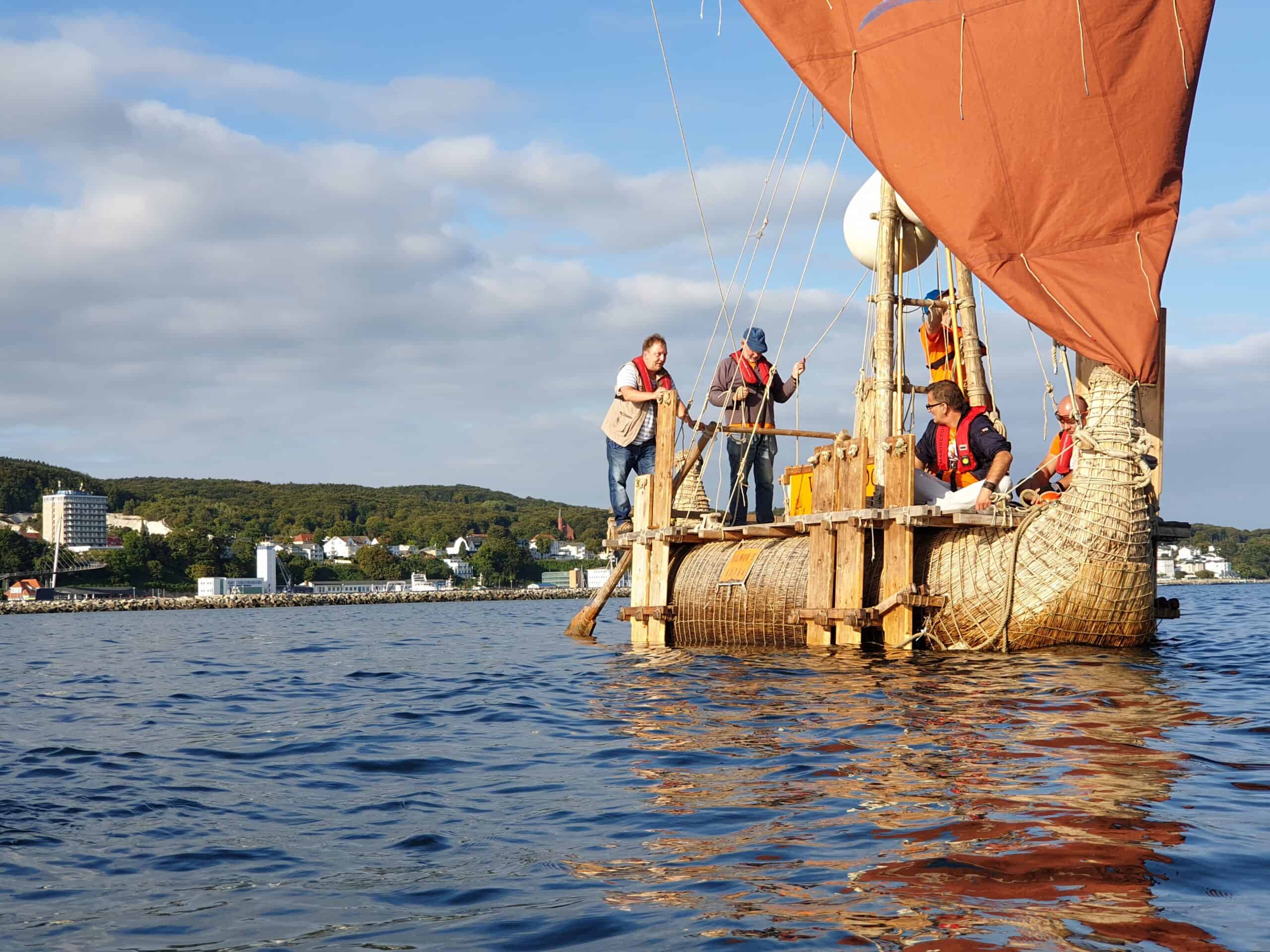
The first tests with the folded square sail were carried out in Sassnitz in 2021. They led to some astonishing observations, which motivated us to make a new and larger triangular cross sail. One of the most important new experiences was that handling is much easier due to the absence of the two main sheets (as with the square sail). Basically, all that is needed here is one person to operate the braces and another for the lower single mainsheet. This allowed us to sail with similar elegance to that shown in the pre-dynastic field paintings from Wadi Khor-Es-Salam more than 5,000 years ago. I noticed very early on that the people on board the triangular cross-sailers were depicted in a very relaxed and informal manner (picture b). The rock paintings also reveal that only a few people were needed to steer the sailing rafts.
Conclusion and outlook
The construction of the DILMUN S proved to be a complete success. The designers' intentions were fully realized. Dozens of club members have now learned to sail in a prehistoric reed boat. The permanent availability of this unique vessel made it possible for the first time to train more complex maneuvers such as tacking, anchoring, and precise reefing under sail.
These skills proved crucial for later expeditions, especially for ABORA IV, whose crew had limited training time due to organizational delays. Without the intensive exercises with the DILMUN S—including on Lake Geiseltal—the start of the ABORA IV expedition would have been delayed by another one to two weeks.
Despite having been in service for over twelve years, the DILMUN S is still in very good condition. It therefore remains a key training and research tool for the ABORA team – and is expected to see plenty of use in the coming years.