back
The DILMUN-reed boats
Allgemeines – Anfänge und Zielsetzung einer frühen Forschungsreihe
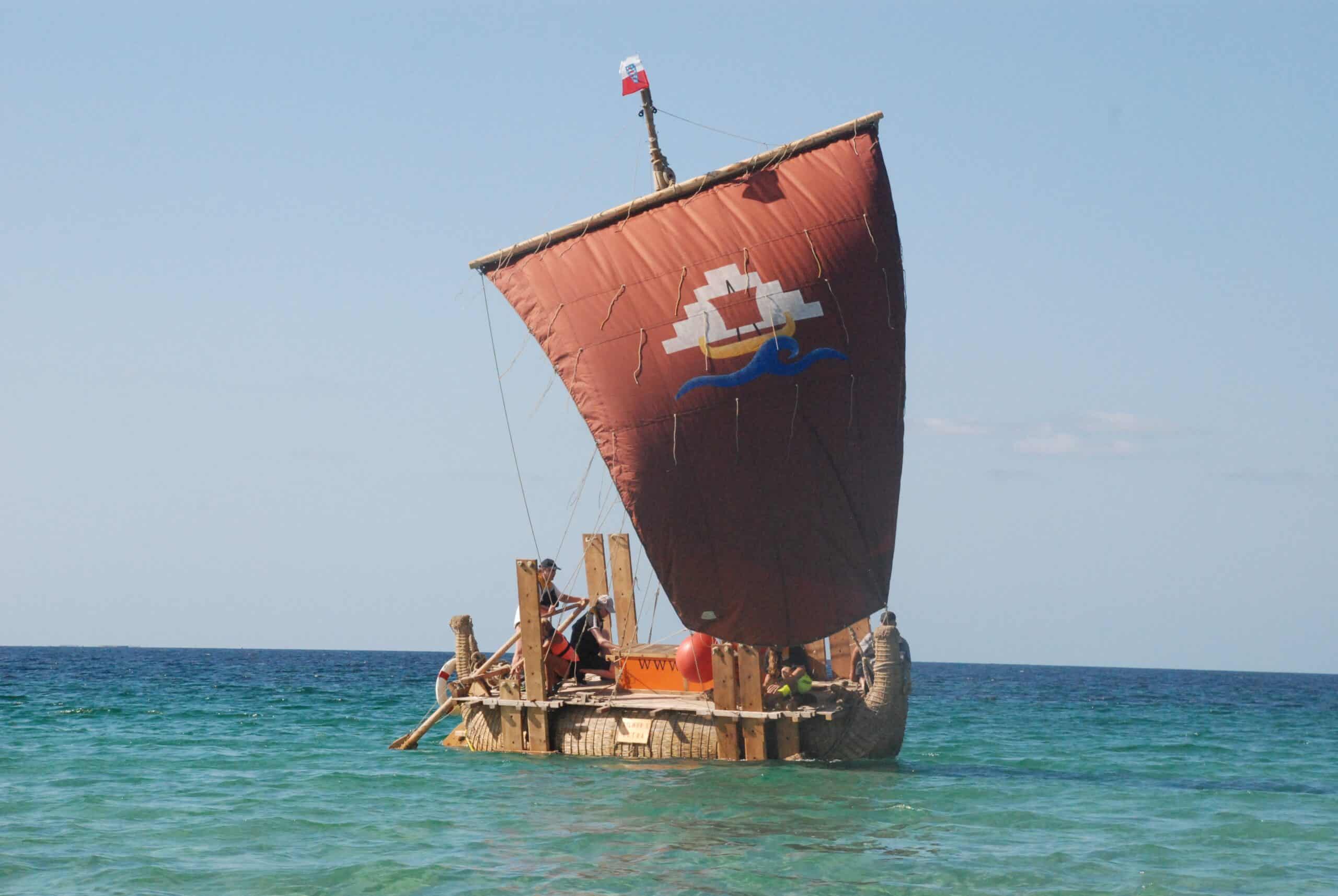
The name DILMUN became the namesake of the first larger reed boat experiments by Dominique Görlitz. Dilmun is the ancient Sumerian name for the island of Bahrain in the Persian Gulf. In Sumerian legends, Dilmun was regarded as a special place and as the seat of the deity Enki—the patron god of seafarers as well as the god of wisdom and science.
DILMUN thus symbolizes what distinguishes these early projects: the combination of ancient tradition, experimental research, and maritime practice. In the wake of Thor Heyerdahl's great reed boat expeditions—especially RA and TIGRIS—the DILMUN ships were initially intended to clarify fundamental questions about reed boat construction on a smaller scale.
The DILMUN series thus forms the experimental foundation on which the ABORA expeditions were later able to build.
First boat(s)
Preliminary experiments at the Nesse (background)
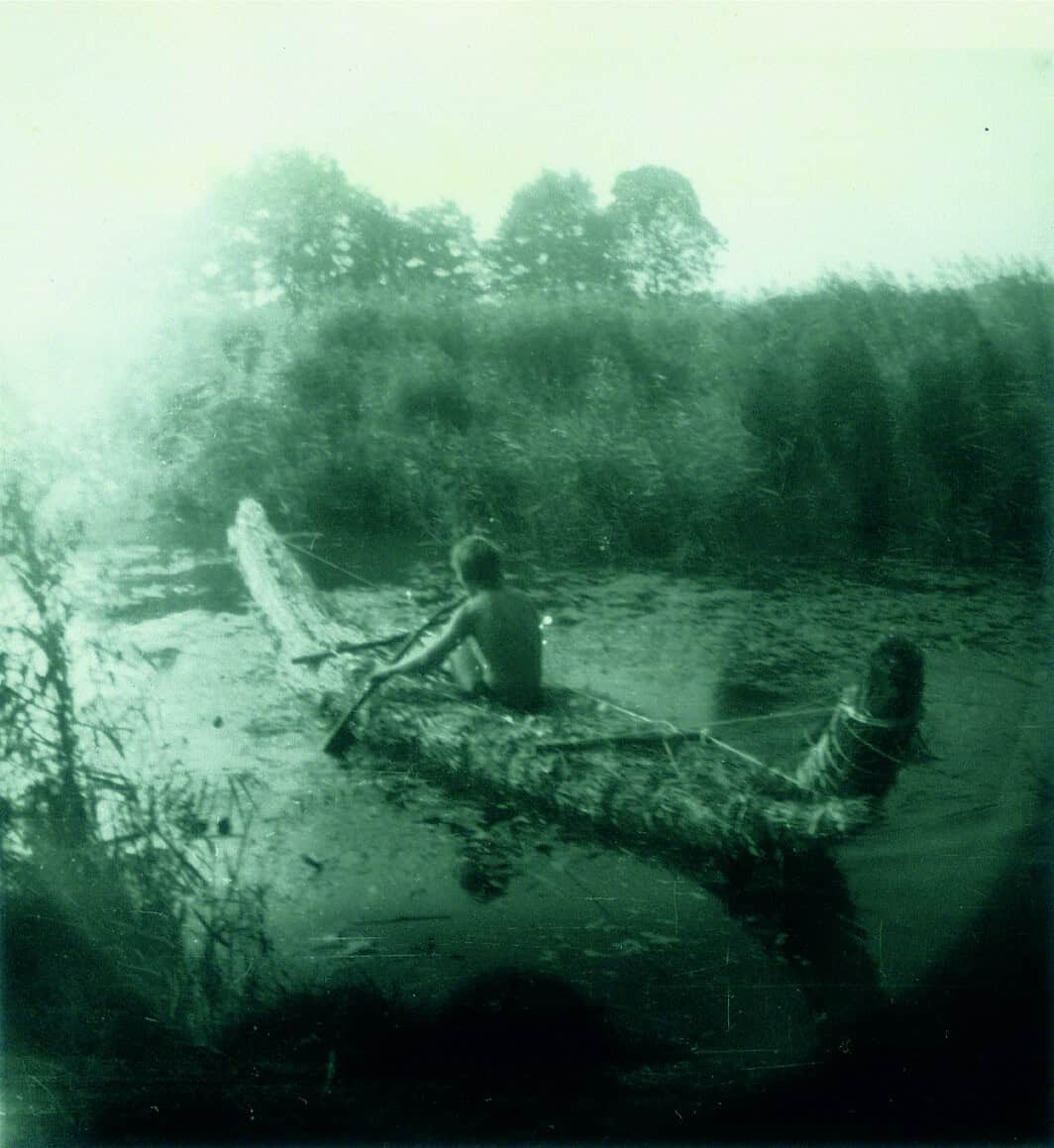
Even before the actual DILMUN series began, the first reed boat and raft experiments were carried out on the small river Nesse near Hochheim and Bufleben. While still at school, Dominique Görlitz first built simple reed rafts on his own and later together with classmates in order to test the material properties and buoyancy in practice.
Das letzte dieser frühen Fahrzeuge erreichte 1983 bereits eine Länge von rund sechs Metern und schwamm auf einem kleinen Teich fast vier Monate, bevor dieser austrocknete und das Floß auf Grund ging. Entscheidend war dabei: Das Floß sank nur langsam und verlor seine Schwimmfähigkeit erst durch Austrocknung.
Für den jungen Forscher war dies ein Schlüsselerlebnis. Das Experiment bestätigte, dass die Grundannahmen von Thor Heyerdahl zur Hochseetauglichkeit von Schilfbooten nicht abwegig sein mussten. Diese Erfahrungen trugen wesentlich dazu bei, dass Dominique Görlitz später Biologie (und im Nebenfach Archäologie) an der Friedrich-Schiller-Universität Jena studierte und dort ein wachsendes Netzwerk von Unterstützern aufbaute – aus dem schließlich die ersten DILMUN-Schiffe hervorgingen. Zu dieser frühen Gemeinschaft gehörte auch Cornelia Lorenz, seine spätere Lebensgefährtin, die ihn seitdem in allen späteren Forschungs- und Expeditionsprojekten begleitet.