back
Subproject I
The Cheops Project – The Iron of the Pharaohs
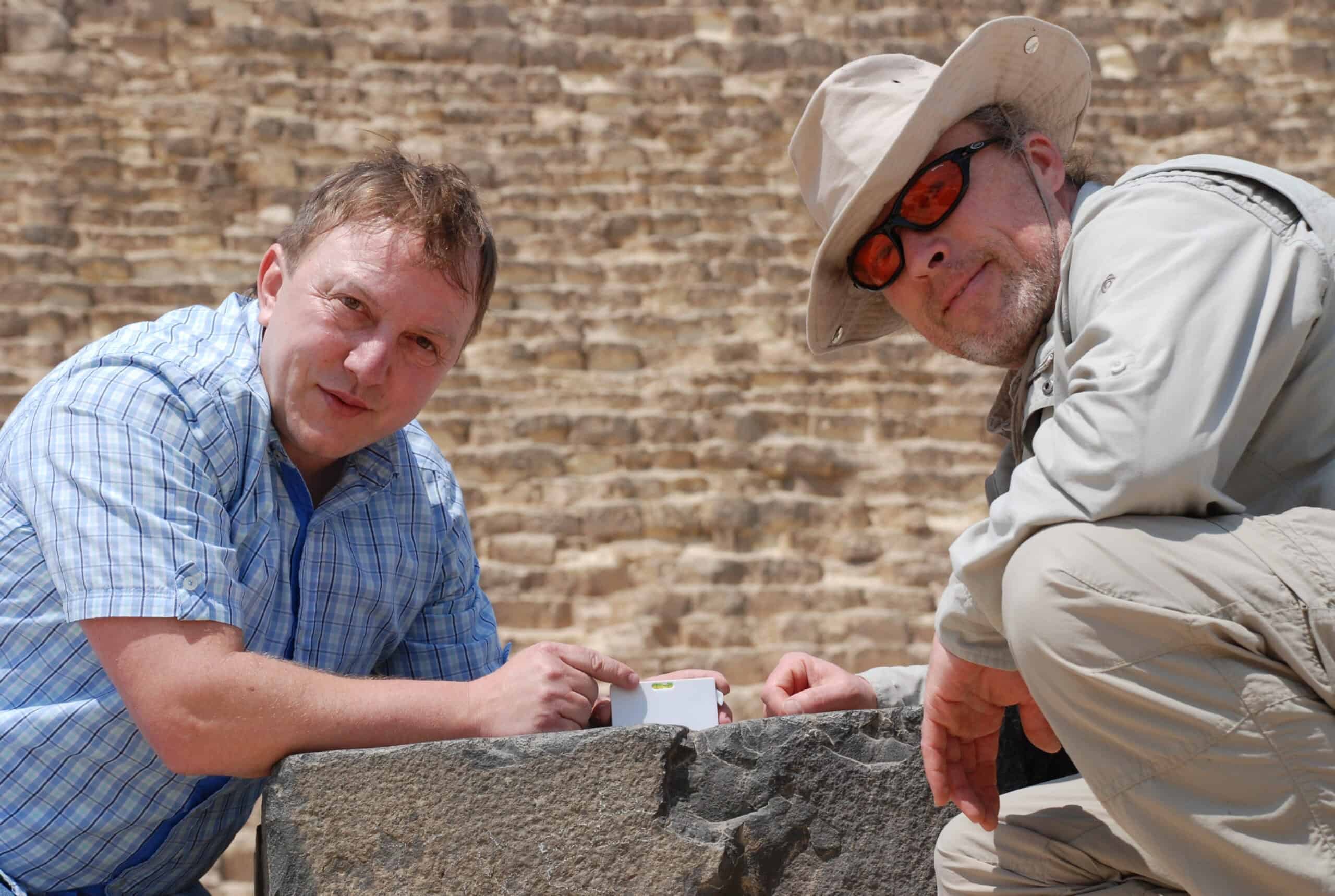
At the start of the Cheops Project, the first step was to obtain official research permission to work in the Great Pyramid of Giza. For Dr. Dominique Görlitz, one point was of central importance: he insisted on meeting the then director of the Giza Plateau, Gaber Ali Omar, in person to ensure the authenticity and scope of the permit. This meeting took place and had far-reaching consequences: the responsible Egyptologist personally accompanied and supervised the sampling of the ceiling stones of the King's Chamber.
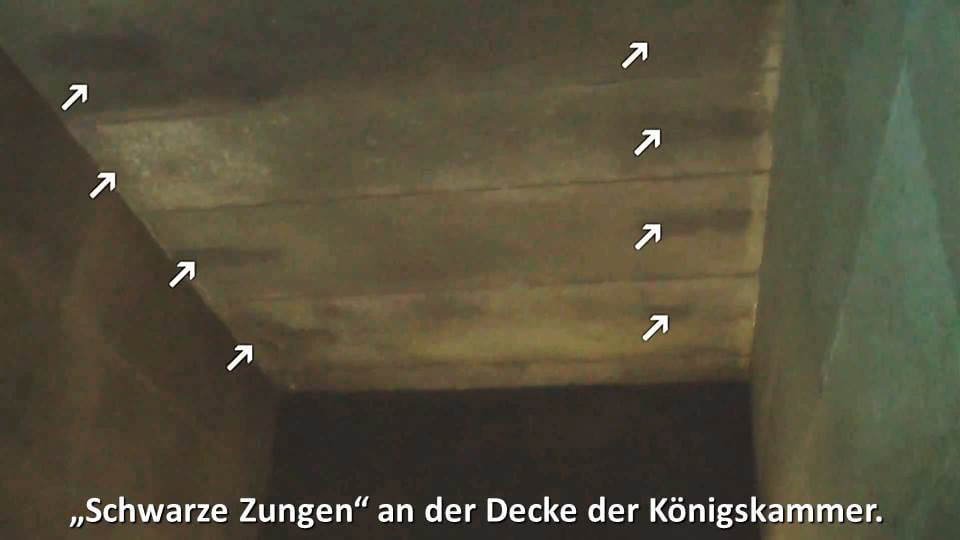
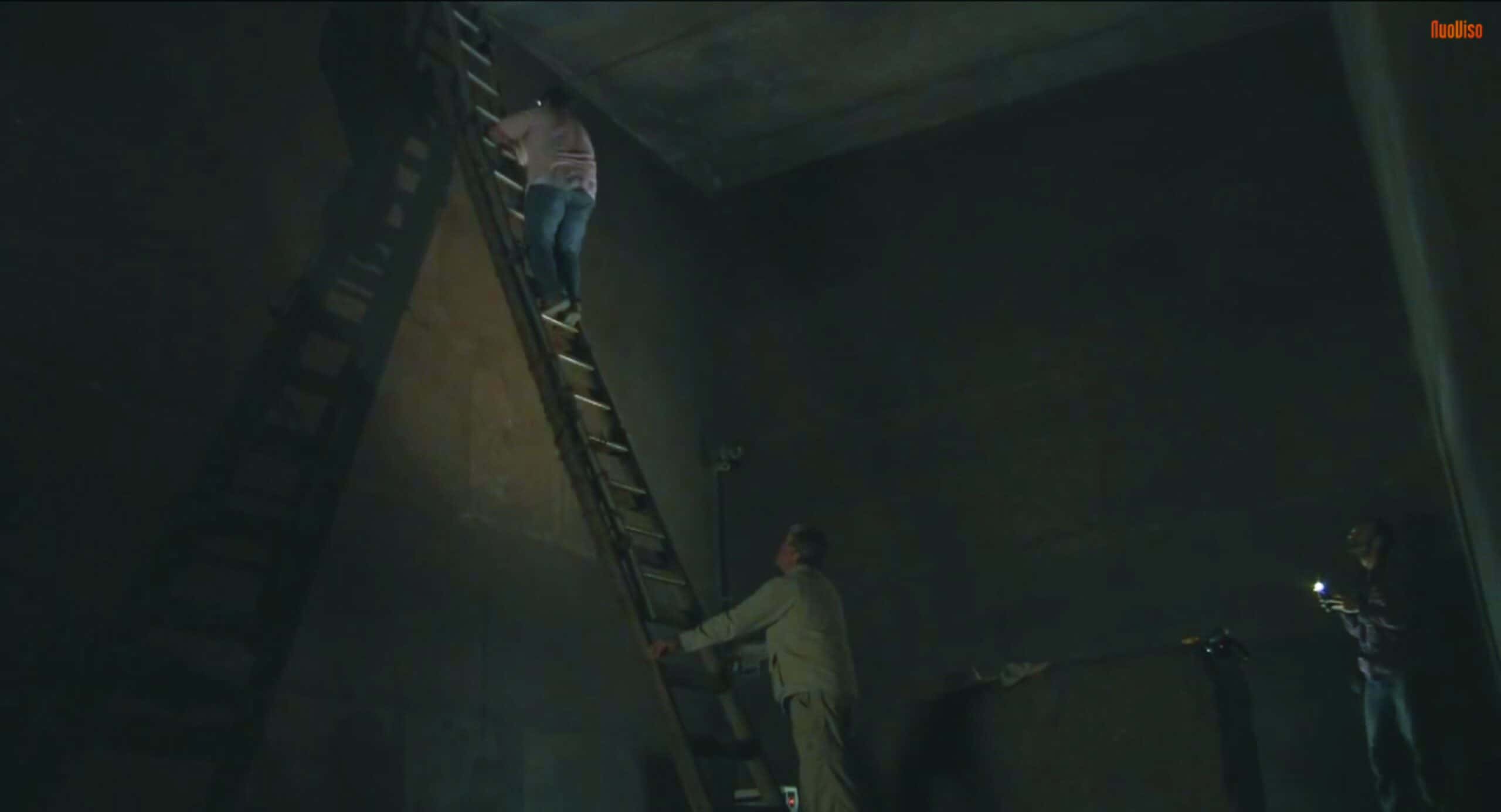
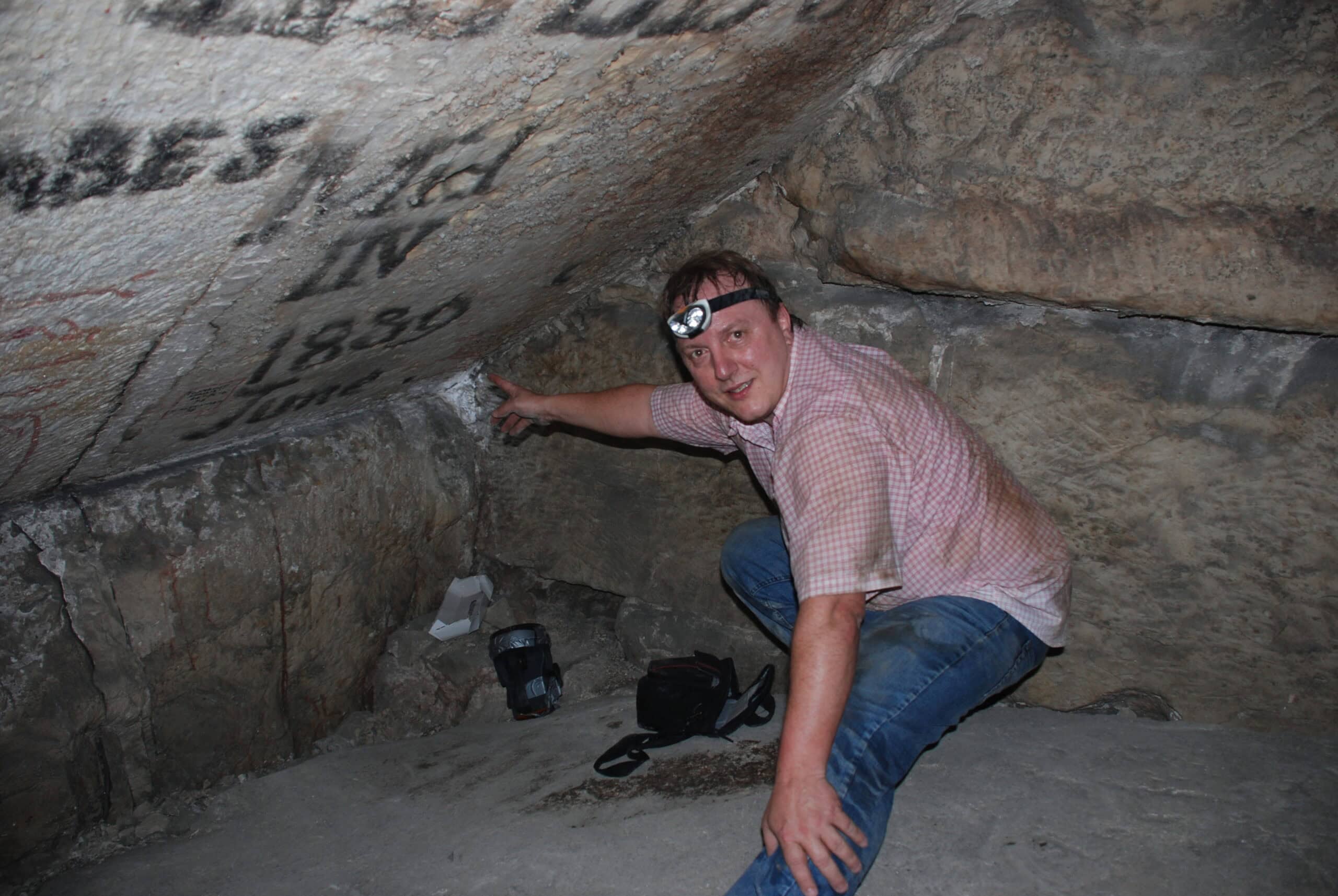
The investigation focused on conspicuous, tongue-shaped dark deposits on the underside of the massive granite beams. Initially, the researchers assumed that these could be organic residues. However, this assumption changed abruptly during the first detailed on-site examination. In the light of his headlamp, Görlitz recognized a metallic black sheen—a phenomenon that Pliny the Elder had already described in the 1st century AD as a characteristic feature of ironworking.
The sampling strategy was subsequently adjusted. Using a gentle “flaking” technique—the careful scraping of tiny particles with a chisel—milligram-sized samples of the extremely thin patina were taken from the underside of the ceiling blocks. While still on site, Görlitz carried out a simple but decisive test in his hotel: using a magnet, he was able to demonstrate that the collected particles responded to a magnetic field. This behavior is unambiguous—only iron and its oxide magnetite exhibit such a reaction.
Subsequent laboratory analyses in Dresden clearly confirmed these observations. Both spectroscopic investigations and XPS analyses (X-ray photoelectron spectroscopy) identified magnetite (Fe₃O₄) as the main component of the black patina.
Görlitz also received important technical support from iron specialist Prof. Dr. Bernd Lychatz from the TU Bergakademie Freiberg. Lychatz pointed out that magnetite typically forms as scale during high-temperature corrosion during the forging of iron sheets. In his opinion, such a scale layer could be pressed into the granite during repeated transport, setting down, and lifting of heavy stone blocks on iron-reinforced lifting aids.
This interpretation was supported by electron microscope images of the patina, which reveal mechanical indentations in the magnetite-containing layer. The findings were reviewed by independent specialists and later documented in the Cheops film.
Based on these findings, Dominique Görlitz subsequently developed the wedge-lifting technique further—an approach that makes the use of simple iron tools and lifting systems in the construction of the Pyramid of Cheops plausible and forms the core of the following experimental investigations.
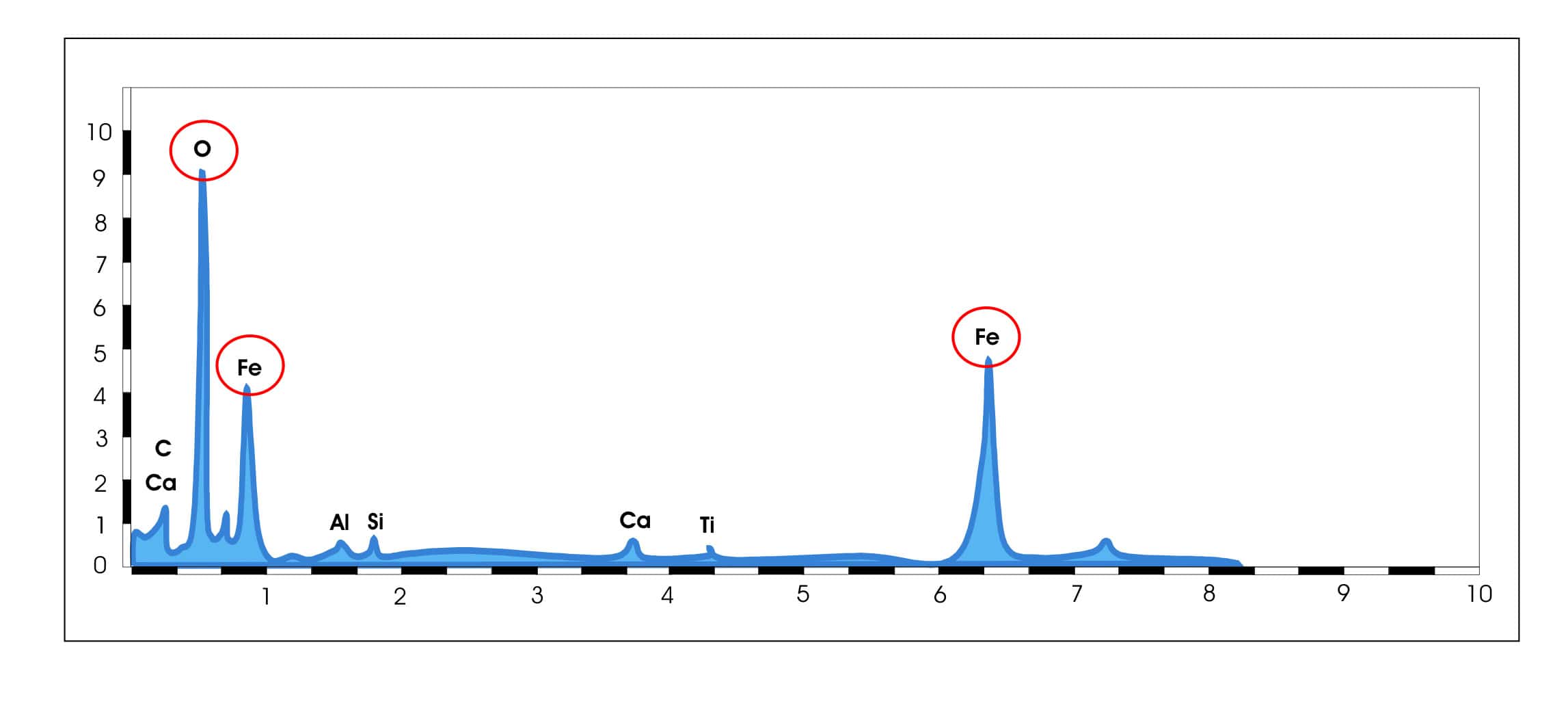
A spectrogram of a black particle. Elemental analysis shows iron and oxygen as the most common elements. This corresponds to iron oxide.
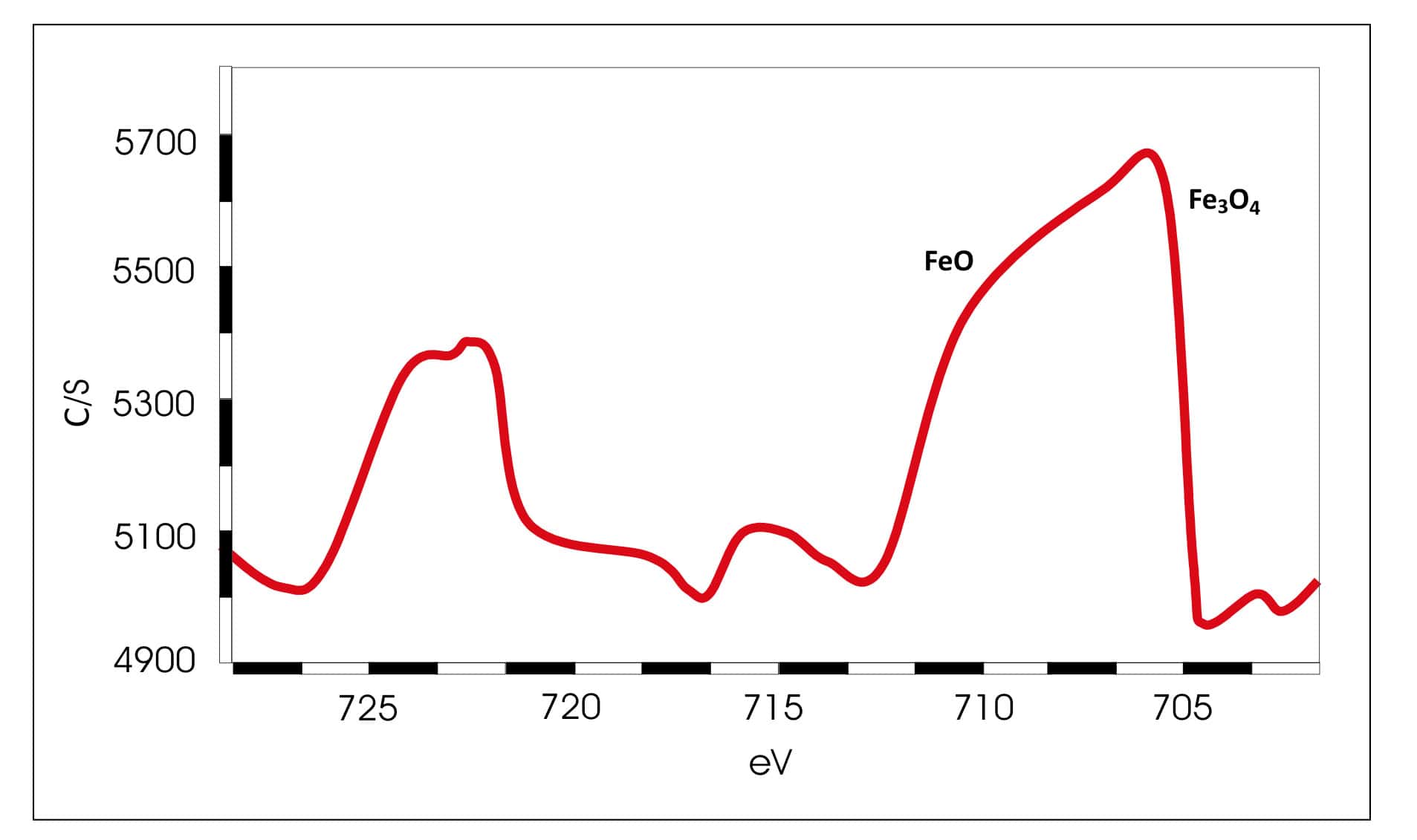
The reconstructed XPS profile of a sample. The result is unambiguous: the dominant compound in the black layer is magnetite (Fe3O4). In addition to a small amount of ferrite, the complete absence of hematite (Fe2O3) is an important outcome of the analysis.
Supplementary analysis: Paint adhesion in the upper relief chamber
Ali Gaber Omar agreed to the additional investigation on two conditions:
1. strict adherence to the schedule; 2. active participation in the initial publication of the analysis results. Both conditions were accepted. For Görlitz, it was both a matter of course and an honor to conduct this investigation in close cooperation with a high-ranking Egyptian expert.
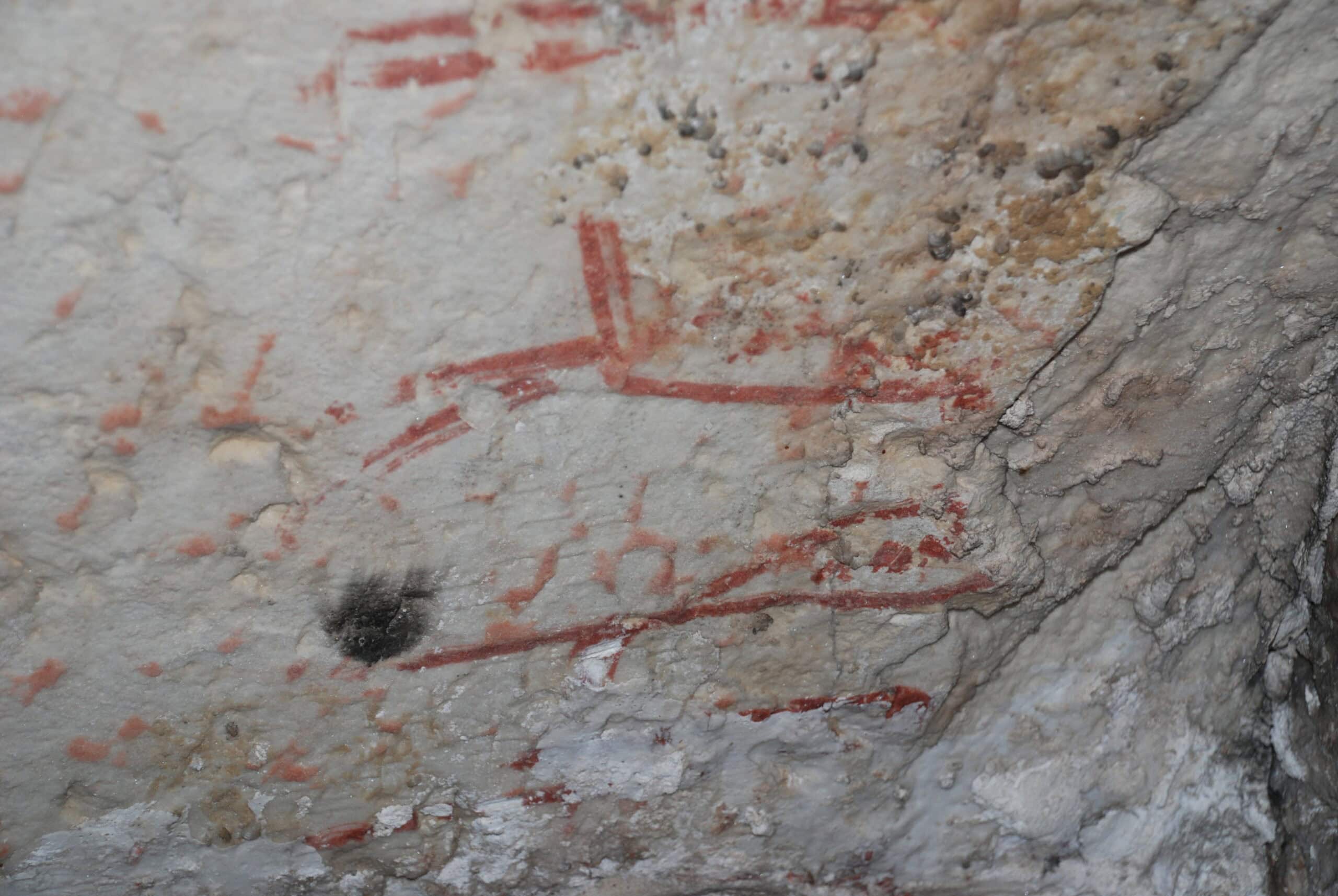
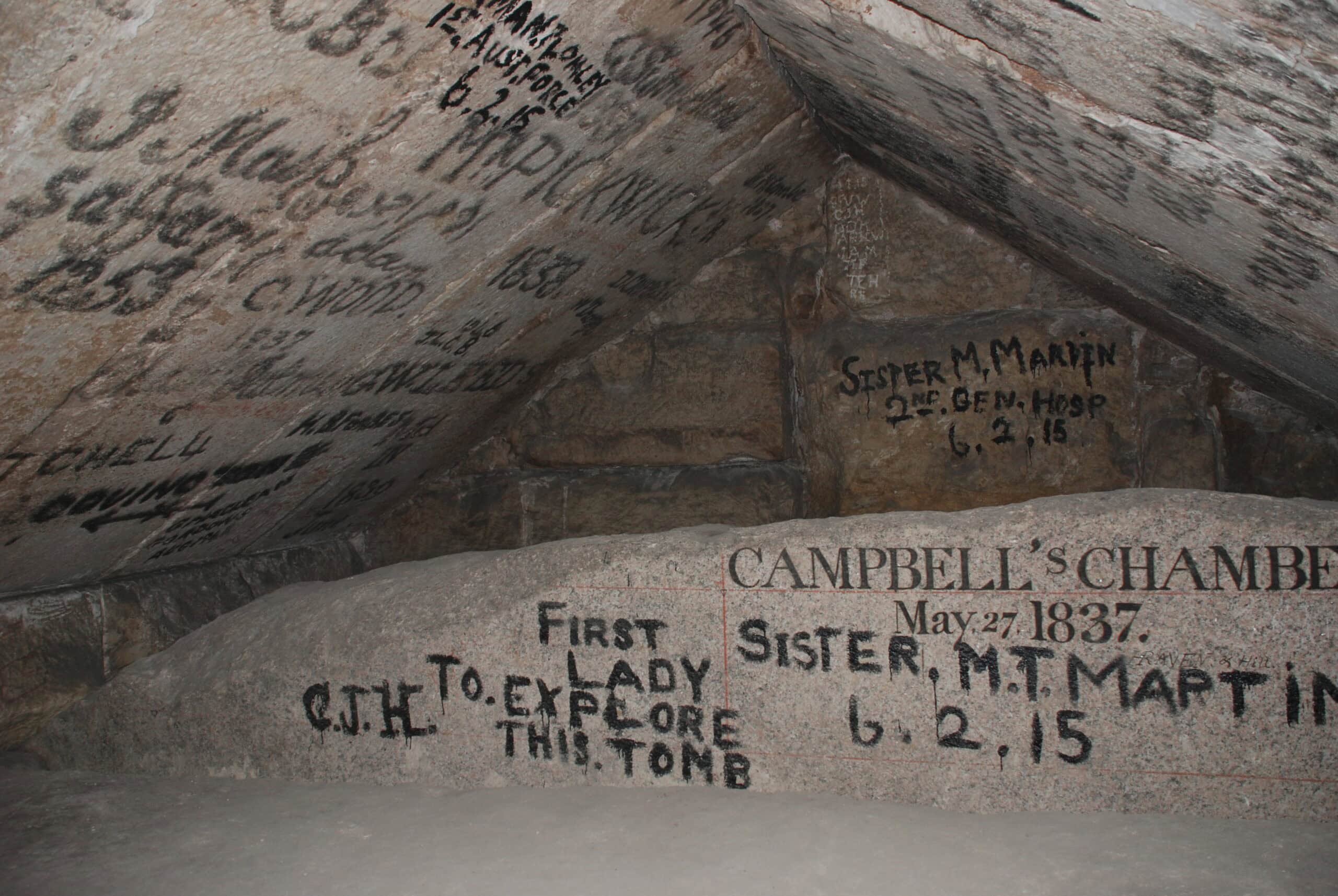
This was followed by the challenging climb to the upper relief chamber. Together with the cameraman, Görlitz sampled a small, already damaged red hieroglyph about two meters away from the Cheops cartouche. The paint sample taken covered less than 0.5 cm² and was sent for further analysis together with the samples obtained previously.
Of particular significance was an observation made during practical experience on site: the red inscription was not applied directly to the limestone block, but rather as a kind of fresco on a previously applied layer of plaster. This observation contradicts the frequently held explanation that the marks were simple stonemason's or marking marks that had been applied before the blocks were installed.
Zumindest die Inschriften auf den Giebelblöcken können demnach erst nach dem Einsetzen der Steine und dem Aufbringen der Gipsschicht ausgeführt worden sein. Diese Feststellung hat weitreichende Konsequenzen für die Interpretation der Malereien und bildet einen wichtigen Bestandteil der weiterführenden Diskussion um die Baugeschichte der Cheops-Pyramide.
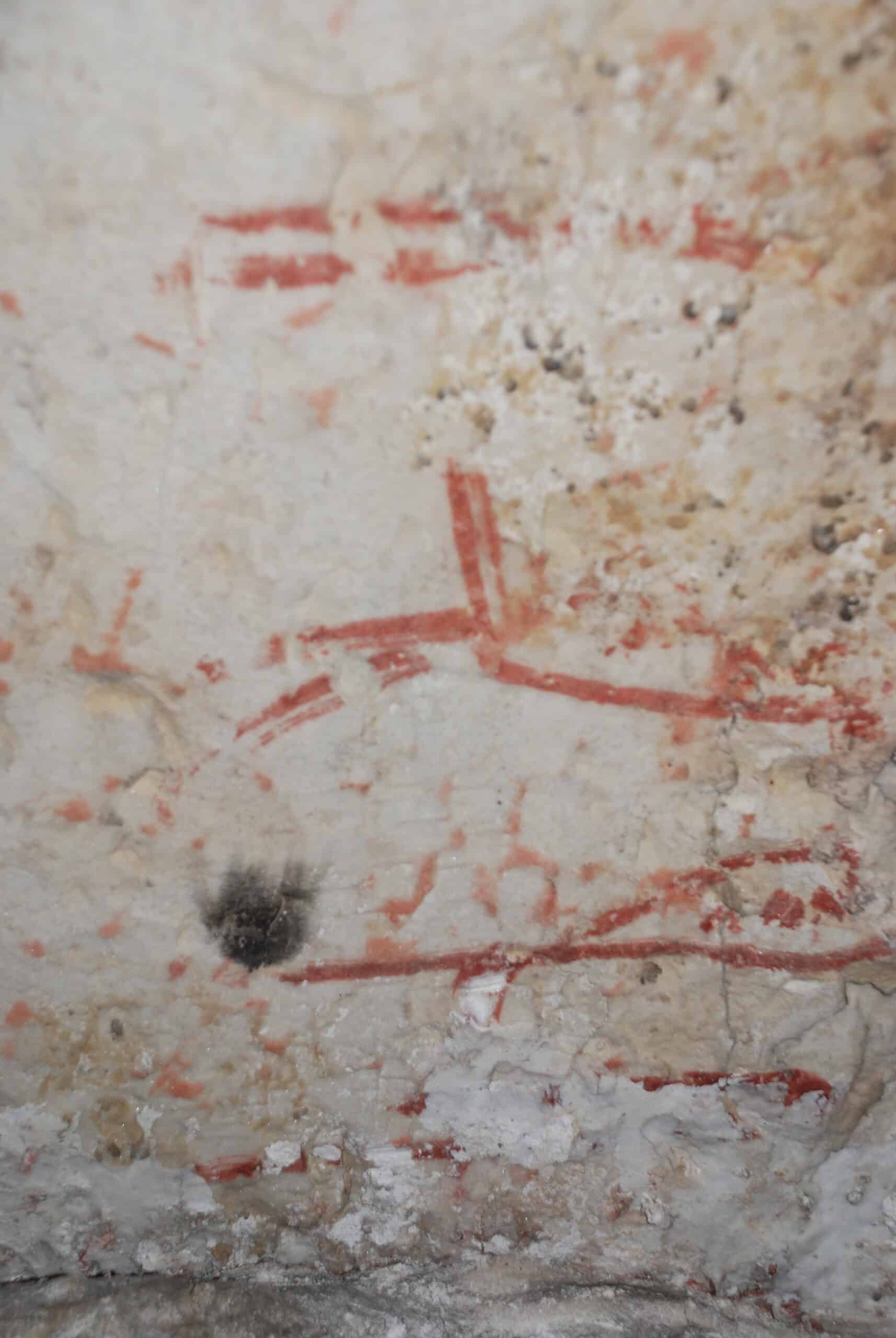
By switching the sampling method to the flaking technique, a considerable amount of time was saved. The time originally allocated for the labor-intensive removal of presumed organic residues was no longer required. Against this background, Görlitz and Erdmann approached the head of the Giza Plateau, Ali Gaber Omar, with a request to use the remaining one and a half hours for an ascent into the relieving chambers above the King’s Chamber.
The chief inspector was openly informed of the intention behind the project: to take samples of insignificant paint adhesion in the area of the paintings discovered by Howard Vyse. The aim of this investigation was to find evidence of ancient Egyptian pigments containing hematite. The background to this was a controversy that had been ongoing for almost 200 years between Egyptologists and independent researchers about the authenticity of the famous cartouche bearing the name of the builder “Cheops” (Egyptian: Khufu).
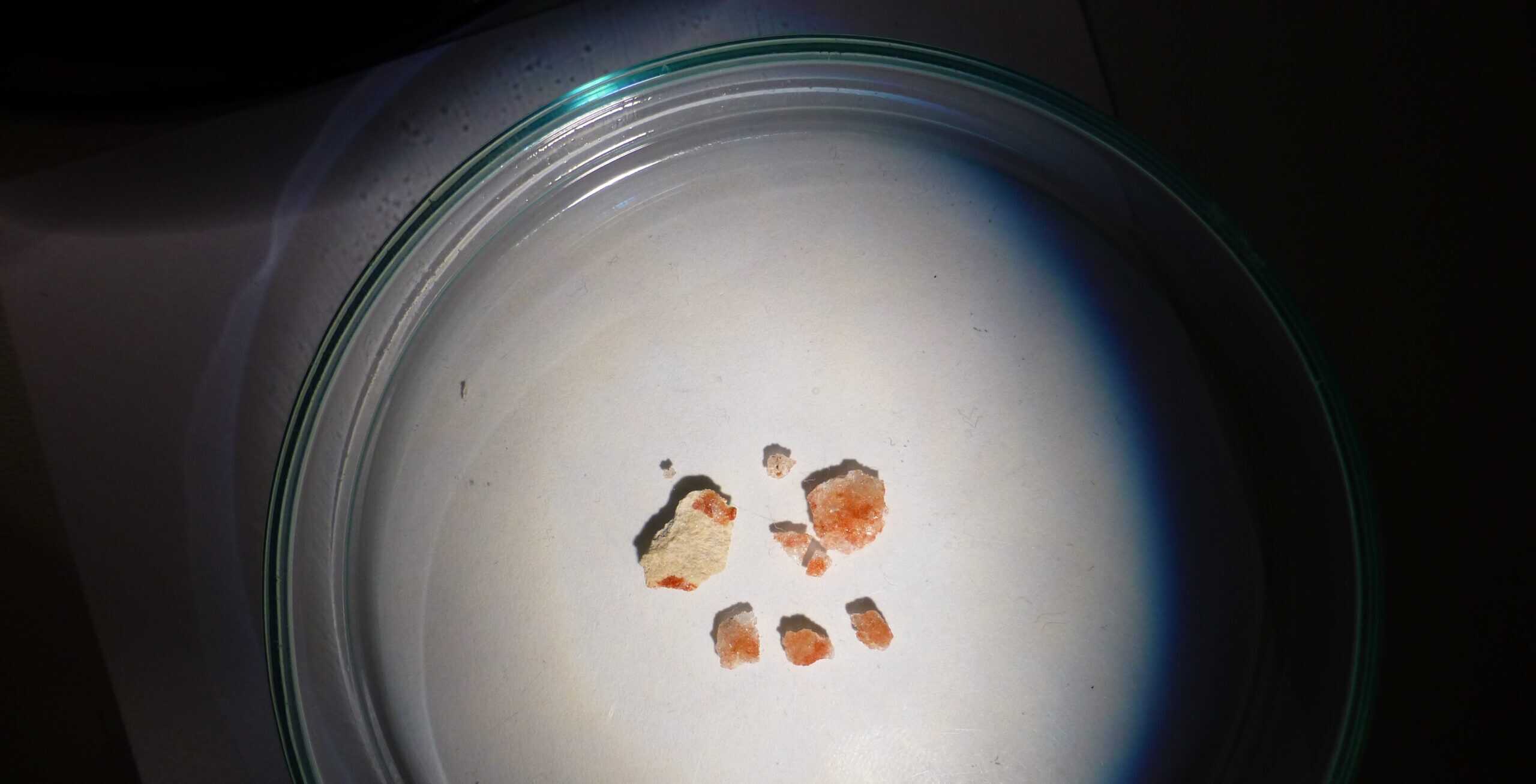
The initial tests on the pigment particles were very difficult because red pigments are practically invisible under an electron microscope. ... The pigment analyses were abruptly halted by the Cheops scandal and the samples were sent back to Egypt.