
Chapter 2
OSL dating of the first stages of construction
A central objective of the Canary Islands Pyramid Project is the objective chronological classification of the stepped structures. Since no organic materials suitable for classical C14 dating have been preserved at most of the pyramid sites, it was necessary to resort to alternative scientific methods. For this reason, OSL dating (Optically Stimulated Luminescence) was chosen—a method particularly well suited for dating sedimentary and architectural contexts. It was possible to enlist two specialists in OSL dating: Dr. Georgios Polymeris, surface OSL (Athens), and Dr. Jorge S. Sanchez, soil OSL (A Coruña).
OSL dating makes it possible to determine the time at which mineral grains (usually quartz or feldspar) were last exposed to sunlight. As soon as sediments are deposited or covered, measurable luminescence begins to build up due to natural environmental radiation. This stored energy can be read out by targeted light stimulation in the laboratory. The result allows the moment when the material was last moved, deposited, or deposited to be dated—a decisive advantage over methods that only date organic remains.
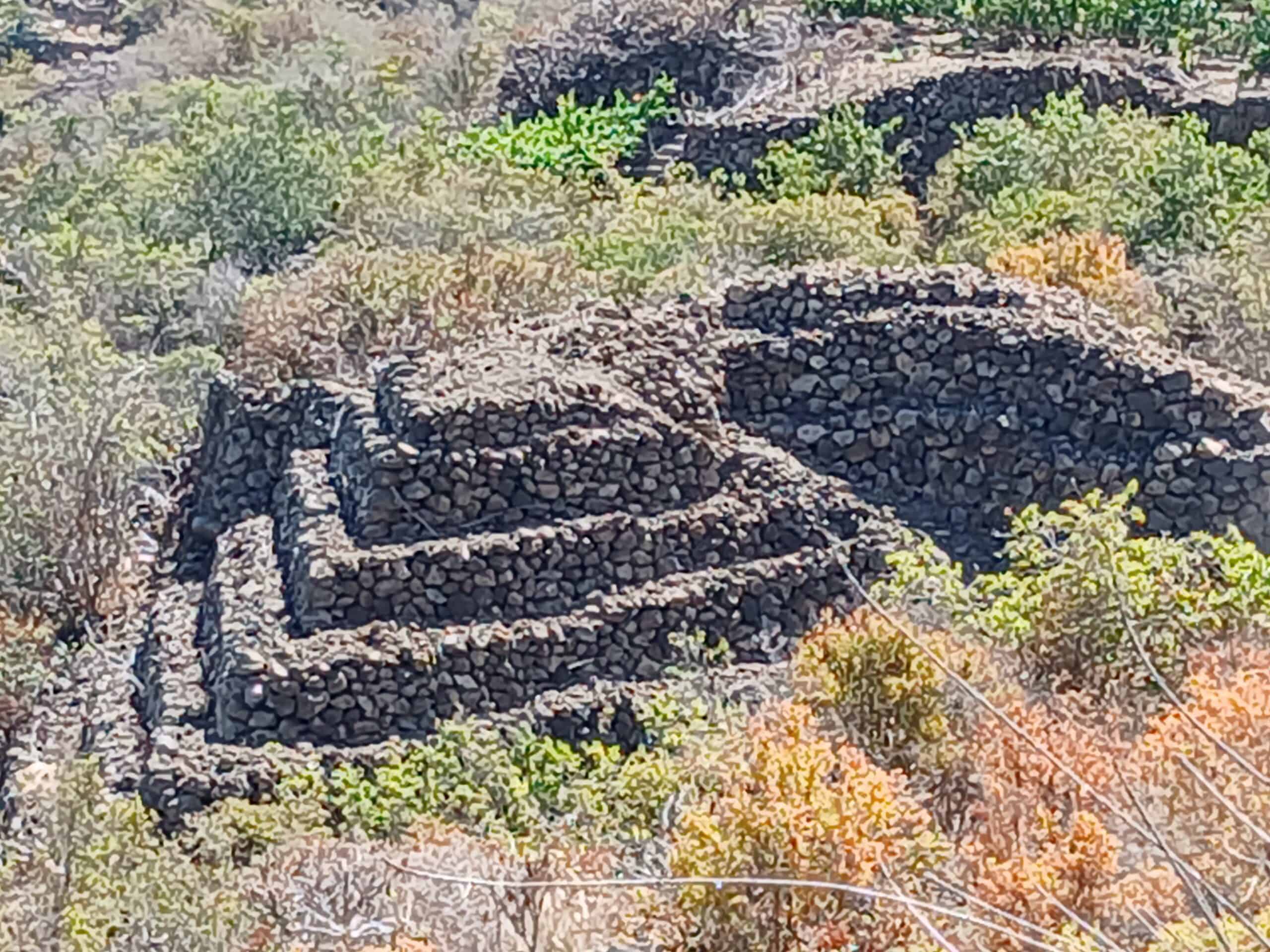
The image shows the Santo Domingo complex. This pyramid and the stepped pyramid located in the San Marcos complex in the upper image were dated during the first OSL.
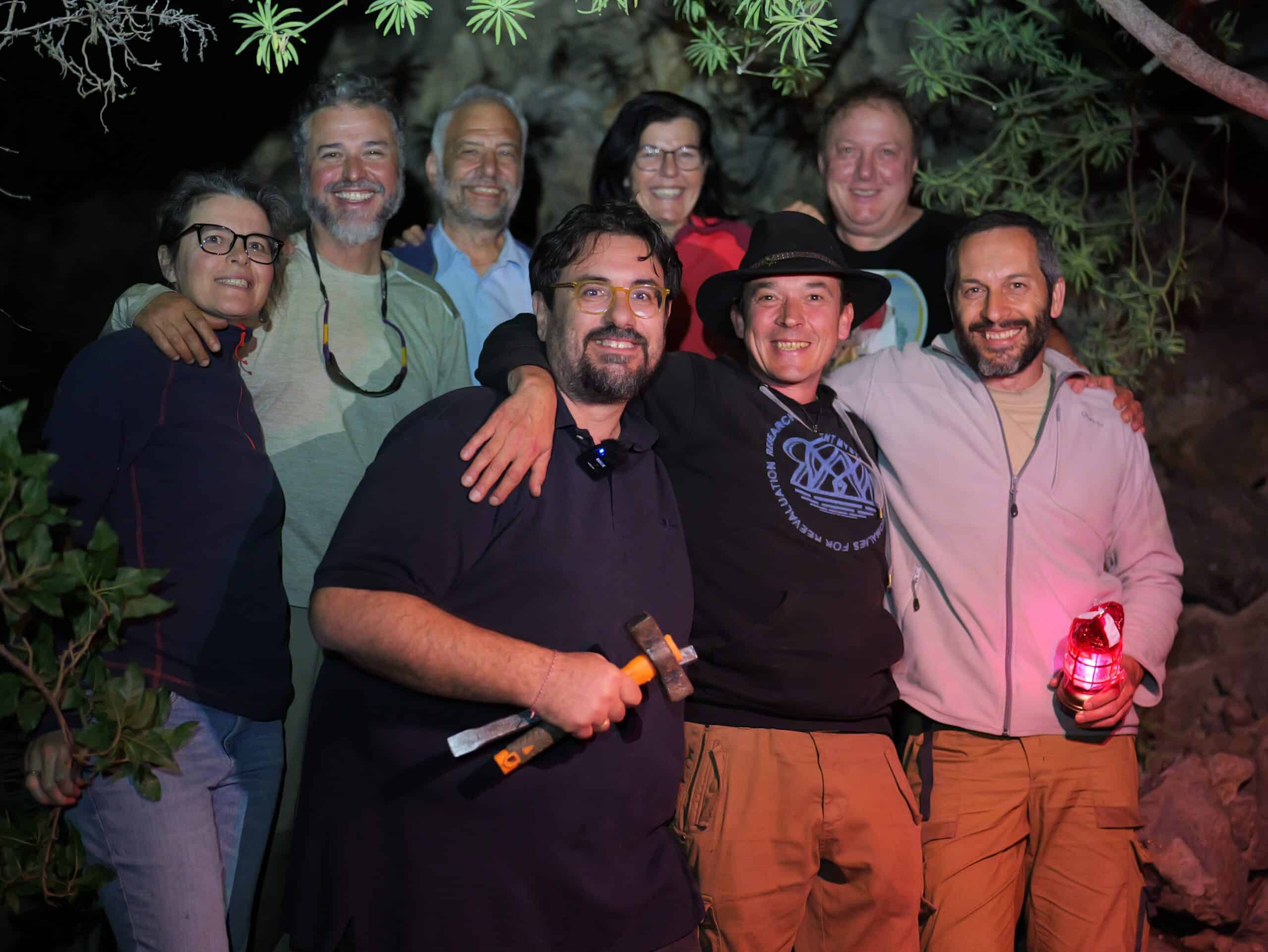
The OSL team at the Santo Domingo step pyramid: (from left to right) Julia & Gustavo, Michael Rappenglück, Beatriz G. Girona, Dominique Görlitz, and bottom row – Georgios Polymeris, Ramon Zürcher, and Jorge Sánchez.
As part of the project, sediment samples were taken from areas relevant to the construction of two northern step pyramid complexes: San Marcos and Santo Domingo. Both are located between Puerto de la Cruz and Icod. Particular attention was paid to layers that are clearly related to the construction of the pyramids, such as substructure horizons, ramps, and filled-in spaces. The samples were taken in a light-protected environment and in accordance with international standards to prevent any distortion of the measurement results.
The initial OSL results provide surprisingly early dates, well before the 19th century, which are incompatible with the theory of purely modern agricultural buildings. Instead, they point to construction phases dating back to prehistoric or early historic periods: approximately 400 to 600 years ago. The final results will be available in a few weeks. These results are consistent with architectural observations such as the systematic stepped shape, the deliberate orientation of individual structures, and the archaeoastronomical alignments of most stepped structures.
Of particular significance is the fact that the OSL data suggest comparable time windows across the islands. This argues against the stone-heap theory (Spanish: majanos) and supports the assumption of a culturally embedded building tradition that was maintained over generations. The stepped pyramids thus do not appear to be random by-products of agricultural activity, but rather deliberately constructed structures with functional or cultic-ritual significance.
OSL dating is a key part of the Canary Islands Pyramid Project. It gives us the first methodologically independent timeline that we can use to organize and connect the other parts of the project—like bioarchaeological analyses, astroarchaeological studies, and individual finds.
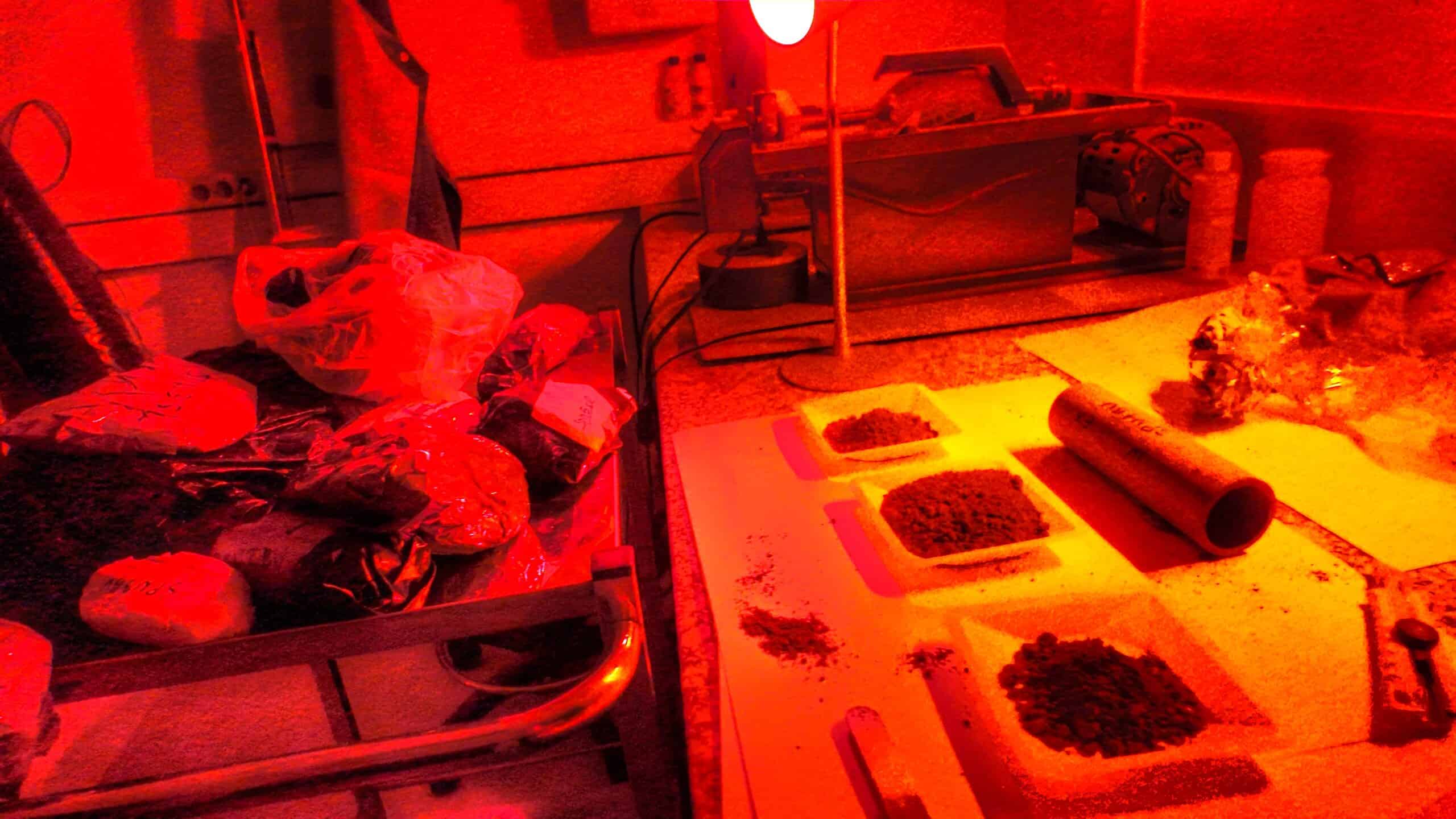
The OSL samples were all taken to A Coruña, where they underwent extensive preparation for light measurement at the University of Jorge and Georgios Institute. This process took several months.