
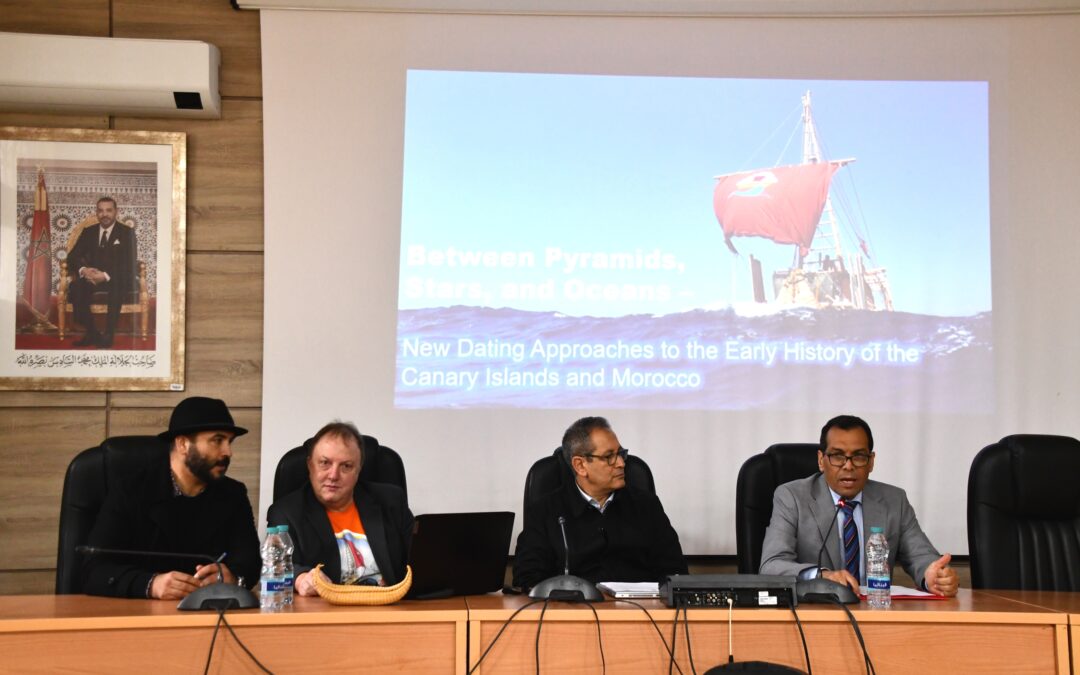
Yesterday I had the opportunity to present our ABORA research at Mohammed V University in Rabat. The presentation generated very strong academic interest — in particular, our transdisciplinary results from archaeology, astronomy, rock art studies, and experimental seafaring were discussed intensively. In addition to the research content, the audiovisual methodology of the lecture also attracted considerable attention.
Especially exciting was the thematic overlap with the current national program of King Mohammed VI, which aims to strengthen Morocco’s engagement with ocean research, maritime trade, and seafaring traditions. The university leadership recognized a remarkable alignment between this initiative and our research objectives.
During the subsequent personal exchange, the university expressed full willingness for cooperation. The highlight was an official invitation to a multi-day scientific workshop intended to deepen our future collaboration.
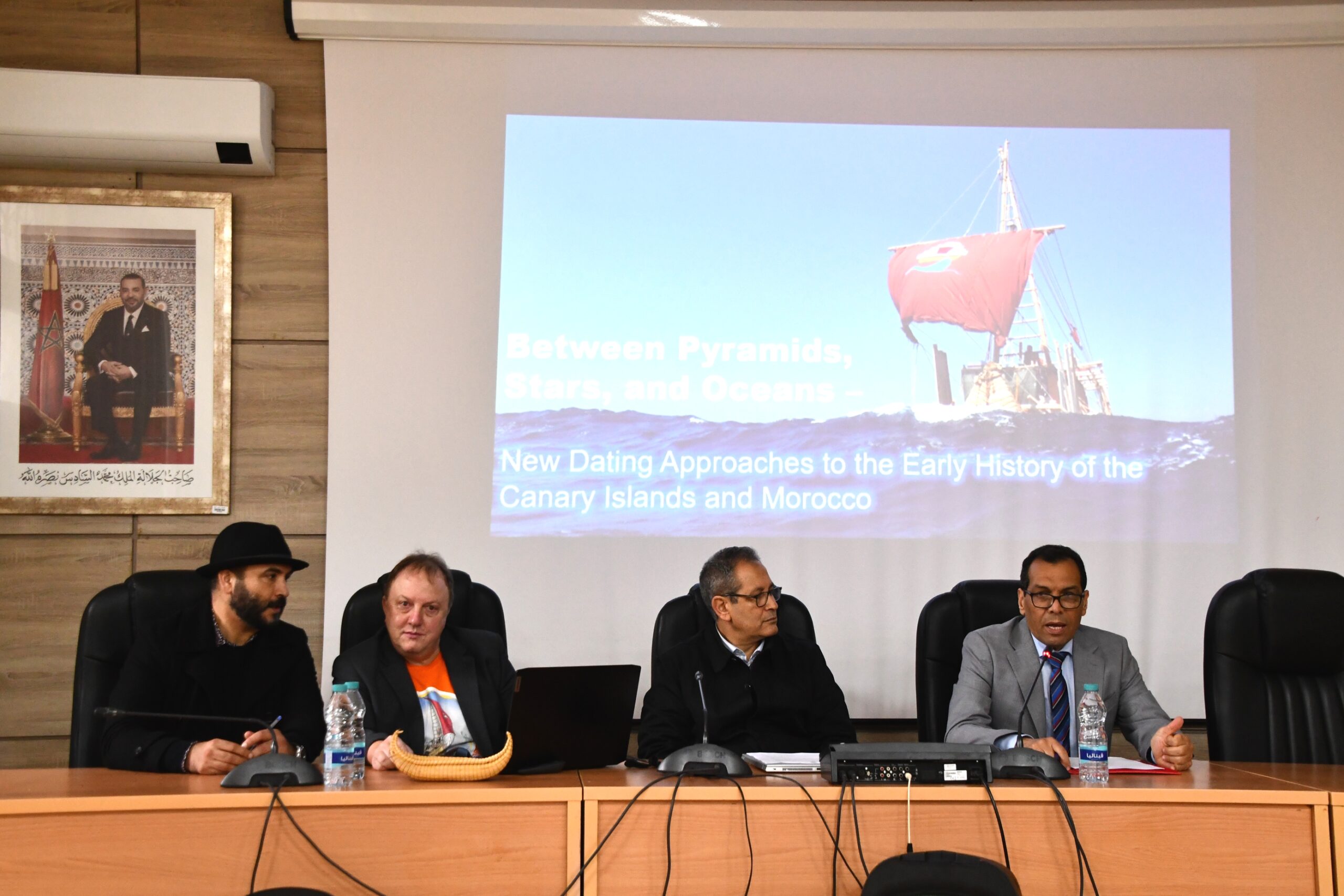
Dominique gave the keynote address at the end of the conference on the topic: “New Dating Approaches to Early History of the Canary Islands and Morocco.” Prior to this, the dean and numerous scholars from archaeology, geography, and social sciences spoke.
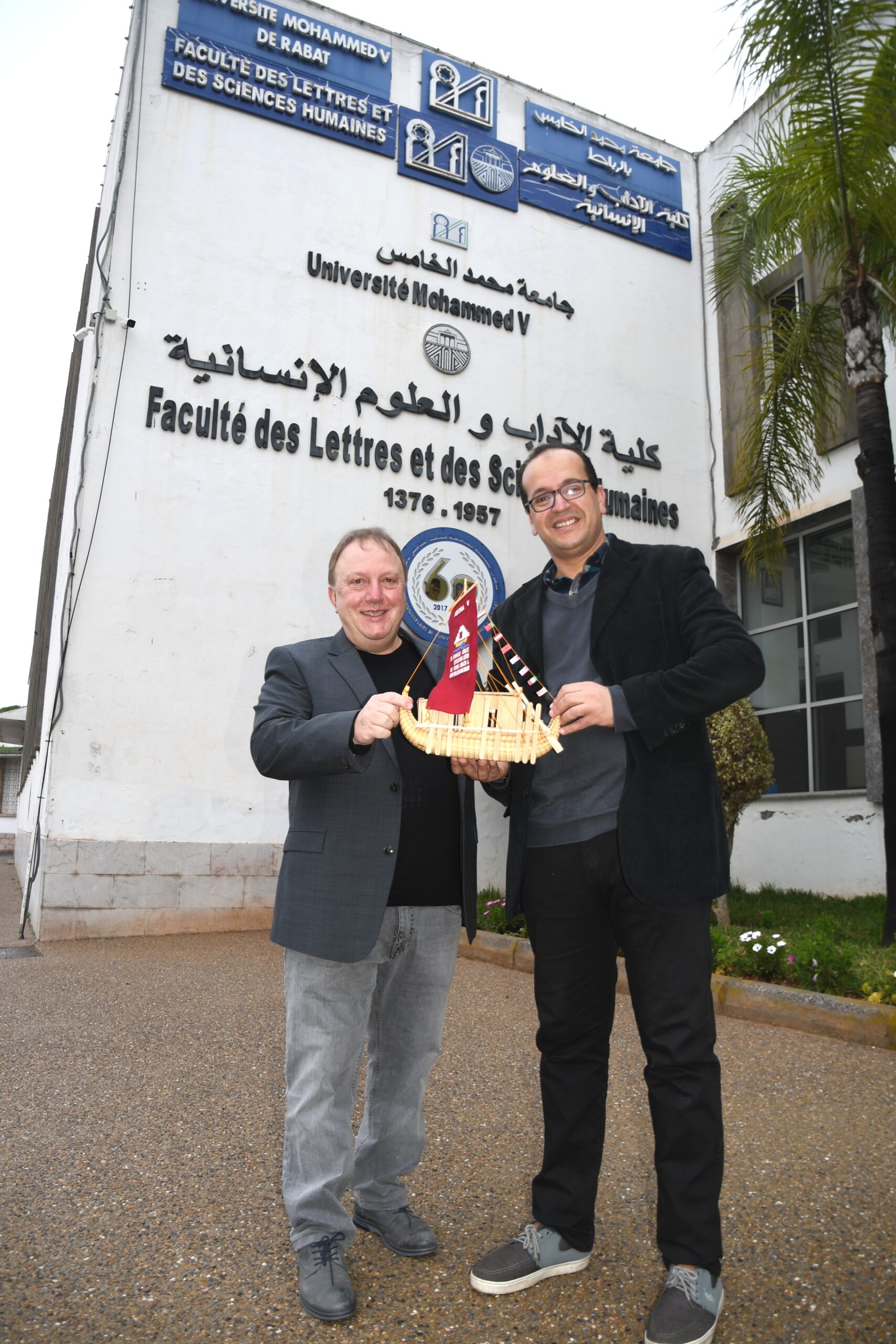
Professor Mohamed Oubihi invited Dominique and organized this conference. His academic connections will help establish important contacts with scientists in Morocco. These contacts should help clarify open questions about the existence of pre-Columbian tobacco and step pyramids in Morocco.
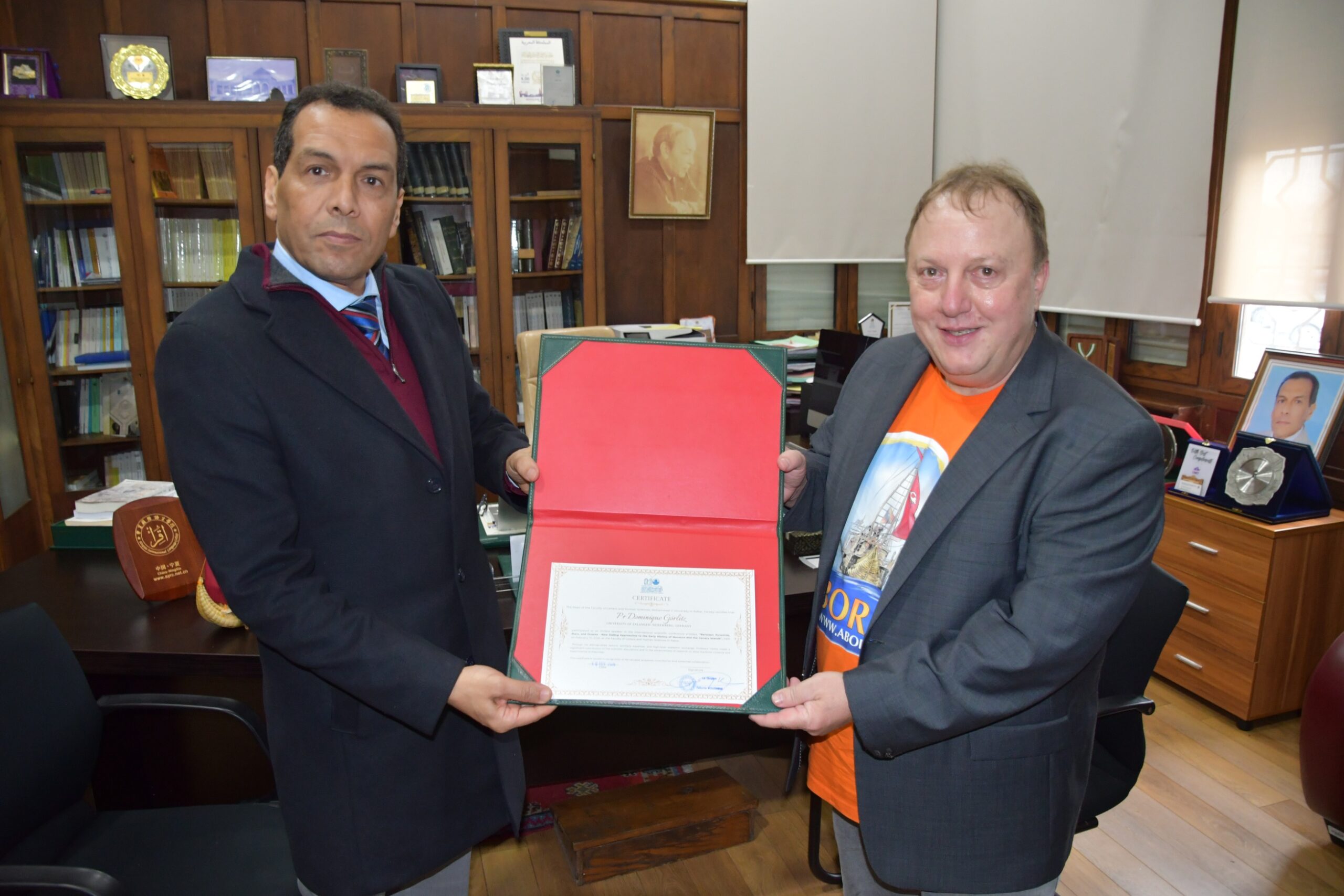
The Dean of the Faculty of Letters and Human Sciences at Mohammed V University in Rabat, Professor Jamal Eddine El Hani, presented Dominique with the certificate of honor for the successful conference at the university.
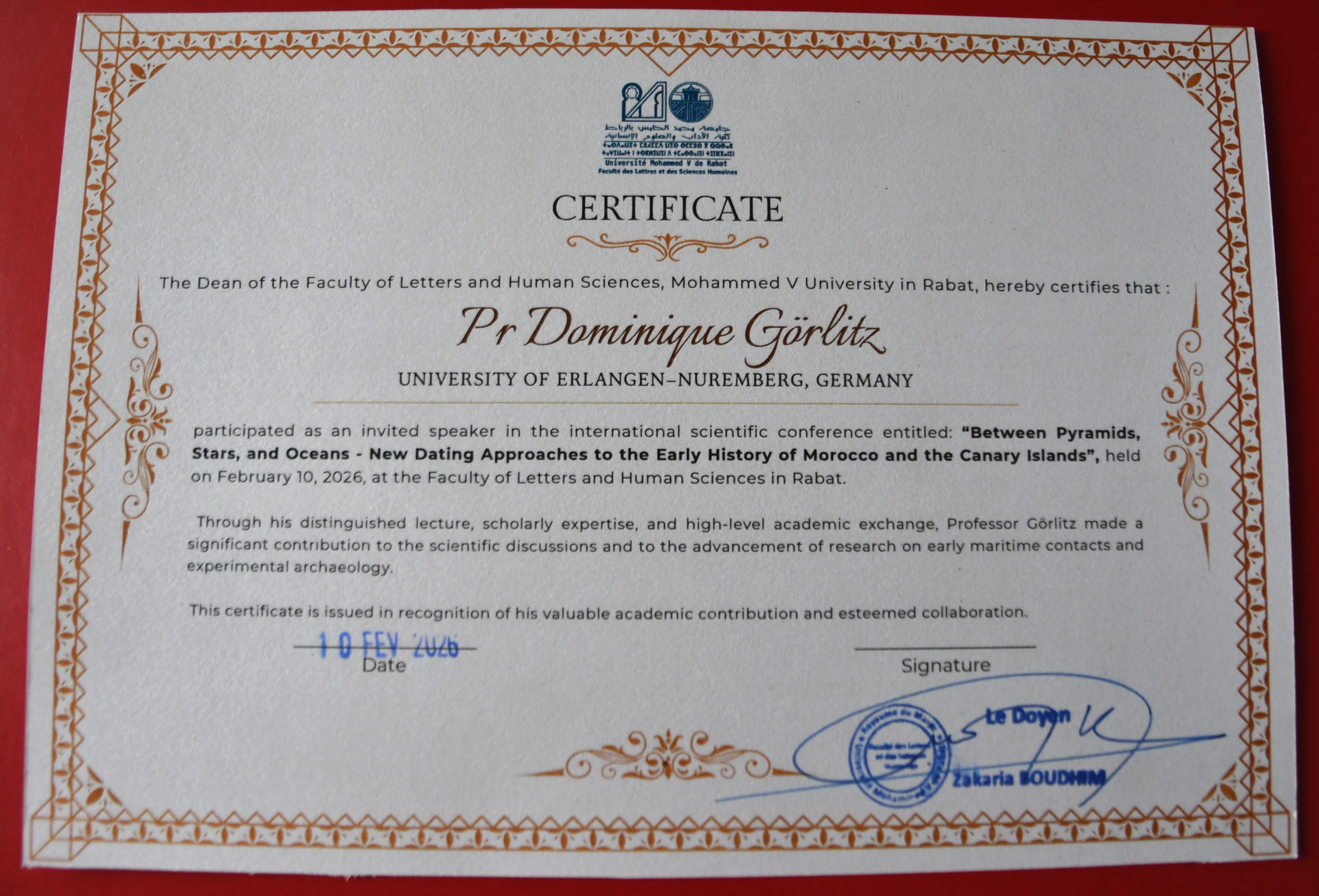
View of the certificate of Mohamed V University.
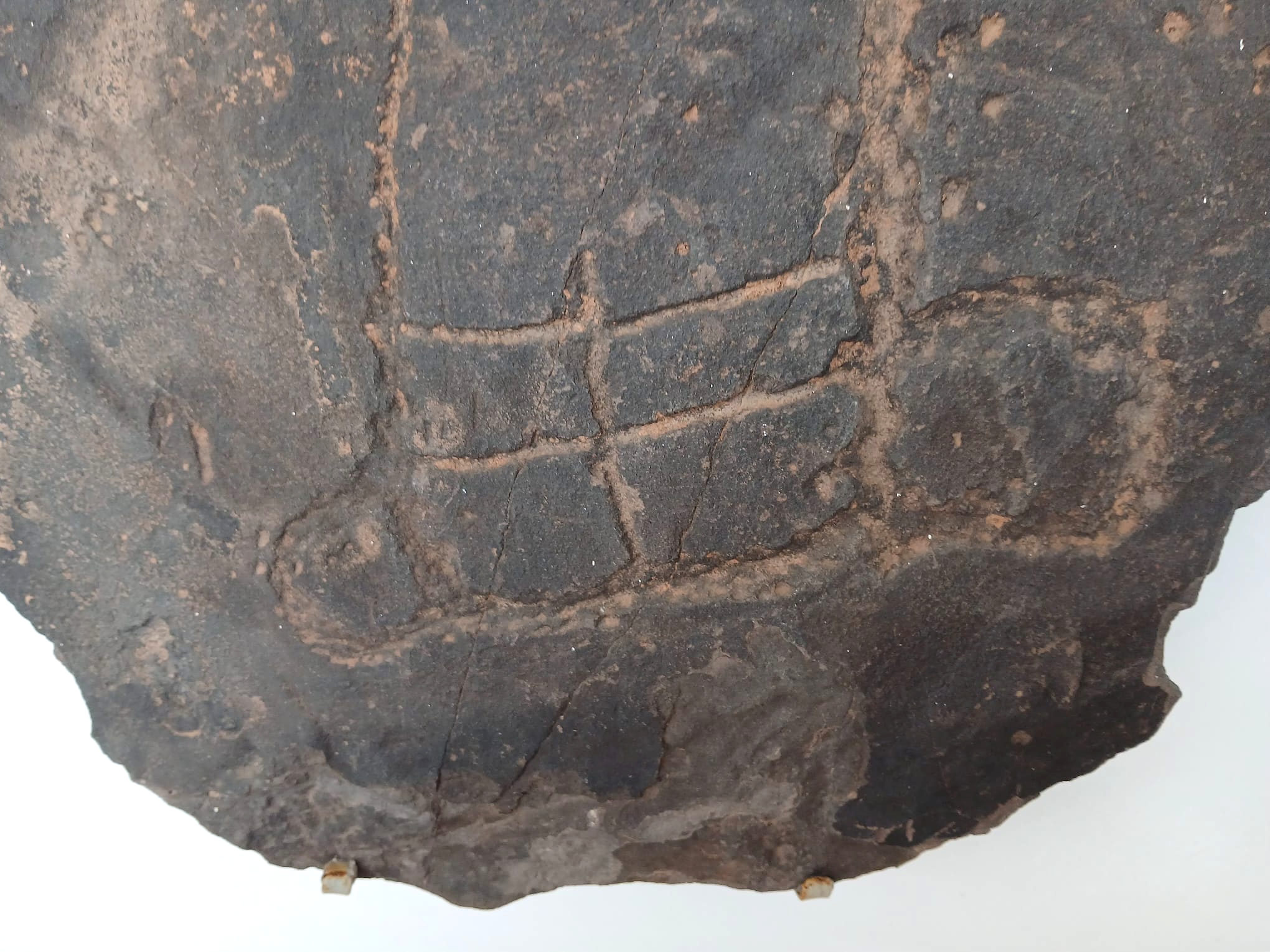
The day before, Professor Oubihi took us to the Museum of History in Rabat. There, together we discovered numerous rock carvings, confirming that Morocco is the right place to bridge the gaps between prehistoric Mediterranean and Atlantic cultures. This Bronze Age image most likely depicts a reed raft with a rectangular square sail – a typical representation of these seaworthy sailing rafts.